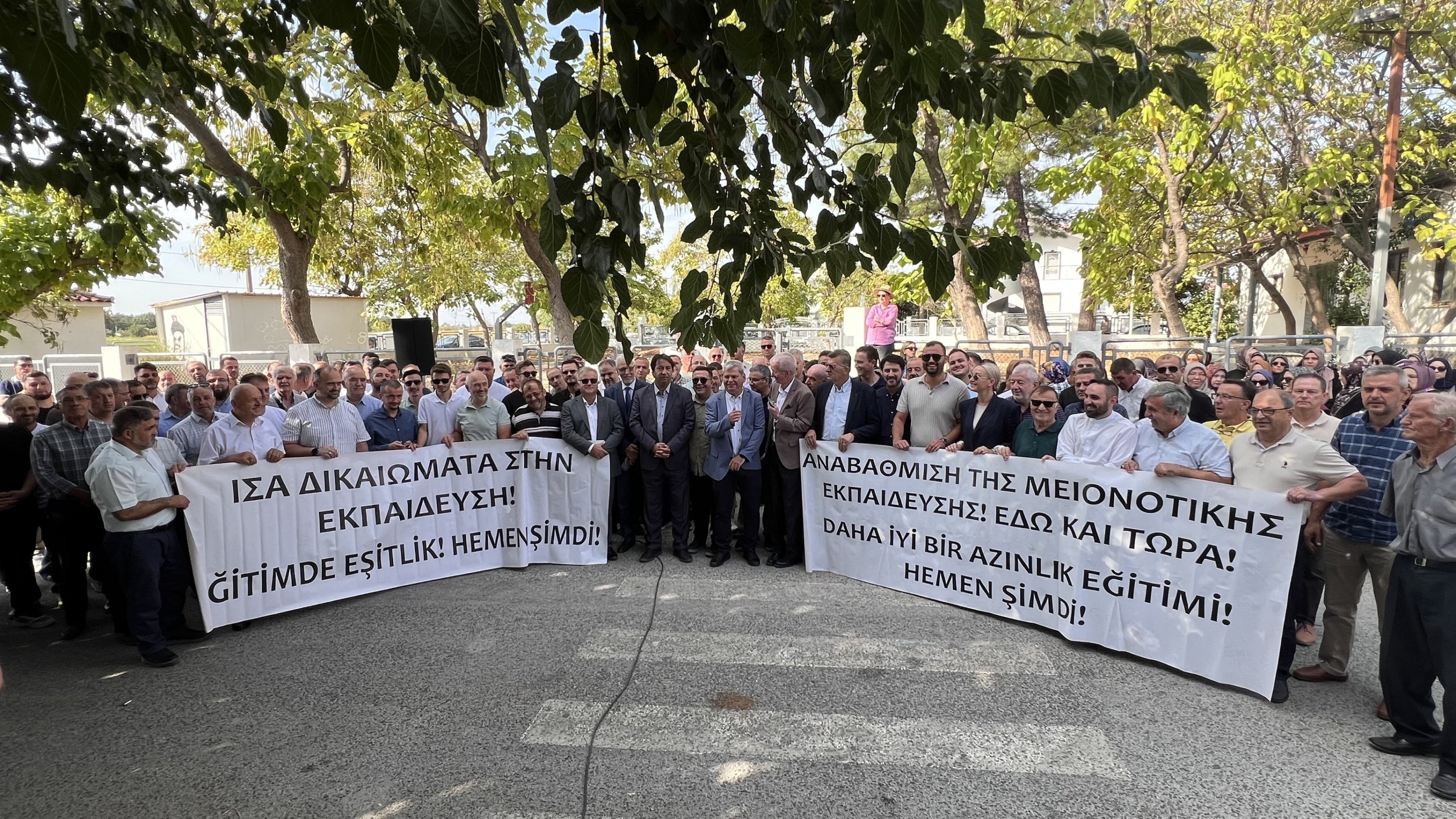
Türkiye on Monday condemned Greece's decision to close eight primary schools belonging to the Turkish minority in Western Thrace ahead of the 2026-2027 academic year, arguing that the move violates international obligations and further erodes the educational rights of the minority community.
The criticism came from both the Foreign Ministry and Hakan Çavuşoğlu, a member of the Presidential Council for Legal Policies and a former deputy prime minister of Türkiye who is himself from the Western Thrace Turkish minority.
Greece has cited insufficient student enrollment as the reason for shutting down the schools. According to Turkish officials, the closures reduce the number of Turkish minority primary schools in Western Thrace to 76.
Çavuşoğlu, who attended one of the minority schools that is now scheduled to close, described the decision as a personal disappointment and argued that it extends a long pattern of restrictions targeting Turkish minority education.
"The closure of these schools does not simply mean locking the doors of school buildings," Çavuşoğlu said. "It represents a serious intervention against the language, culture, identity and future of the Western Thrace Turkish community."
He argued that minority education is a fundamental right protected under the Lausanne Treaty and accused Greece of pursuing policies that systematically weaken the institutional structure of the minority community.
According to Çavuşoğlu, reducing the number of minority schools under the justification of declining enrollment weakens access to education in the Turkish language and undermines the community's ability to preserve its cultural identity.
He also criticized reported efforts to cancel the enrollment of some students at the Iskeçe (Xanthi) Central Turkish Minority Primary School through administrative procedures.
"A child's right to receive education in his or her mother tongue is an inseparable part of universal human rights," Çavuşoğlu said, adding that parents should be free to enroll their children in minority schools without bureaucratic interference.
He argued that preventing families from exercising that choice contradicts both educational freedom and fundamental human rights principles.
Çavuşoğlu also questioned Greece's commitment to democratic values, saying policies affecting Turkish minority education were inconsistent with the principles of pluralism, human rights and the rule of law promoted by the European Union.
He called on Athens to reverse what he described as discriminatory policies and fulfill its international commitments regarding minority protections.
The former deputy prime minister said the Turkish minority has been an integral part of Western Thrace for centuries and argued that administrative measures cannot erase its language, culture or identity.
He also urged the international community to pay closer attention to the situation, saying stronger support was needed to safeguard the minority's educational and fundamental rights.
Foreign Ministry spokesperson Öncü Keçeli also condemned on Sunday Greece's use of low student numbers as a pretext for closing minority schools.
"We condemn Greece's decision to close eight primary schools belonging to the Western Thrace Turkish minority under the pretext of insufficient student enrollment," Keçeli said in a statement posted on X.
He further criticized what he described as new administrative obstacles affecting first-grade enrollment at the Xanthi 1st Turkish Minority Primary School, calling them another example of systematic practices that undermine the educational rights of the Turkish minority in Western Thrace.
Keçeli said the closures and enrollment restrictions constituted violations of the 1923 Lausanne Peace Treaty, which guarantees educational, religious and cultural rights for recognized minorities.
He urged Greece to comply with its treaty obligations and implement rulings by international courts and recommendations from European institutions concerning minority rights.
"Türkiye will continue to firmly support the Western Thrace Turkish minority in its struggle to protect its rights," Keçeli underlined.