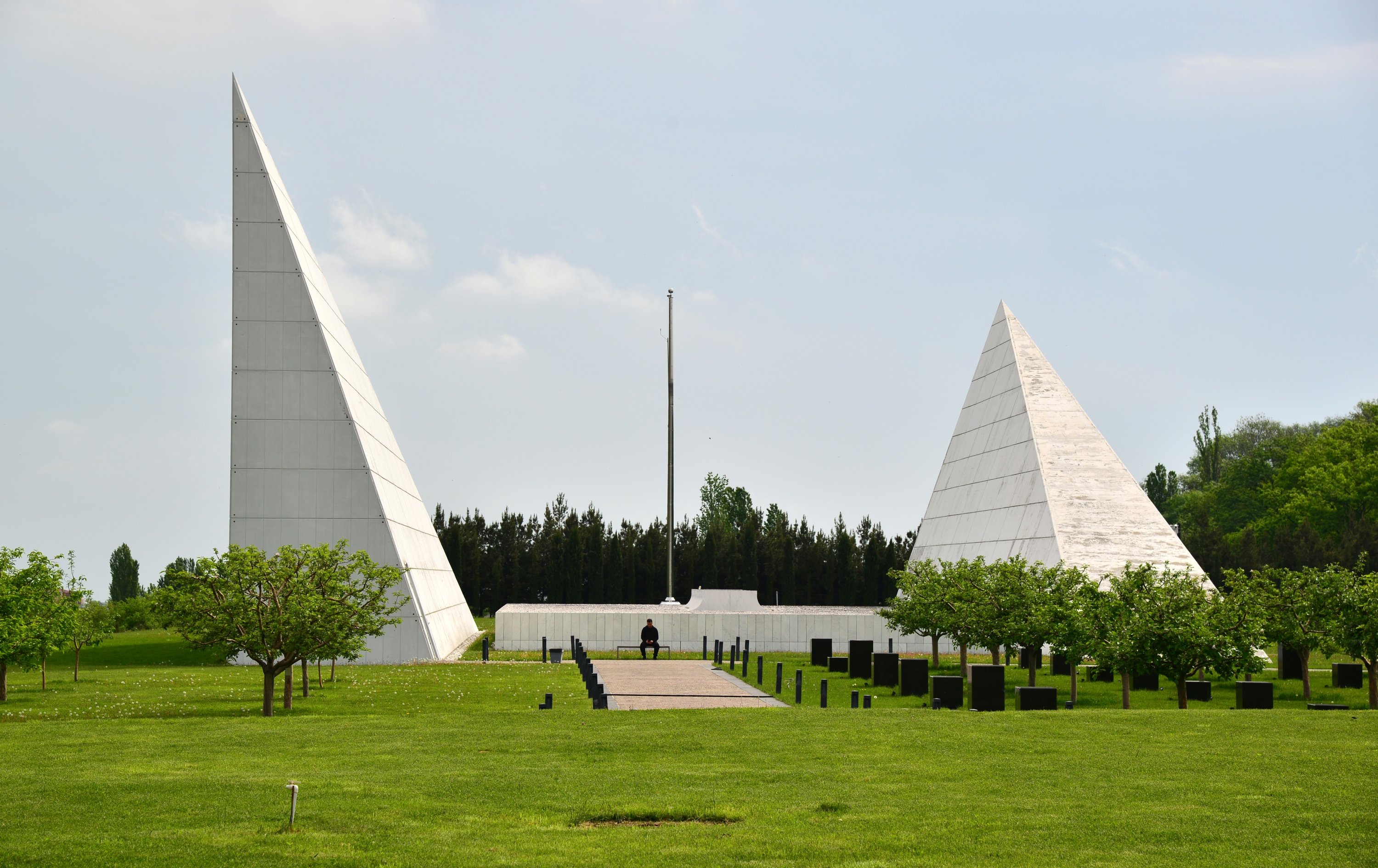
March 31 marks the "Day of Genocide" of Azerbaijanis, a chilling episode in the history of the country where 50,000 people were slaughtered by Armenian gangs in 1918. The day is a painful reminder of the past for Azerbaijan, which only recently managed to retake its territory from Armenian occupiers.
At the beginning of the 20th century, in the final days of Tsarist Russia, Armenians who had been settled in various regions of Azerbaijan took advantage of the power vacuum to begin massacring Azerbaijanis and seizing their lands.
Arming themselves from 1905 onward, the Armenian gangs stirred up unrest across the country, particularly in Baku.
With the revolution in Russia in 1917, the Tsarist regime collapsed. The Bolsheviks, who came to power, also took control of the administration in Baku. Armenian Bolshevik revolutionary Stepan Shaumian provided political and financial support to Armenian gangs, leading to an increase in attacks against Azerbaijanis.
Between March 30 and April 3, 1918, Armenian and Bolshevik gangs massacred 50,000 Azerbaijanis in Baku, Shamakhi, Guba, Khachmaz, Lankaran, Hajigabul, Salyan, Zangezur, Karabakh, Nakhchivan and other regions. The massacre ended when the Ottoman army, known as the "Caucasian Islamic Army," came to Azerbaijan’s aid and cleared the country of these gangs.
The atrocities and massacres committed by Armenians in Azerbaijan in 1918 are recognized as "genocide."
The late President Heydar Aliyev, through a decree signed in 1998, decided that March 31 would be commemorated as "Day of Genocide of Azerbaijanis."
Azerbaijan's ombudsman, Sabina Aliyeva, stated that the events of March-April 1918 were one of the bloodiest and most tragic examples of systematic attacks against Azerbaijanis.
In a statement to an Anadolu Agency (AA) correspondent on Tuesday, Aliyeva said that systematic and ruthless crimes have been committed against Azerbaijanis by Armenians since the beginning of the 20th century, both in various regions of Azerbaijan and in present-day Armenia.
Stating that thousands of innocent people were killed during this process due to their national and religious identities, Aliyeva noted that these events have gone down in history as mass massacres.
Aliyeva emphasized that the international recognition of the genocide crimes committed against Azerbaijanis and the ensuring of justice are of great importance to prevent the recurrence of similar crimes against humanity in the future.