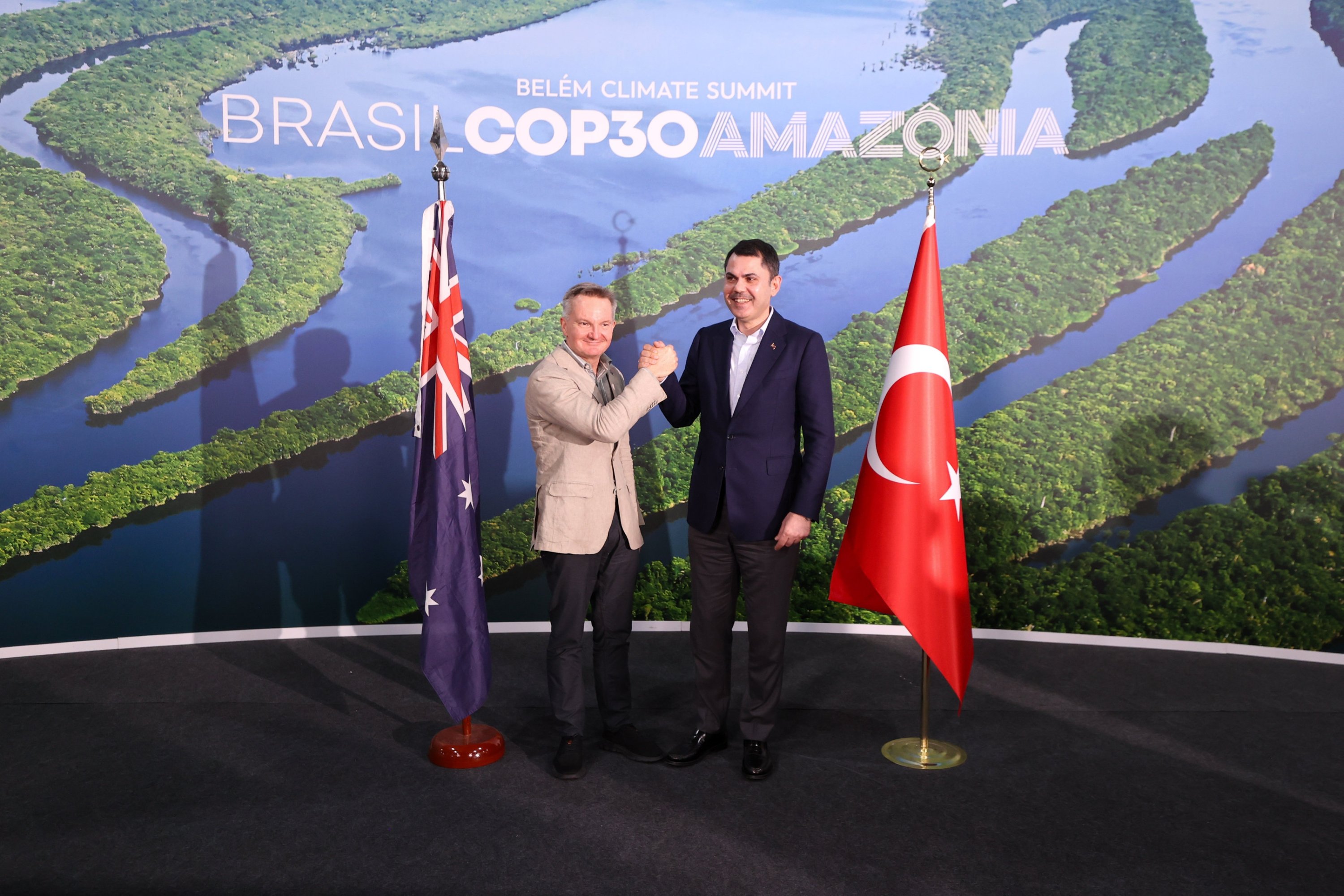
Türkiye will preside over next year’s U.N. climate summit, COP31, after securing the role through successful negotiations led by Environment, Urbanization and Climate Change Minister Murat Kurum at this year’s Brazil conference.
Speaking to Anadolu Agency (AA), Ayşe Uyduranoğlu, who teaches economics at Istanbul's Bilgi University, evaluated the outcomes of the just-concluded COP30 and the significance of Türkiye hosting next year's event.
Uyduranoğlu highlighted that one of the most notable shortcomings of COP30, held in November, was the failure to secure a firm commitment to phase out coal. She stressed that phasing out coal is a long-term process and that countries must set clear timelines for ending coal use.
She welcomed the increased emphasis on a "just transition" at COP30, describing it as a positive development, but added that the concept would only be meaningful if greater attention is paid to the needs of different societal groups within countries.
Given that Türkiye is located in the Mediterranean Basin, one of the regions most vulnerable to climate change, and is among Europe's countries most exposed to extreme weather events, Uyduranoğlu underscored the symbolic and strategic importance of hosting COP31. She called for adaptation policies to be given more priority at that meeting.
Uyduranoğlu also noted that Türkiye is currently preparing its Emissions Trading System (ETS).
"If there are no delays, a two-year pilot phase will begin, followed by permanent implementation. The ETS must be designed to be highly dynamic and adaptable to constant change. A carbon tax should also be seriously discussed in Türkiye," she said.
She pointed to Sweden as a successful example, noting that it was one of the first countries to implement both an effective ETS and a carbon tax.
Uyduranoğlu emphasized that revenues from both the ETS and any future carbon tax must be earmarked specifically for climate adaptation, mitigation and just transition policies.
Suay Nilhan Açıkalın, who teaches international relations at Hacı Bayram Veli University in the Turkish capital Ankara, told AA that this year's COP30 made progress on finance and adaptation but remained cautious on issues requiring strong political will.
She explained that last year's COP29 in Baku, Azerbaijan, set a new climate finance goal of at least $300 billion per year, while COP30 expanded this vision through the Baku to Belem Roadmap, raising the overall mobilization target to $1.3 trillion annually by 2035. These remain aspirational targets rather than secured funds.
Açıkalın described Türkiye's selection to host COP31 as a diplomatic success, marking the first time the country has been entrusted with leading the conference within the Western European and Others Group.
She attributed this achievement to Türkiye's balanced multilateral diplomacy and strong ties with both European institutions and the Global South.