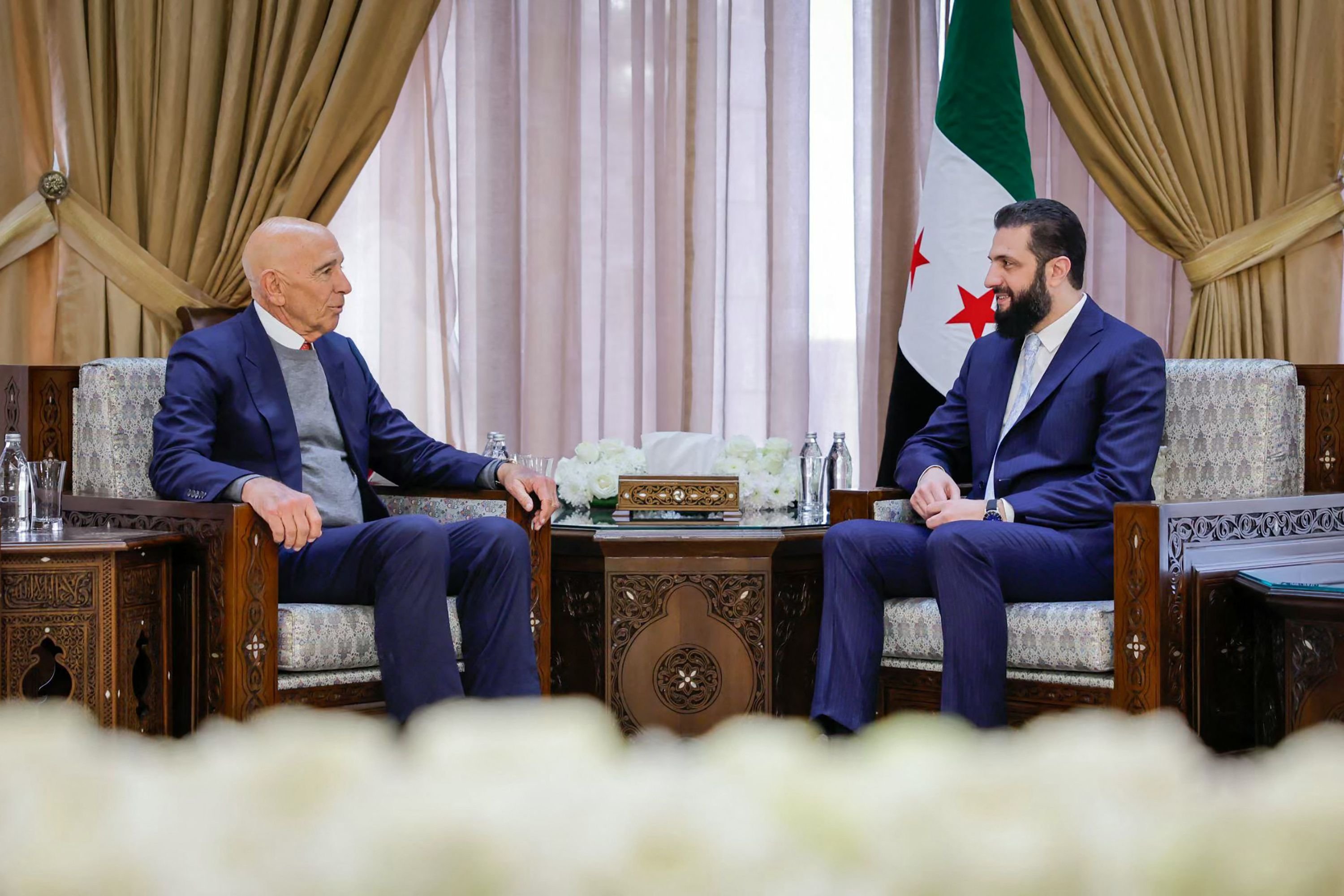
The purpose of the U.S.-led anti-Daesh partnership with the YPG/PKK-dominated SDF has “largely expired,” and the Syrian government is now both willing and positioned to assume security responsibilities across the country, U.S. envoy Tom Barrack said Tuesday.
Barrack noted that Damascus is prepared to take control of key security tasks, including prisons and camps holding Daesh detainees and their families – facilities long guarded by the YPG with U.S. backing. His remarks signal a significant shift in Washington’s approach to northeastern Syria, where the YPG has been the primary U.S. partner since the height of the fight against Daesh, which has been strongly criticized by Türkiye.
In a detailed statement posted on X, Barrack said the moment represents a historic turning point for Kurdish groups in Syria.
“The greatest opportunity for the Kurds in Syria right now lies in the post-Assad transition under the new government led by President Ahmed al-Sharaa,” he wrote. He said the transition could offer a “pathway to full integration into a unified Syrian state with citizenship rights, cultural protections, and political participation,” noting that Kurdish communities faced “statelessness, language restrictions, and systemic discrimination” under Assad’s rule.
Barrack outlined the original rationale of the U.S.-YPG partnership, describing how the YPG emerged as Washington’s "local ally" in eliminating Daesh’s territorial control by 2019, capturing thousands of fighters and securing camps such as al-Hol and al-Shaddadi. At the time, he said, the Syrian state was fragmented and “not a viable partner” due to its alliances with Iran and Russia.
But he said circumstances have “fundamentally changed.” Syria’s central government, now “acknowledged” and having joined the Global Coalition to Defeat Daesh as its 90th member in late 2025, has signaled cooperation with Western partners on counterterrorism, Barrack said. With that shift, he argued, the original purpose of the U.S.-YPG alliance “has run its course.”
Barrack said the United States has been actively facilitating a transition that includes a YPG-Damascus integration agreement signed on Jan. 18. The deal envisions the incorporation of SDF fighters into the national military, the transfer of key infrastructure such as oil fields, dams, and border crossings to Syrian state control, and the handover of Daesh detention sites to Damascus.
“The U.S. has no interest in a long-term military presence,” Barrack wrote, emphasizing that Washington’s priorities now center on preventing a Daesh resurgence, supporting reconciliation efforts, and promoting Syrian unity “without endorsing separatism or federalism.”
He said the integration framework presents the strongest chance in decades for Syria’s Kurds to secure long-denied rights, including citizenship for those once stateless, cultural and linguistic protections – such as Kurdish-language education and recognition of Nawruz as a national holiday – and political participation within a unified Syrian state.
While he acknowledged ongoing risks, including fragile cease-fires, local tensions, and concerns over hardliners, Barrack said Washington is pushing for safeguards to protect Kurdish rights and ensure continued counter-Daesh cooperation. Prolonging separate governance structures, he warned, could fuel instability or create openings for extremist groups.
Barrack said U.S. efforts in Syria are currently focused on two priorities: “ensuring the security of prison facilities holding ISIS prisoners, currently guarded by the SDF, and facilitating talks between the SDF and the Syrian Government to allow for the peaceful integration of the SDF and the political inclusion of Syria’s Kurdish population into full Syrian citizenship.”