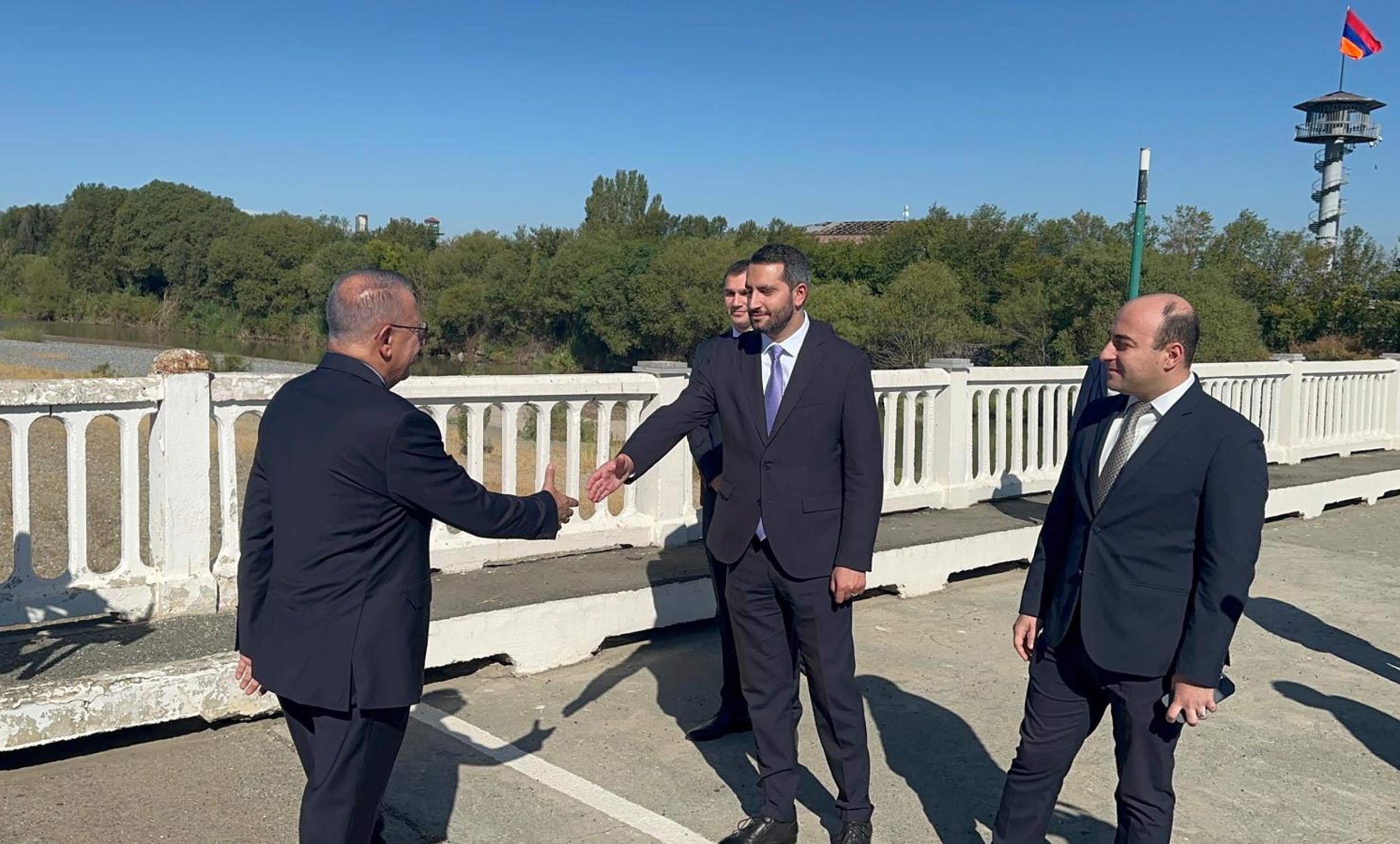
Armenia is ready to reopen its border with Türkiye, but technical steps are still needed, Türkiye's special envoy for the normalization process with Armenia, Serdar Kılıç, said Thursday.
Kılıç met with Ercan Turan, the governor of Türkiye's Iğdır border province, before traveling to Armenia, telling reporters that he and his Armenian counterpart are working on certain issues.
"We will review these efforts and confirm the previous work. We will also address what can be done in the future for the economic life of both countries, especially in this region."
Kılıç underlined the importance of the Zangezur Corridor, a strategic link connecting Armenia's neighbor, Azerbaijan, with its exclave of Nakhchivan.
"This communication line is particularly significant. The Zangezur route is important not only for relations between Türkiye and Armenia but also for opening up to all of Central Asia and the Turkic republics," he said, expressing Türkiye's wish "to open this route in the short term and contribute to the economies of both countries, especially the Iğdır and Kars (border provinces)."
Kılıç added that the Armenian side also views these matters positively, saying: "Today they made a statement saying: ‘We are ready to open the border.' Of course, they also look favorably on something that benefits everyone. Some technical work needs to be carried out before certain projects can be implemented; otherwise, we have no issue regarding intent."
Kılıç and his delegation are scheduled to cross into Armenia via the Alican Border Gate in Iğdır for talks in Yerevan, Armenia's capital.
Since 2022, the two sides have agreed to resume cargo flights, start technical work on border infrastructure and ease visa procedures for diplomatic passport holders. They also decided to allow third-country nationals to cross the border, though that measure has yet to take effect.
Türkiye and Armenia have held five rounds of normalization talks in recent years, seeking to restore diplomatic ties and reopen borders closed since the early 1990s.
The two countries share a complex history. Armenia, for a long time, has accused Türkiye, or rather, the Ottoman Empire, of committing "genocide" against the Armenian population in the country during World War I. Türkiye has repeatedly denied the claims, although it has acknowledged a high number of deaths among Armenians due to isolated incidents and diseases.
Borders have remained closed since 1993 following Armenia’s illegal occupation of the Azerbaijani territory of Karabakh. Relations began to thaw after the 2020 Karabakh war, with both sides appointing special envoys to pursue normalization talks and negotiating the reopening of their land border. So far, limited agreements have allowed third-country citizens and diplomats to cross, but a full reopening remains elusive.
Despite the hurdles, there have been tentative gestures toward cooperation. The Margara border crossing has been used twice in recent years for humanitarian purposes: in February 2023 to deliver Armenian aid trucks following a devastating earthquake in southeastern Türkiye, and in March 2024 for humanitarian aid shipments to Syria via Türkiye. Armenia has also upgraded the crossing in anticipation of future use.
In June, Armenian Prime Minister Nikol Pashinyan visited Türkiye and met President Recep Tayyip Erdoğan in a historic but somewhat muted visit. Two leaders expressed their readiness for peace in their region and a commitment to normalizing ties.
Türkiye has welcomed progress toward establishing lasting peace between Azerbaijan and Armenia following a U.S.-brokered declaration recorded in Washington on Aug. 8.