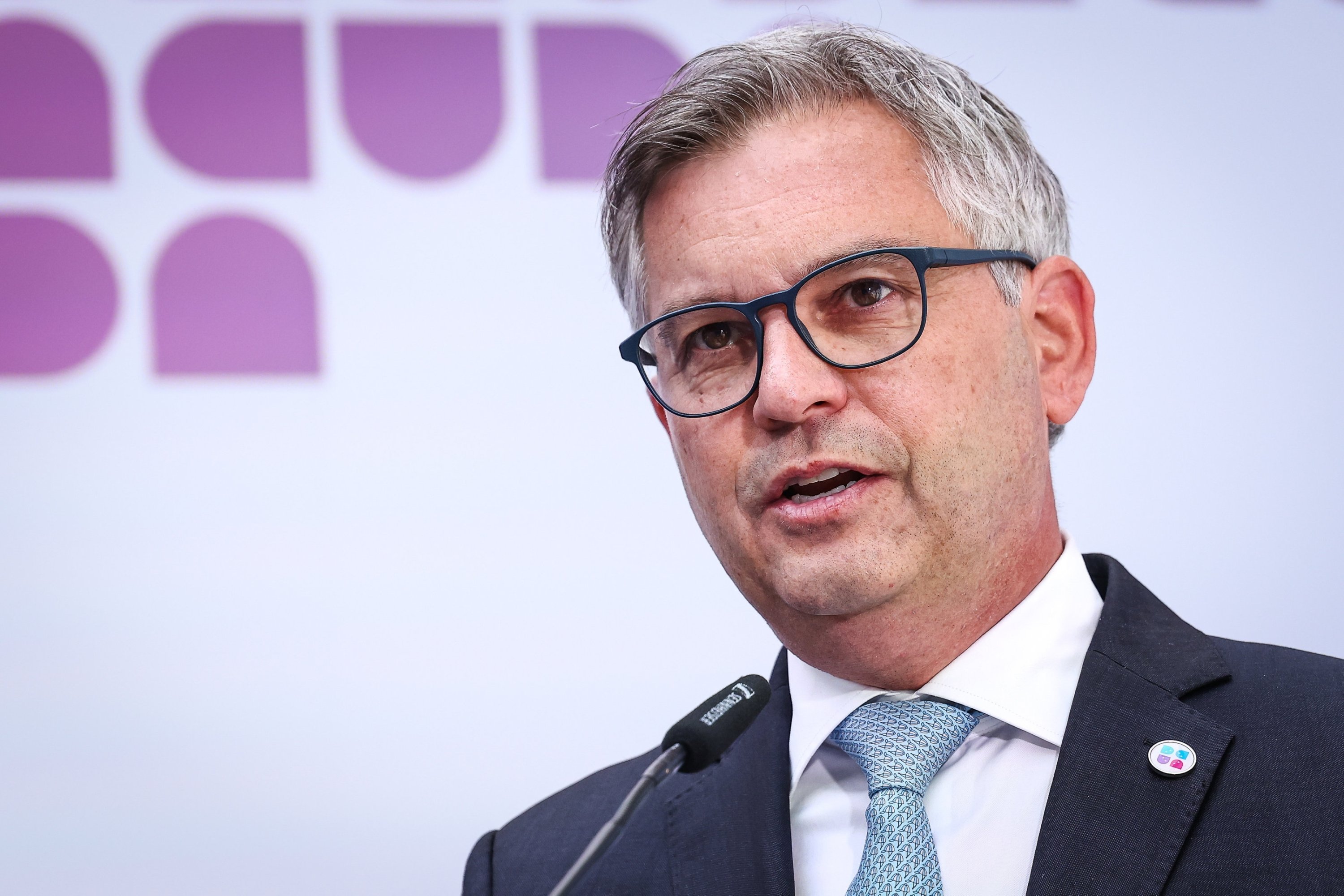
Ankara and Brussels on Wednesday held the third session of the high-level dialogue on migration and security in Istanbul to focus on cooperation based on joint interests, the Interior Ministry said.
The meeting was led by Interior Minister Ali Yerlikaya and the EU’s Magnus Brunner, commissioner for internal affairs and migration.
The meeting also focused on the problems Turkish citizens face during EU visa processes. Türkiye conveyed its expectations for a just evaluation of the visa approval and the rules and implementations for it.
At the meeting, where the visa liberalization process was also discussed, it was stated that there was no need to wait for the full liberalization process, which would require the political will of the EU, to correct the deficiencies and errors in the current practice.
Turkish officials say EU membership is strategic for Türkiye, which expects the EU to lift restrictions, revive high-level dialogue, update the customs union and facilitate the visa process until full visa liberalization.
However, the rejection rates for Turkish applicants have steadily increased since 2014, when the average rejection rate for Türkiye was 4.4%. By 2021, the rejection rate reached 16.9% during the pandemic, higher than the global average of 13.4%. In 2022, the rejection rate for Turkish applicants was 15.7%, compared to 17.9% globally.
In 2023, the number of Turkish citizens applying for Schengen visas reached over 1 million, with more than 48,000 applications being rejected. In 2024, denials stood at 14.5%, indicating a limited but measurable improvement.
The situation in Syria was also discussed as Ankara underlined that the country’s stability is directly linked with the stability of Türkiye and the EU. The minister highlighted that cooperation between Ankara and Brussels would help Damascus get rid of instability and terrorism, while facilitating the secure and voluntary returns of Syrian refugees.
The meeting also discussed issues such as cross-border organized crime, migrant smuggling and the fight against terrorism.
“In all stages of our fight against irregular migration, including the border security measures we take and the rescue of irregular migrants from the sea, we act in accordance with international law, human rights, neighborly rights and law, and our civilizational values,” the minister said.
He said there has been an increase in Syrian returns since the fall of the Bashar Assad regime.