Türkiye is set to propose acting as a mediator between Washington and Tehran during a visit by Iran's top diplomat on Friday, according to officials, while Ankara weighs tightening security along its border in case tensions intensify.
Friday's visit by Iranian Foreign Minister Abbas Araghchi comes after U.S. President Donald Trump threatened a military strike on Iran over its deadly protest crackdown earlier this month.
A U.S. naval strike group arrived in Middle East waters on Monday with Trump warning it was "ready, willing and able" to hit Iran "if necessary." Trump lastly urged Tehran on Wednesday to come to the table and make a deal on nuclear weapons or the next U.S. attack would be "far worse."
Araghchi warned on Wednesday that Iran would respond immediately and forcefully to any U.S. military operation, adding that its forces have their "fingers on the trigger," but did not rule out a new nuclear deal.
Türkiye, a NATO member that shares a border with Iran, has said it opposes any foreign intervention on its neighbor and urged Washington to resolve its issues with Tehran "one by one."
It has reached out to both sides, warning that destabilization in Iran would exceed the region's capacity to manage at this time.
Foreign Minister Hakan Fidan will tell Araghchi on Friday that his country "is ready to contribute to resolving the current tensions through dialogue," a Turkish diplomatic source told Agence France-Presse (AFP) on Thursday.
Fidan would reiterate Türkiye's opposition "to military interventions against Iran... (over) the regional and global risks such a step would entail," said the source, requesting anonymity because of the sensitivity of the talks.
The minister had on Wednesday stressed the need for Washington and Tehran to resume discussions over the Iranian nuclear program, suggesting that was the top priority to be resolved.
"It's wrong to attack Iran. It's wrong to start the war again. Iran is ready to negotiate on the nuclear file again," Fidan had told Al-Jazeera television.
The diplomatic source said Türkiye was in favor of efforts to reach "a peaceful solution to Iran's nuclear program in the near term and is ready to provide assistance if needed."
As well as Türkiye's diplomatic efforts to stave off a military confrontation, President Recep Tayyip Erdoğan has also been pushing Washington for a high-level trilateral meeting, Turkish media reports said.
There was no official confirmation of the report.
In Tehran, Foreign Ministry spokesperson Esmaeil Baqaei confirmed Friday's visit. He said on the social media platform X that Iran "is determined to continuously strengthen relations with its neighbors based on the policy of good neighborliness and common interests."
Analysts say Türkiye believes a military intervention against Iran would generate serious security risks, including instability and mass migration, and therefore prioritizes diplomacy.
"Türkiye's focus in U.S.-Iran relations is not necessarily on resolving all disputes, but on preventing a military intervention," Ankara-based Iranian academic Arif Keskin told AFP.
He said Türkiye's stance also aligns with the approach of pro-negotiation circles in Iran.
"At this stage, it is widely acknowledged that the actor that would benefit most from negotiations and a potential agreement would be the Iranian leadership itself," Keskin said.
"Even the initiation of talks is viewed as a significant gain for Iran."
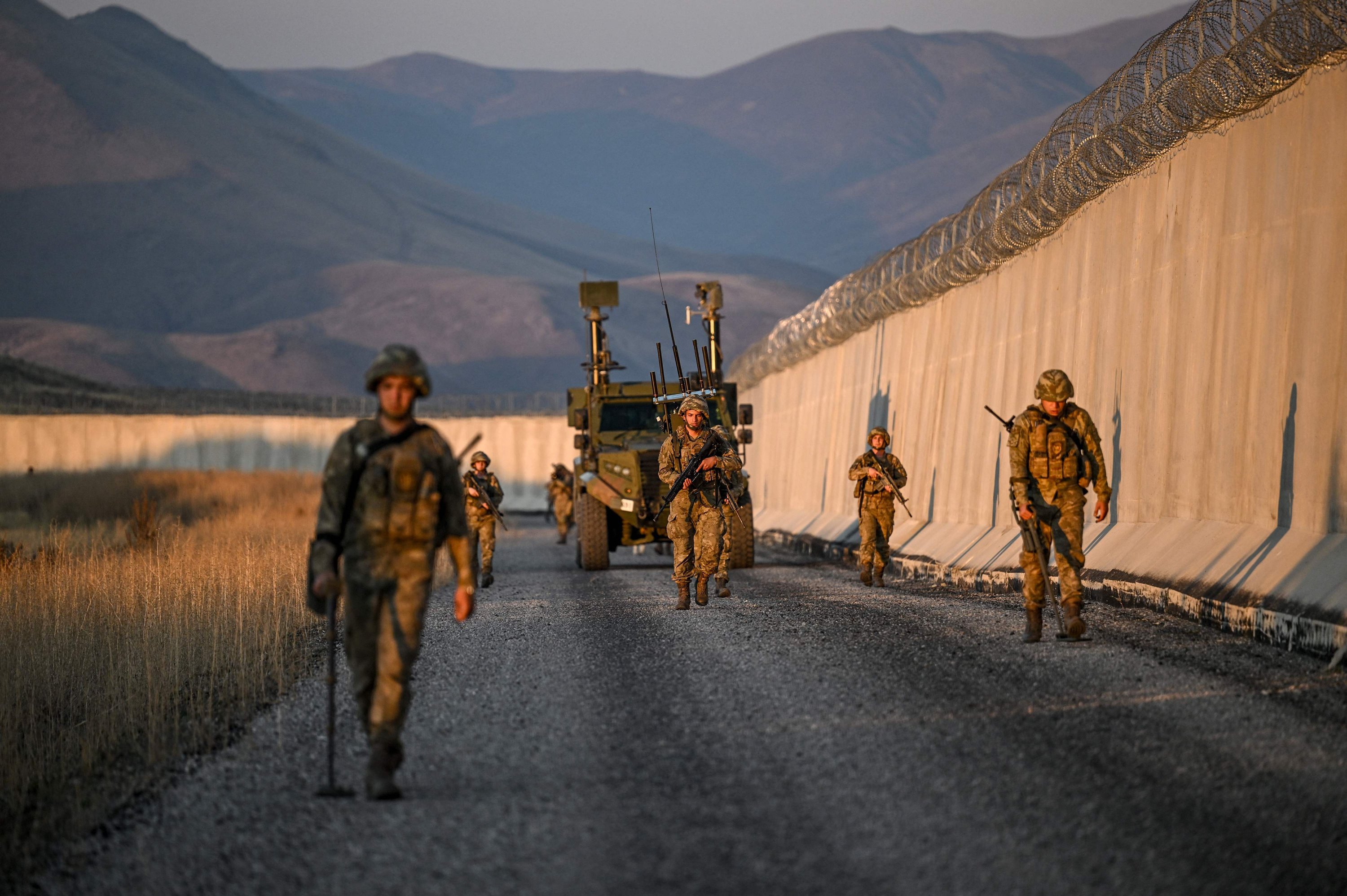
Alongside its diplomatic push, Ankara is assessing additional security precautions along its border with Iran if a U.S. strike destabilises the country, a senior Turkish official told AFP.
Much of the 500-kilometer (310-mile) frontier is secured by a wall, but "it has proven insufficient," said the official, who requested anonymity.
The Turkish authorities have so far avoided the term "buffer zone," but options under review include deploying more troops and expanding technological surveillance systems, the official added.
Türkiye began building a concrete wall in 2021 as concerns grew about a potential influx of migrants following the Taliban's takeover of Afghanistan.
So far, officials say there is no sign of mass movement toward Türkiye linked to developments in Iran.
Earlier this month, the Defense Ministry said it had detected "no evidence" of large-scale migration.
Unmanned aerial vehicles continue to conduct round-the-clock reconnaissance along the frontier.
To date, authorities have installed 203 electro-optical towers, 43 lift towers, 380 kilometers of modular concrete wall, and 553 kilometers of trenches, according to official figures.