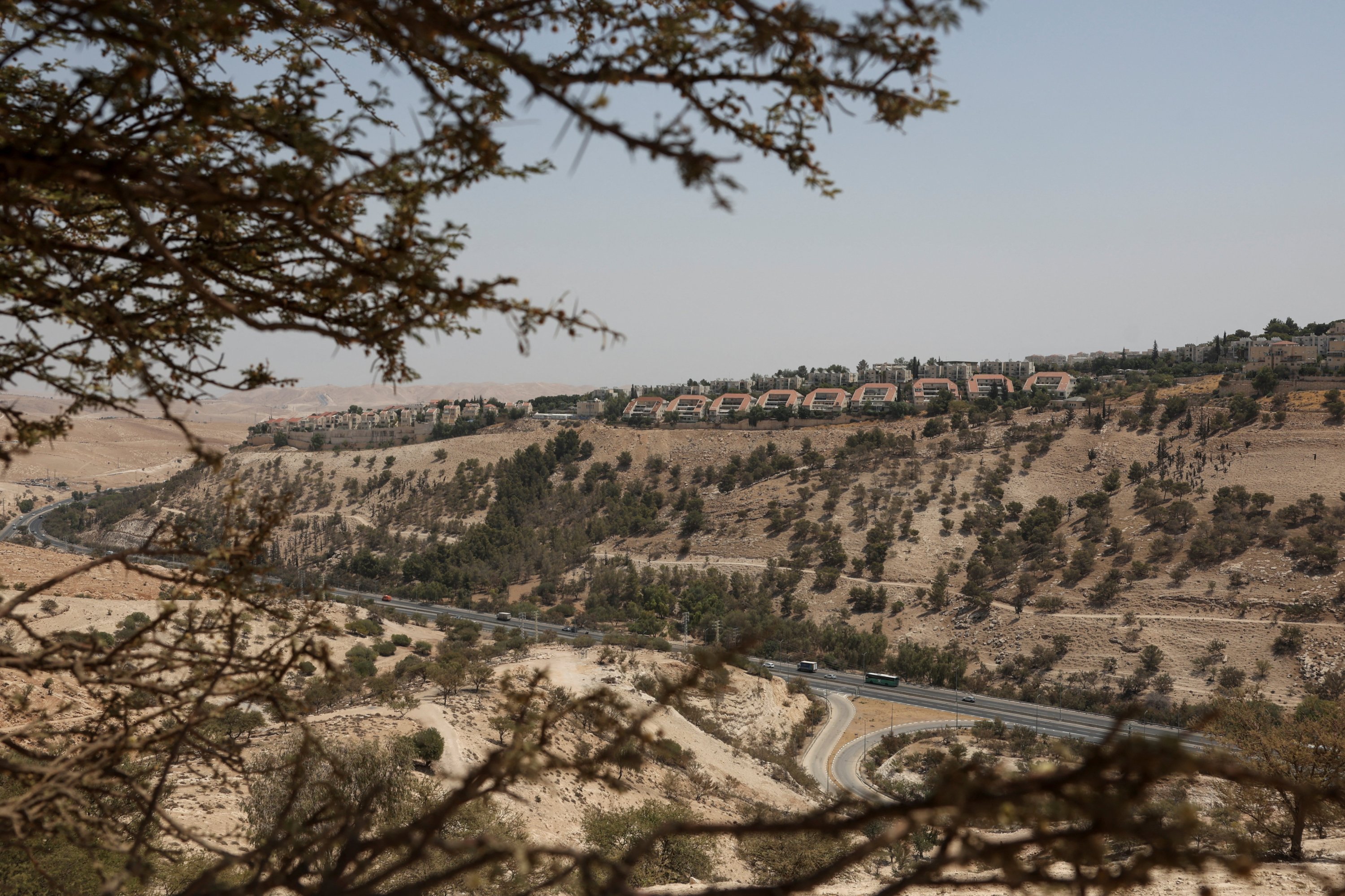
Türkiye on Thursday condemned Israel’s approval of a settlement construction plan in the E1 area of the occupied West Bank, warning that the move would sever East Jerusalem from the rest of the territory and deal a serious blow to the two-state solution and hopes for lasting peace.
In a strongly worded statement, the Foreign Ministry said the project — which will physically separate the West Bank from East Jerusalem — flagrantly violates international law and United Nations resolutions, while targeting the territorial integrity of the State of Palestine.
“Approval of this plan disregards the two-state solution and undermines prospects for a just and lasting peace in the region,” the ministry said, adding that establishing an independent and sovereign State of Palestine within the 1967 borders, with East Jerusalem as its capital and full territorial continuity, remains the only way to achieve peace.
The ministry stressed that Türkiye will continue to support “the just cause and steadfast struggle of the Palestinian people” in the face of Israel’s illegal settlement expansion and ongoing occupation.
The E1 area, a stretch of land east of Jerusalem, has long been viewed by Palestinian officials and rights groups as a critical link between the northern and southern parts of the West Bank. Settlement construction there is widely seen as a “red line” that would make a viable, contiguous Palestinian state impossible.
International observers have repeatedly warned that such expansion plans not only breach Israel’s obligations under international law but also inflame tensions and further entrench its occupation of Palestinian lands.
Spokesperson of the ruling Justice and Development Party (AK Party) Ömer Çelik, similarly condemned Israel’s move saying that the settlement plan is “an extension of their damned genocide acts.”
“At a time when the humanitarian front is making successive decisions to recognize the state of Palestine, Israel is once again attacking the humanitarian front and targeting the territorial integrity of the state of Palestine,” he wrote on social media on Friday.
Çelik underlined that Türkiye would continue its struggle for the foundation of a Palestinian state according to the 1967 borders.
Parliament Speaker Numan Kurtulmuş on Friday also reacted to Israel and said Türkiye rejects this “illegal” decision.
“The treacherous plan by occupying Israel to divide the West Bank from East Jerusalem is a blatant attack that ignores international law and United Nations resolutions, undermines the territorial integrity of Palestine, and is part of a genocidal scheme,” he said, according to a statement by Parliament.
Israel’s settlement expansion and land seizure in the West Bank have intensified significantly. According to Peace Now, an Israeli NGO, land appropriations in the first quarter of 2025 have already exceeded the total for all of 2024.
Currently, over 451,000 Israeli settlers reside in the West Bank and another 230,000 in East Jerusalem, settlements considered illegal under international law. These settlers live under Israeli civil law, while approximately 4 million Palestinians in the West Bank remain under Israeli military rule.
Palestinians face harsh daily conditions, including road closures, frequent military raids and violent attacks from settlers. Human rights groups have repeatedly warned that these conditions amount to systematic discrimination and collective punishment.
Israel is already facing a genocide case at the International Court of Justice (ICJ) over its military actions in Gaza since Oct. 7, 2023.
Türkiye has been vocal in calling out what it describes as Israel’s genocidal policies and the failure of the international community to enforce legal standards.
With the annexation vote, critics warn that Israel is moving toward de jure annexation of Palestinian land, solidifying control in ways that would further derail prospects for a two-state solution.
Türkiye’s statement concluded with a call for immediate international accountability, warning that inaction could lead to deeper instability and irreparable damage to the peace process in the region.