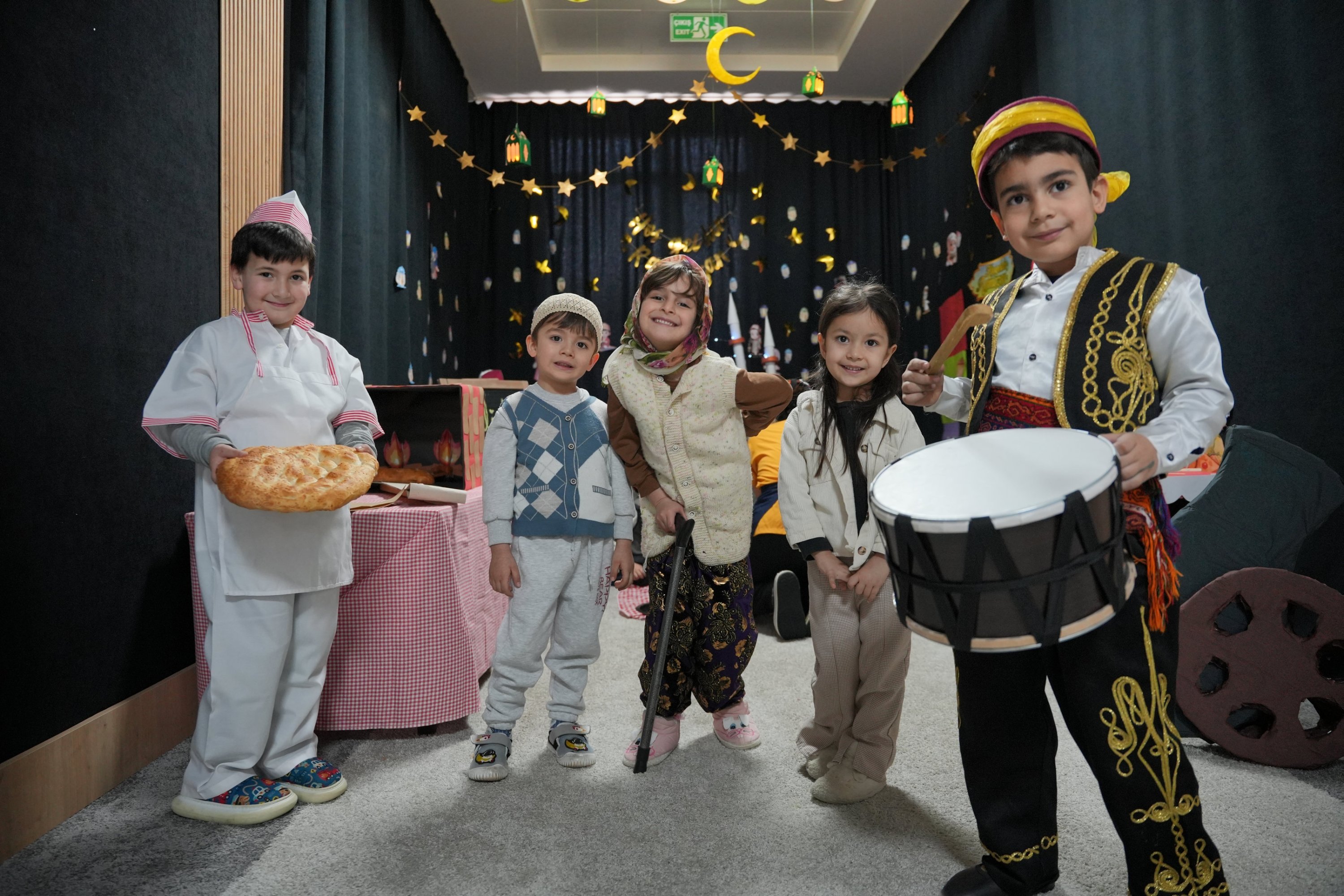
Education Minister Yusuf Tekin on Monday defended the organization of Ramadan-themed activities in schools across Türkiye, as criticism from opposition-aligned figures continued to draw backlash from various segments of society.
The discussion began in mid-February after the Education Ministry instructed provincial authorities in all 81 provinces to organize events under the theme “Ramadan at the Heart of Education” during the Islamic holy month. The ministry said the initiative aims to promote values such as justice, compassion, solidarity and patriotism through classroom activities, charity efforts and social responsibility projects, with participation based on volunteerism.
Shortly after the directive was issued, a group of 168 academics, writers, journalists and public figures released a controversial declaration titled “We Defend Secularism Together,” arguing that Ramadan-themed activities in public schools contradict the constitutional principle of secularism. Many of the signatories are known for their proximity to leftist circles and the main opposition Republican People’s Party (CHP).
The statement quickly prompted criticism from the government and several public voices, who said the declaration mischaracterized secularism and unfairly targeted religious expressions in public life. Some critics also said the language of the text resembled rhetoric associated with the Feb. 28, 1997 process, which is known as the “postmodern coup,” when the military intervened politically citing concerns over secularism.
President Recep Tayyip Erdoğan condemned the opposition’s stance, accusing critics of attempting to hide behind secularism to challenge the country’s national and religious values.
As reactions continued in recent days, Tekin became the latest senior official to address the issue. In a video message posted Monday on his social media account, he rejected claims that the school initiative violates secular principles.
“Why would it be contrary to secularism?” Tekin said. “Isn’t secularism the guarantee of freedom of religion and belief, which is one of the fundamental rights and freedoms? Isn’t it about ensuring that our children embrace the values of the society they live in?”
Tekin said the ministry’s objective is to help students connect with their cultural and historical heritage.
“We want our children to celebrate the values that belong to us – the Republic, Ramadan, Eid al-Adha and all our national and religious holidays – in a strong and enthusiastic manner,” he said. “So that they grow up loyal to this country and this nation.”
He added that education systems worldwide transmit national and cultural traditions to younger generations and cited examples from Germany, France, Italy and the U.K., where religious and national holidays are marked in schools.
The Education Ministry has emphasized that participation in Ramadan-related activities is voluntary and that the program centers on moral development and social responsibility rather than compulsory religious observance.