Hostilities in the Middle East have intensified following joint U.S.-Israeli attacks on Iran, which have killed thousands since Feb. 28. As Tehran retaliates with drone and missile strikes targeting Israel, along with Jordan, Iraq and the Gulf countries, states in the region reconsider their security strategies with Türkiye emerging as a potential key partner in defense and military cooperation.
While noting that the Middle East, which has become the scene of comprehensive attacks jointly waged by the United States and Israel against Iran, is experiencing one of the most critical periods in its history, “The conflict presents opportunities to redefine relations between Türkiye and the Gulf countries, Saudi Arabia, the United Arab Emirates (UAE), Qatar and Kuwait, particularly along the axis of defense and security architecture,” Hüseyin Fazla, a retired air force brigadier general and founder and director of STRASAM told to Daily Sabah.
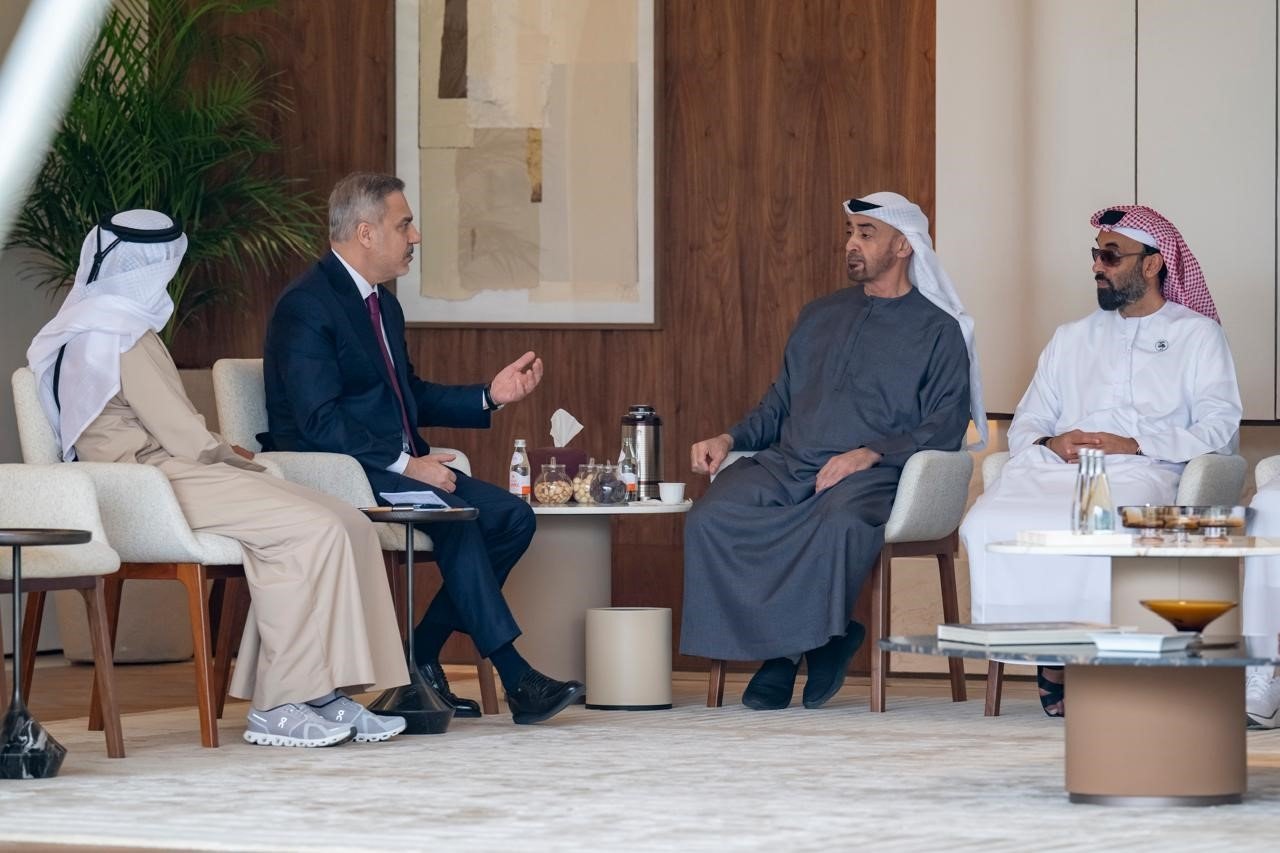
Foreign Minister Hakan Fidan visited Riyadh, Doha and Abu Dhabi from March 18-20 as part of a three-day Gulf tour following the outbreak of war, in what marked his first high-level diplomatic outreach after the conflict.
Beginning in Riyadh, Fidan attended a Saudi-led meeting bringing together foreign ministers from Türkiye, Qatar, Azerbaijan, Bahrain, Egypt, Jordan, Kuwait, Lebanon, Pakistan, Syria and the UAE.
During the tour, he underscored Türkiye’s support for Gulf countries in the face of Iran’s attacks, warning that continued escalation could prompt countermeasures from the region and urging Tehran to abandon its retaliation policy to prevent a wider war.
According to Fazla, the ongoing conflict between the U.S.-Israel and Iran is reshaping the Middle East’s strategic landscape, creating an opportunity for Türkiye to help fill emerging security gaps in the Gulf with domestically produced, high-tech defense systems that are not tied to political conditions. Turkish defense products, proven in combat, could appeal to Gulf states seeking greater strategic autonomy and reduced reliance on external powers.
“Gulf capitals are likely to seek a balancing role for Türkiye as a regional power and a strategic partner that provides depth in safeguarding their interests,” he stated, warning that although drone and ballistic missile threats may diminish after the clash, new geopolitical dynamics will emerge.
“In this context, future relations between Türkiye and these countries could be assessed under a new framework that goes beyond a commercial partnership to include active defense cooperation.”
Fazla also underlined that Türkiye’s “Steel Dome” architecture, developed in line with its layered and integrated air defense vision, could offer Gulf countries, particularly the United Arab Emirates and Saudi Arabia, a more comprehensive and cost-effective alternative to Western systems such as Patriot and THAAD against ballistic missiles, aircraft and kamikaze drones.
He described the Steel Dome as a turnkey national air defense model with strong appeal for Gulf states seeking integrated and sovereign defense solutions, as the system brings together capabilities including the HISAR and SIPER air defense systems, KORKUT and other point-defense platforms, as well as laser-based weapons such as ALKA and short-range systems like SUNGUR, under a network-centric command and control structure.
Minister Fidan previously signaled that rising tensions are likely to fundamentally shape the future policies and strategies of Gulf countries, suggesting they may explore new options, particularly in security and defense industries.
On the other hand, Ayhan Sarı, an associate professor at the Turkish-German University and security and foreign policy expert at the Turkish Research Foundation, said the U.S., despite drawing trillions of dollars in Gulf capital and selling hundreds of billions of dollars in arms to the region, has failed to provide adequate security for its partners.
Sarı noted that reports of damage to U.S. bases, downed aircraft and American casualties highlight Washington’s own vulnerabilities.
“What is striking is that the United States has not been able to fully protect even itself in this environment,” he said, arguing that this has exposed limits to U.S. security guarantees for Gulf states.
The expert also added that, despite vast financial resources, advanced weaponry and technology, the U.S. has struggled to ensure uninterrupted maritime traffic through the Strait of Hormuz, calling it a clear indication of military shortcomings in the region.
Türkiye, which has gained prominence in recent years for advances in its defense sector, is already engaged in substantial cooperation with Gulf states. Following Iran’s recent attacks, multiple countries have reportedly offered partnerships to Gulf nations in areas such as air defense and counter-drone technologies.
Sarı added that Washington’s stance during the Russia-Ukraine war, which many in Europe viewed as leaving the continent to shoulder the burden alone, has further deepened these concerns.
“In this context, relying on the West to build a national security architecture would be a serious miscalculation,” the expert said.
“What was once seen as a strong warning has now, with the latest war, become a tangible reality.”
Türkiye, which maintains high-level military cooperation with Qatar, has also indicated the possibility of a partnership with Saudi Arabia in the development of its domestically produced Kaan fighter jet.
Kaan is a fifth-generation stealth jet that Türkiye has worked on for almost a decade. The jet was first publicly unveiled in 2023 before it performed its maiden test flight in early 2024. Its serial production is expected to begin in 2028.
The aircraft is designed to perform air-to-air combat with next-generation weapons and conduct precision strikes from internal weapon bays at supersonic speeds, supported by artificial intelligence and neural-network systems.
Moreover, Fazla also offered that Türkiye’s 2026 vision in the defense industry, particularly its “local production” model that enables technology transfer to partner countries, could offer Gulf states an opportunity to reduce external dependency.
Within this framework, he pointed to armed unmanned surface vessel platforms such as ULAQ and MARLIN, which could contribute to maritime security in the Persian Gulf and the Strait of Hormuz.
“In addition, the uninterrupted munitions supply chain provided by Türkiye through MKE and ROKETSAN, including systems such as SOM, TAYFUN and ATMACA will ensure logistical continuity for Gulf militaries.”
Last month, Türkiye and Saudi Arabia signed a memorandum of understanding covering a joint production of the Turkish indigenous Gökbey multirole helicopter, marking the platform's first overseas manufacturing agreement.
This agreement on Gökbey comes just days after President Recep Tayyip Erdoğan said Ankara and Riyadh could opt for joint investment in Türkiye's homegrown fifth-generation stealth fighter jet program at "any time."
Minister Fidan’s meeting in Riyadh with his counterparts from Saudi Arabia, Pakistan and Egypt also added momentum to ongoing discussions in recent months about a possible “alliance” among these countries.
The instability triggered by the war with Iran and the growing demand for security could push Gulf countries to seek a regional security pact with a strong partner beyond the United States.
According to Hüseyin Fazla, the Saudi Arabia-Pakistan Strategic Mutual Defense Agreement signed on Sept. 17, 2025, could be expanded into a broader regional defense framework including powers such as Türkiye and Egypt, and potentially even Iran in the future, depending on postwar developments.
“Such a structure, combining Pakistan’s nuclear deterrence with Türkiye’s defense industry capabilities, could reduce Gulf dependence on the United States while forming a regional bloc capable of countering emerging threats and strengthening collective deterrence.”
Additionally, reiterating that historical precedents such as the Sadabad Pact and the Balkan Pacts exist, Ayhan Sarı offered that updated versions adapted to current conditions, with real operational relevance on the ground and the capacity to effectively deter Israeli aggression, are possible.
“The core of such an alliance could perhaps be formed by Türkiye, Pakistan and Saudi Arabia,” he emphasized.