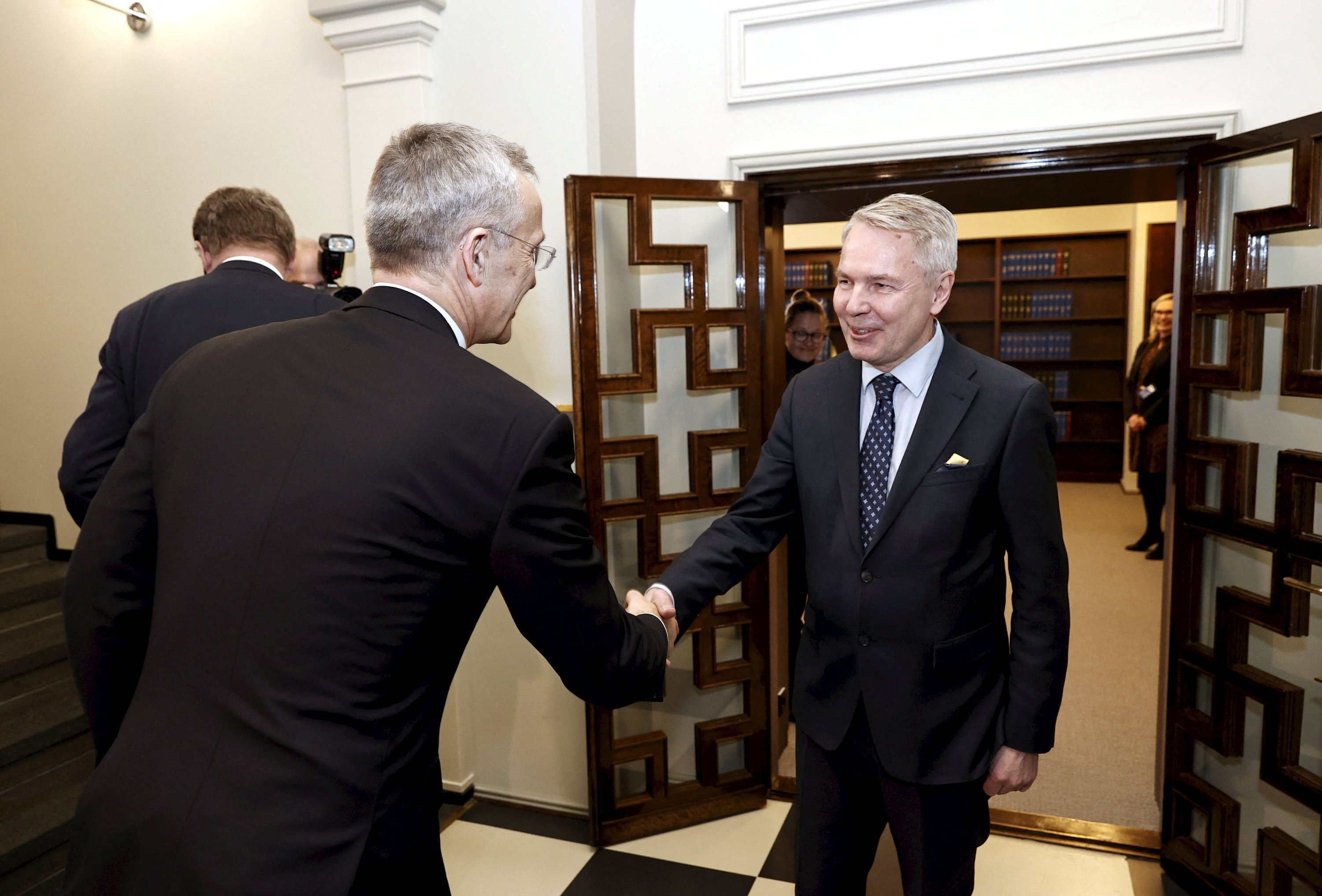
Finland is closer to achieving its ambition to join NATO as of Wednesday. First, the Nordic country’s Parliament passed legislation allowing it to join the military alliance. Eventually, an official tally showed that approvals from Türkiye and Hungary for the membership were still pending.
In response to the Russia-Ukraine conflict, Finland opted for deep military alignment last May by applying to join NATO instead of solely relying on its armed forces to defend the 1,300-kilometer (800-mile) border it shares with Russia. By adopting NATO’s founding documents, Finland may get a head start on neighboring Sweden, which has also applied to join the alliance but has had its application held back by existing member Türkiye.
President Recep Tayyip Erdoğan has said his country is ready to take Finland in but still thinks Sweden harbors terrorists. Finland and Sweden still await approval for their bids from Hungary, the parliament of which began debating the ratifications on Wednesday and could hold a vote later this month.
Ankara is concerned by Stockholm harboring members of terrorist groups like the PKK, its Syrian offshoot, the YPG, and the Gülenist Terror Group (FETÖ). It has demanded their extradition as a step toward giving Sweden’s NATO membership its green light.
A trilateral pact inked on the margins of a NATO summit in Madrid in June 2022 bound the Nordic countries to a series of commitments to assuage Ankara’s security concerns. However, accession talks between the sides have stalled since January after a copy of the Quran was burned outside the Turkish Embassy in Stockholm by Rasmus Paludan, leader of the Danish far-right political party Hard Line, under government authorization and police protection. Paludan’s actions only piled on protests by PKK sympathizers targeting Erdoğan and Türkiye in prior weeks.
NATO Chief Jens Stoltenberg himself urged Ankara for ratification during a visit of solidarity last month over the twin earthquakes on Feb. 6. Citing the lifting of the arms embargo and steps the Swedish government took on fighting terrorism, namely the anti-terror law that went into effect on Jan. 1, Stoltenberg argued the countries had “demonstrated their commitment” and that it was “high time Türkiye approves Sweden and Finland’s accession.” “What matters is not whether their applications are approved separately but that both become members,” he said at a joint presser with Turkish Foreign Minister Mevlüt Çavuşoğlu. The top Turkish diplomat countered, saying, “It isn’t realistic to say Stockholm has wholly fulfilled its commitments under the tripartite deal. They took steps ... but the PKK continues to operate there.”
Finland and Sweden are proceeding “hand-in-hand” toward NATO membership, Finnish President Sauli Niinisto also said last month but added that Türkiye controlled the decision to ratify the applications. “We proceed hand in hand in terms of the things that are in our own hands,” Niinisto told a joint news conference with the Swedish and Norwegian prime ministers. “But ratification is not in our hands.” While Türkiye maintains its stance over Sweden’s support of terrorists, Finland’s application has elicited a warmer response from Ankara. Erdoğan previously suggested Türkiye could welcome the country into NATO “alone.”