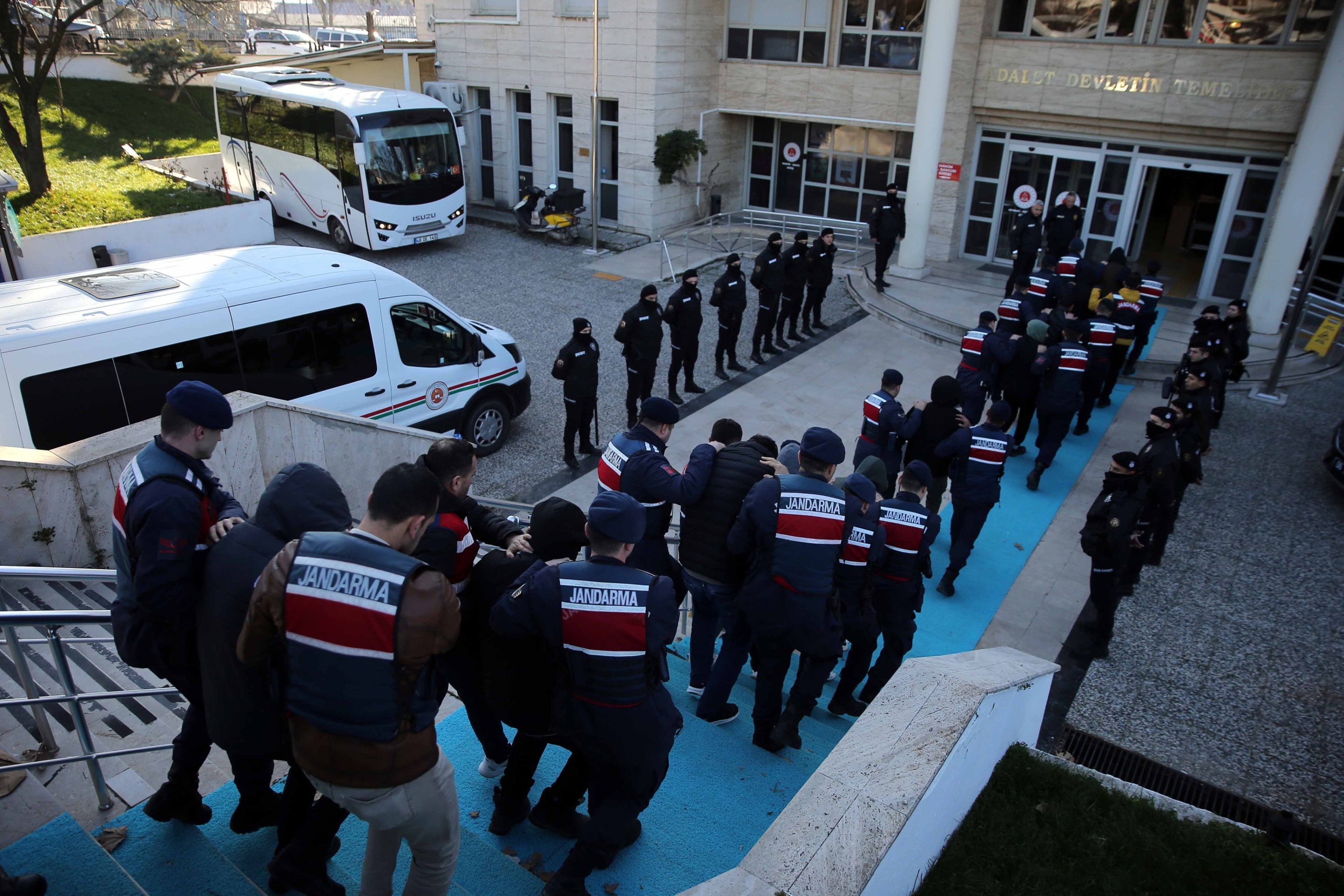
Türkiye’s ruling Justice and Development Party (AK Party) has begun preparations for a comprehensive overhaul of the penal execution system, aiming to impose longer prison terms for serious crimes such as murder, sexual abuse and rape.
Statements from the AK Party and its ally, the Nationalist Movement Party (MHP), have underscored the need for a full revision of the existing framework.
According to a report in the Turkish newspaper Sabah citing party officials, the reform effort is built around three main pillars: equalizing sentence lengths, strengthening prison monitoring boards and expanding supervision and support after release.
The initiative follows public debate triggered by amendments included in the 11th Judicial Package, which allowed the conditional release of thousands of inmates last month. The regulation renewed scrutiny of sentence execution practices and raised expectations for broader reform.
The Justice Ministry and the AK Party are now preparing a plan to comprehensively revise the Penal Execution Law, which is expected to be brought to the lawmakers in the coming months.
Under the current system, different execution procedures apply depending on the type of crime, such as terrorism or organized crime. In most criminal cases, convicts can serve half of their sentence in prison before becoming eligible for conditional release, while in terrorism-related crimes this ratio can rise to three-quarters, creating complexity within the system.
The planned regulation seeks to standardize sentence execution by setting the threshold at half of the sentence for all crimes. However, key exceptions will apply.
Those convicted of murdering women, children, parents or siblings, as well as perpetrators of sexual abuse and rape, will be excluded from the equalization. Crimes against children will also fall outside the new standard, requiring offenders to serve longer periods in prison.
AK Party officials said previous practices allowed conditional release after serving as little as 40% of a sentence, noting that later regulations increased these terms and that the system now needs simplification.
The reform also envisions restructuring the Prison Administration and Observation Boards. A crime-based monitoring mechanism will be introduced, and the boards will be reinforced with psychologists, pedagogues, psychiatrists and other specialists from relevant ministries, including the Family and Health Ministries.
With expanded authority, the boards will assess whether inmates show genuine remorse, pose a risk of reoffending and are capable of reintegrating into society. Only those deemed suitable will benefit from conditional release.
Under the new model, released convicts will be closely monitored while receiving psychological support, vocational training and assistance with employment, extending support to their families to facilitate social reintegration.