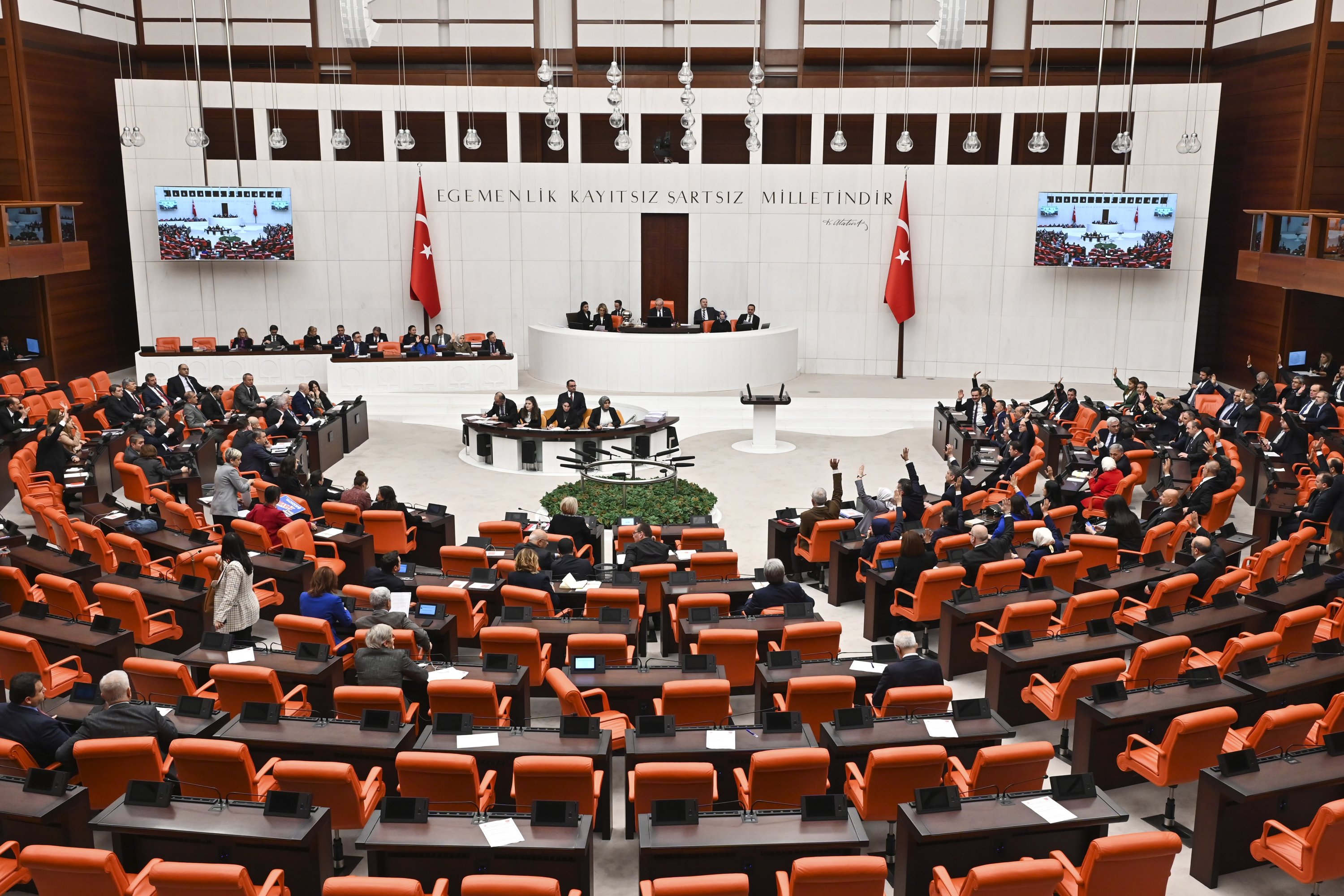
Parliament will return on Thursday from its summer recess. The 51-day break will end with a ceremony at the Turkish Grand National Assembly, where President Recep Tayyip Erdoğan is scheduled to speak. A busy agenda awaits lawmakers from across the political spectrum as bills postponed until the new legislative year will be up for discussion and approval.
Before the next summer recess, which will begin in July 2027, lawmakers will tackle new “judiciary packages,” omnibus bills that serve as additions to the patchwork of the Constitution that the government seeks to replace with a new one. The new constitution will also likely be on the agenda, as the ruling Justice and Development Party (AK Party) aspires to replace the current one, which dates back to the era of the military junta that seized power in 1980.
The 13th Judiciary Package will be among the priorities of Parliament, and it involves several items, including regulations and laws concerning social media, divorce and alimony.
Under a proposed package being prepared by the Justice Ministry and the AK Party parliamentary group, a new regulation will be drafted in line with the Constitutional Court’s reasoning for annulling provisions on indefinite alimony. The proposal is expected to introduce a minimum threshold for alimony payments and establish different categories based on the length of marriages.
The package will also include several regulations concerning divorce proceedings. Lengthy divorce cases are believed to increase tensions between couples and trigger violence and femicides, according to findings in reports presented to Parliament in the past. To prevent this, a judge will be able to grant a divorce without waiting for other disputes to be resolved if they conclude that “the marital union has effectively and emotionally ended and it is not possible for the spouses to establish a shared life again.” Court proceedings concerning issues such as alimony, child custody and the division of property will continue separately.
Another key regulation in the package will concern social media accounts. Authorities are planning to introduce a verification system that would require social media platforms to be used under users’ real identities. The measure is also expected to help prevent crimes such as illegal betting, drug trafficking and prostitution. Technical work is continuing on an identity verification system that is being considered for implementation through the e-Government portal. Technical details on how the system will operate both domestically and abroad are expected to be clarified in the coming period.
Parliament will also debate the establishment of a committee to monitor the terror-free Türkiye initiative. Before the recess, lawmakers approved a law on the process, which aims for the full dissolution of the terrorist group PKK. The 12-article legislation received broad parliamentary backing, with 468 lawmakers voting in favor, 88 against and six abstaining. The legislation lays out legal procedures for members of the PKK who lay down their arms and surrender to Turkish authorities as the organization moves toward dissolution and disarmament. It includes provisions allowing the deferral of prosecution or prison sentences in certain circumstances, while establishing different legal procedures depending on an individual’s position within the organization and involvement in criminal activity.
The law does not constitute a general amnesty and does not eliminate existing convictions, change the legal classification of crimes or broadly remove criminal liability, according to the justification accompanying the legislation.
Also on the agenda is a draft bill concerning the Turkish Red Crescent (Kızılay). The nine-article bill will redefine the responsibilities of the Red Crescent. Another bill on the table concerns Booking.com, which has been subject to an access ban for the past nine years. The bill is expected to pave the way for the reopening of the accommodation website.
Suspended in 2017 following court rulings over tax evasion and unfair competition, Booking.com, one of the leading providers in the sector, had been restricted to handling foreign travel for Turkish users. The proposed law would clear the way for the travel giant to fully restart domestic and international booking services across Türkiye.
Accordingly, foreign digital accommodation platforms will be required to obtain a permit to operate in Türkiye, according to a report by Sabah newspaper.