Rising Israeli threats in the Eastern Mediterranean and Gaza are pushing Egypt and Türkiye toward closer strategic cooperation, creating the conditions for what some analysts now see as a potential new regional axis.
The two nations, long linked by historical ties and overlapping economic and strategic interests, are navigating a rapidly shifting regional landscape, where shared security concerns have accelerated engagement after years of relative diplomatic lull.
“Recent threats posed by Israel against Egypt and Türkiye in the Eastern Mediterranean, Gaza and other areas have made it imperative for Türkiye and Egypt to cooperate,” said Tunç Demirtaş, a researcher at Turkish think-tank Foundation for Political, Economic and Social Research (SETA) and Ph.D. holder in International Relations.
This growing urgency has sparked the possibility of a new strategic axis. Türkiye, Iran, Egypt, as well as Syria and Lebanon, have all felt the security risk that is Israel and its expansionist policies, notably in the past two years.
“If Türkiye and Egypt were to be considered separately, there could be a newly formed axis between the two,” Demirtaş told Daily Sabah. While still in its early stages, this axis reflects pragmatic collaboration: both countries are prioritizing partnerships that address shared threats.
Egypt and Türkiye have already been taking concrete steps since 2022 to normalize ties that broke down in 2013 during the military coup that overthrew the late Egyptian President Mohammed Morsi. Reciprocal visits and increased diplomatic engagement are followed by cooperation that now spans the Eastern Mediterranean, Libya, Sudan, and Syria, with both countries seeking mutual benefits in defense, security, and economic sectors.
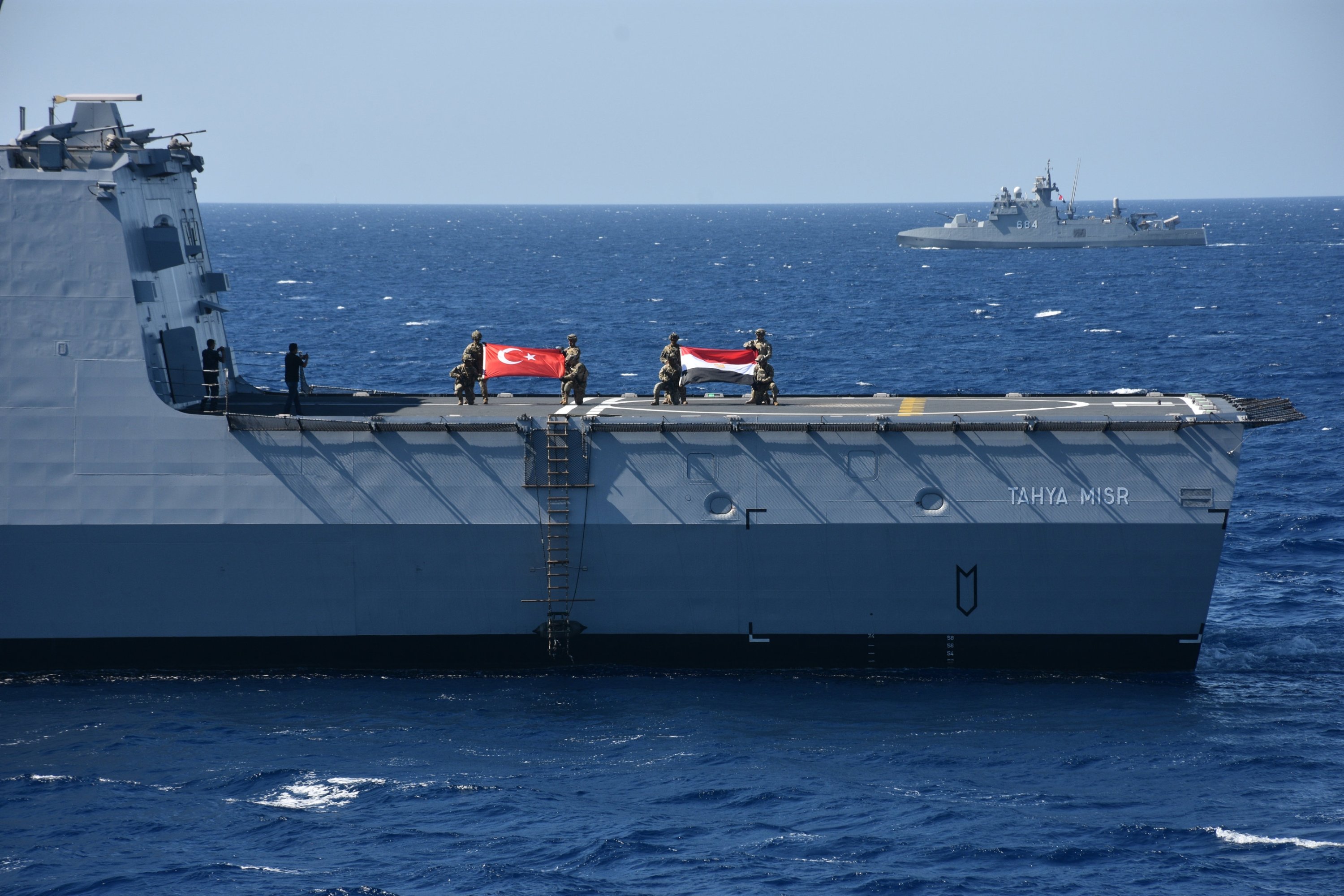
Just last week, the two countries held their first joint naval drill in over a decade, dubbed the “Friendship Sea” exercise, at a key naval base in southwestern Türkiye, which was “one of the most concrete indicators of potential regional cooperation,” according to Demirtaş.
The drill also took place amid ongoing tensions with Greece and the Greek Cypriots, who have long contested maritime boundaries and energy rights in the Eastern Mediterranean. While not explicitly directed at any third country, the drill signals Ankara and Cairo’s intent to maintain a coordinated presence in this strategically sensitive area.
A key driver of the renewed partnership is Israel’s genocidal war in Gaza and attacks spreading to Syria, Iran, Lebanon, and even, most recently, Qatar. Ankara and Cairo have adopted a coordinated stance calling for an immediate cease-fire in Gaza while also navigating pressures from domestic constituencies and traditional partners such as the United States.
Furthermore, increasing cooperation between the two countries, in terms of providing Egypt and Türkiye with the potential to maximize their use of the Eastern Mediterranean's energy reserves, is seen as a reasonable and rational basis for both countries to advance relations, Demirtaş said.
Historical ties, shared identity, and overlapping economic and strategic interests reinforce Egypt-Türkiye cooperation, extending from the Suez Canal to the Red Sea, maritime security, and energy projects.
Demirtaş pointed out the broader implications of this developing axis. “A new positioning of Egypt, Sudan, and even Somalia is actually emerging. This strategic cooperation between Türkiye and Egypt is shaped by this new axis and its key actors.”
While Türkiye remains Egypt’s primary partner in the emerging framework, Cairo’s pragmatic diplomacy leaves room for cooperation with Iran or other Gulf nations where mutual interests, such as regional security, energy or crisis management, align, Demirtaş said.
As Israel’s aggression continues to shape the security landscape, Egypt and Türkiye’s cooperation could evolve further, but the axis is still taking shape, and the two countries are exploring ways to safeguard shared interests, manage regional threats and strengthen influence across the Eastern Mediterranean.