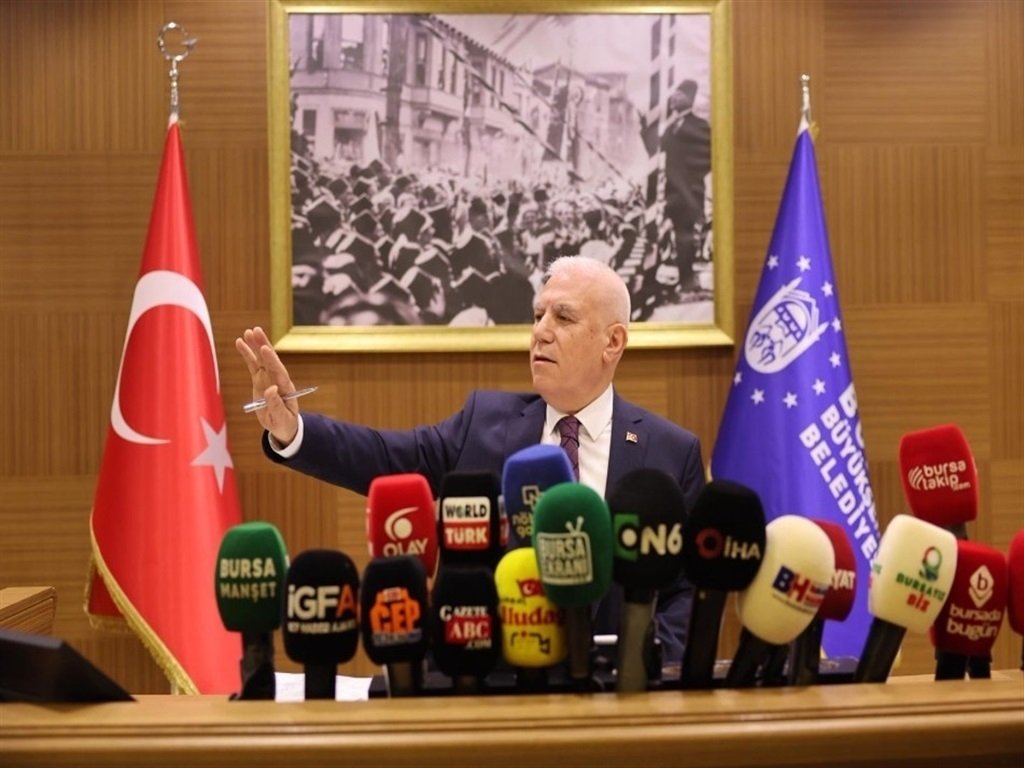
A corruption investigation into Bursa’s Nilüfer Municipality has been documented through financial crime reports and technical surveillance, alleging that its former mayor, Mustafa Bozbey, was the leader of a criminal network and detailing how public land was allegedly exploited for illicit gain, the report showed Wednesday.
Turkish authorities have recently detained dozens of suspects, including former Bursa Mayor Mustafa Bozbey and members of his family, as part of a sweeping bribery and corruption investigation targeting municipal structures in the northwestern province of Bursa, according to judicial sources and a financial crimes report.
A total of 59 suspects were taken into custody following coordinated police raids carried out in four provinces on March 31, under instructions from the Bursa Chief Public Prosecutor’s Office.
The operation was launched after complaints alleging bribery in the Nilüfer district prompted an investigation supported by technical surveillance and financial analysis.
According to Sabah newspaper, a report prepared by the Financial Crimes Investigation Board (MASAK) dated July 27, 2025, identified Bozbey as the alleged leader of a criminal network that prosecutors say systematically facilitated illicit gains through zoning changes and municipal approvals.
The report stated that several business figures allegedly transferred high-value real estate assets in exchange for favorable construction permits and increased building rights.
In one case, properties were initially registered under the name of a relative of a former district mayor before being reassigned to a younger family member in an apparent effort to conceal ownership, investigators said, citing land registry and banking records.
Authorities also examined the activities of a tourism company named Nil-As Turizm, the owner accused of expanding a residential project from 65 to 180 units through irregular approvals, generating an estimated TL 600 million (nearly $14 million) in illicit profit. Investigators allege that excess units were distributed through proxy individuals and some were used as bribes, while others were sold on the market to legitimize proceeds.
The report further alleges that public land designated for social facilities and green spaces was opened for development in exchange for bribes. In these cases, assets were reportedly transferred through intermediary real estate firms believed to be linked to the network.
Prosecutors say a number of companies functioned as “pool entities” to channel and launder illicit funds. Financial records pointed to unusually large and unexplained cash movements, which were included in the case file as evidence of money laundering.
Several individuals described as key intermediaries, including municipal aides and company representatives, were detained on suspicion of facilitating transactions, collecting payments and managing the distribution of assets within the alleged network.
The investigation remains ongoing, with authorities examining additional financial flows and corporate links tied to the suspects.