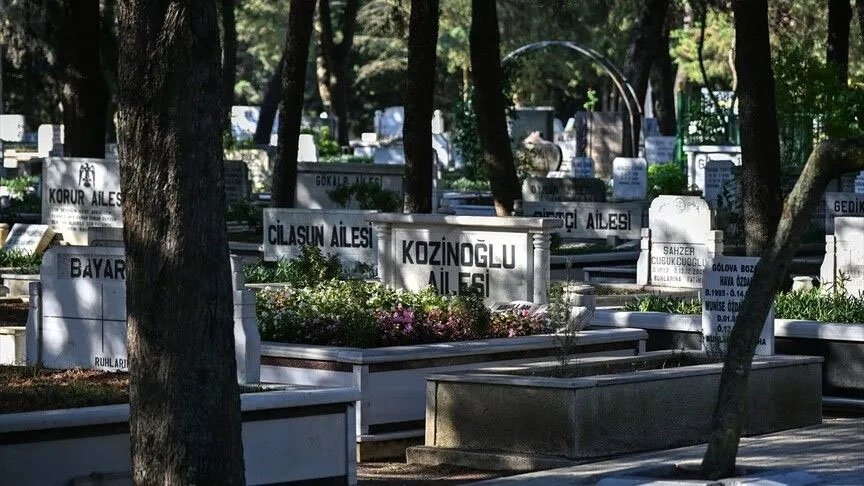
An examination of the body of Kaşif Kozinoğlu, a former intelligence officer who died in prison, reportedly of a heart attack, revealed toxic materials enough to kill a healthy person, according to a report published by the Sabah newspaper on Tuesday.
Kozinoğlu died on Nov. 12, 2011, after falling ill while being held at Silivri Prison in Istanbul. He was jailed as part of the Ergenekon investigations that Turkish authorities now describe as a plot orchestrated by the Gülenist Terror Group (FETÖ) and died shortly before he was due to present his defense in court.
A new probe was launched into his death, long described as suspicious by Kozinoğlu’s friends, after Justice Minister Akın Gürlek took office earlier this year and announced he would pursue new investigations into unsolved crimes and suspicious deaths of the yesteryear in high-profile cases.
The new autopsy report of Kozinoğlu, whose last tenure was as the chief adviser in charge of Asian affairs at the National Intelligence Organization (MIT), indicates findings of antimony in his hair and fingernails. High doses of antimony can cause cardiac arrest.
The report on the body, which was exhumed on Sept. 12, noted that it was in an advanced state of decomposition.
The most striking finding in the report was that although antimony was not detected in any of the seven different grave soil samples examined, it was found at various levels in the body. The presence of such high concentrations of antimony in biological tissues despite its complete absence from the soil strengthened the possibility that the substance had entered the body from an external source, heightening suspicions of foul play, according to the Sabah report.
Antimony causes cellular damage similar to that caused by arsenic and can have fatal consequences by triggering severe gastrointestinal disorders, liver and kidney failure, and cardiovascular shock.
Allegations that Kozinoğlu drank coffee in prison shortly before his death, along with suspicions raised in the investigation file, have been brought under renewed scrutiny in light of the antimony and arsenic findings in the report. In forensic toxicology literature, coffee is recognized as a highly effective vehicle for concealing differences in the taste and smell of chemical substances due to its bitter flavor, strong aroma and dense consistency, the Sabah report says.
A total of 30 people have faced legal proceedings so far in the broader investigation into Kozinoğlu's suspicious death. Nine suspects, including Ali Işgören, the Silivri chief public prosecutor at the time, former MIT operative Enver Altaylı, a prison guard and emergency medical technicians, have been arrested. An arrest warrant has also been issued for one prison official.
Sabah newspaper has also released images from the security camera footage of the prison ward at the time of Kozinoğlu’s death. The footage allegedly shows Kozinoğlu’s cellmate Hasan Atilla Uğur switched off the ambient lighting for about 14 minutes while Kozinoğlu was taking a walk in the prison.
The footage also showed Kozinoğlu's cellmates, Uğur and Hasan Ataman Yıldırım, washing the glass from which Kozinoğlu had drunk coffee on the kitchen counter shortly after he fell ill and was taken to hospital. Uğur and Yıldırım were released under house arrest in recent months following statements they gave to investigators.
Kozinoğlu has said in a statement shortly before his death that he feared he could be killed. Prosecutors had accused him of being a member of a terrorist group and leaking confidential documents, and he was questioned by Zekeriya Öz, a prosecutor who is now on the run after an arrest warrant was issued for him on charges of FETÖ membership.
The Ergenekon case began in 2007 after weapons were discovered in Istanbul's Ümraniye district and eventually led to the prosecution of hundreds of military officers, journalists, academics and other public figures accused of belonging to an alleged clandestine network plotting to overthrow the government.
Following the failed coup attempt in 2016, Turkish authorities reassessed many of the investigations and trials carried out by members of FETÖ's network within the judiciary. Officials have since argued that the Ergenekon proceedings were part of a broader effort by the terrorist group to remove senior military personnel and expand its influence within state institutions.