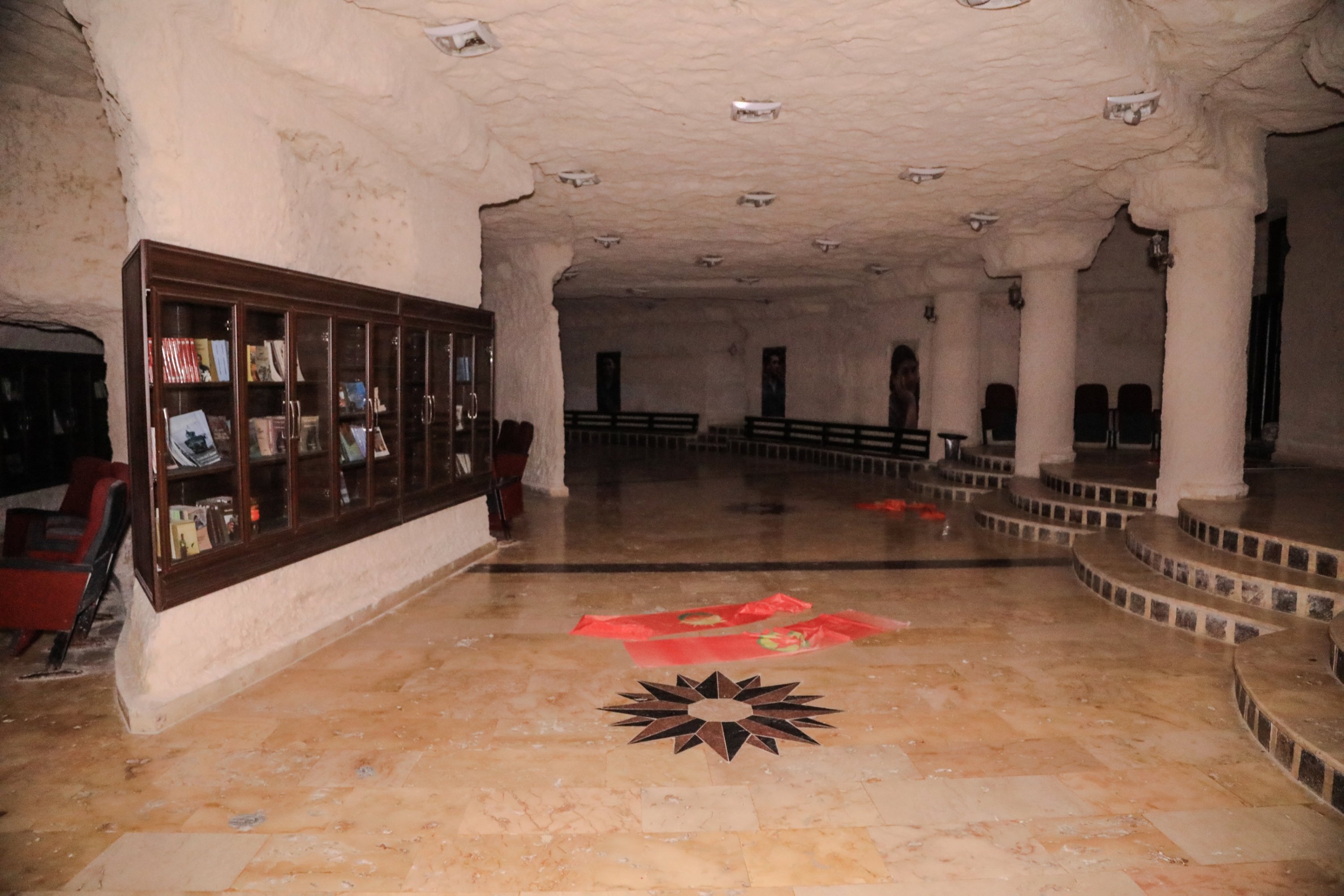
Syrian army forces have uncovered a large, multi-level underground tunnel network built by the YPG terrorist group beneath a mountain in the town of Sirrin, located in the Ain al-Arab region of northern Syria.
According to footage and reporting by Anadolu Agency (AA), the tunnel complex, described by military officials as resembling an “underground city,” was revealed after Syrian government forces retook control of Sirrin following a military operation against the U.S-backed YPG, a wing of the PKK terrorist group.
The structure consists of three interconnected levels linked by a network of tunnels stretching beneath the mountainous terrain.
Inside the tunnels, Syrian forces discovered large quantities of ammunition, documents and equipment belonging to the group. Some sections were constructed wide enough to allow cars or pickup trucks to pass through, highlighting the scale and sophistication of the underground facility.
Moreover, electricity and water lines had been installed throughout the tunnel system, which features multiple armored doors and maze-like corridors. The underground complex also includes living quarters designed to house militants, with kitchens, bedrooms and storage areas found during inspections.
Additional facilities inside the structure include a cinema hall, an amphitheater and a bakery, as well as areas displaying YPG symbols, banners and propaganda materials.
Tools and machinery believed to have been used to excavate the tunnels were also found on site.
Syrian military officials said the Sirrin tunnel network is one of the largest discovered so far in areas reclaimed from the group.
Brig. Gen. Seyf Polat, commander of the Syrian army’s 76th Division, said the underground complex served as one of the YPG’s command centers.
Speaking to AA, during an inspection, Polat noted government forces had secured the tunnels and were in the process of clearing land mines and explosive devices left behind by the group.
Polat also said publications found inside the tunnels were used to indoctrinate children and youths, accusing the group of attempting to manipulate Kurdish youth and sow division among Syria’s ethnic and religious communities, including Arabs, Kurds, Assyrians and Turkmens.
He added that the Syrian army had thwarted what he described as the group’s plans to establish control in northeastern Syria and said authorities were considering turning the site into a museum to document the group’s activities for future generations.
The Syrian army has continued operations in northern Syria aimed at dismantling militant infrastructure and reasserting state control over previously contested areas.
On the other hand, the Syrian government has begun repair work on bridges in the city of Raqqa that were damaged as the YPG withdrew from the area, officials and residents said.
Raqqa, which lies along the Euphrates River and serves as a key link between eastern and western Syria, had been under the control of the YPG since 2017. Syrian army forces regained control of the city on Jan. 18 following a military operation, reestablishing government authority.
Before withdrawing, the group detonated explosives on two major bridges connecting the eastern and western banks of the Euphrates in Raqqa, causing severe structural damage. Despite years of conflict and displacement, the city is believed to be home to more than 100,000 people, many of whom rely on the bridges for daily transportation and trade.
One of the crossings, officially known as the Rashid Bridge and commonly referred to by residents as the “New Bridge,” is currently accessible only through a temporary road made of earth fill. Vehicles were seen lining up for extended periods, causing long traffic delays.
A second crossing, known locally as the Old Bridge and located several hundred meters downstream, remains unusable after one of its supporting pillars was destroyed in the blast. Syrian authorities have launched rehabilitation work at the site, with heavy machinery clearing debris and laying groundwork to stabilize the structure.
Until repairs are completed, residents of Raqqa are forced to cross the Euphrates using motorized boats or small rowboats, underscoring the continued disruption to daily life as the city begins post-conflict recovery efforts.
Most recently, the Syrian Defense Ministry announced that the cease-fire with the group was extended for 15 days, starting Jan. 25. The announcement came hours after the expiry of an initial cease-fire, which the YPG was given four days to conduct consultations and prepare a detailed plan for the practical integration of the areas.
Though no all-out clashes have been reported since the cease-fire began, the Syrian army remains on alert.