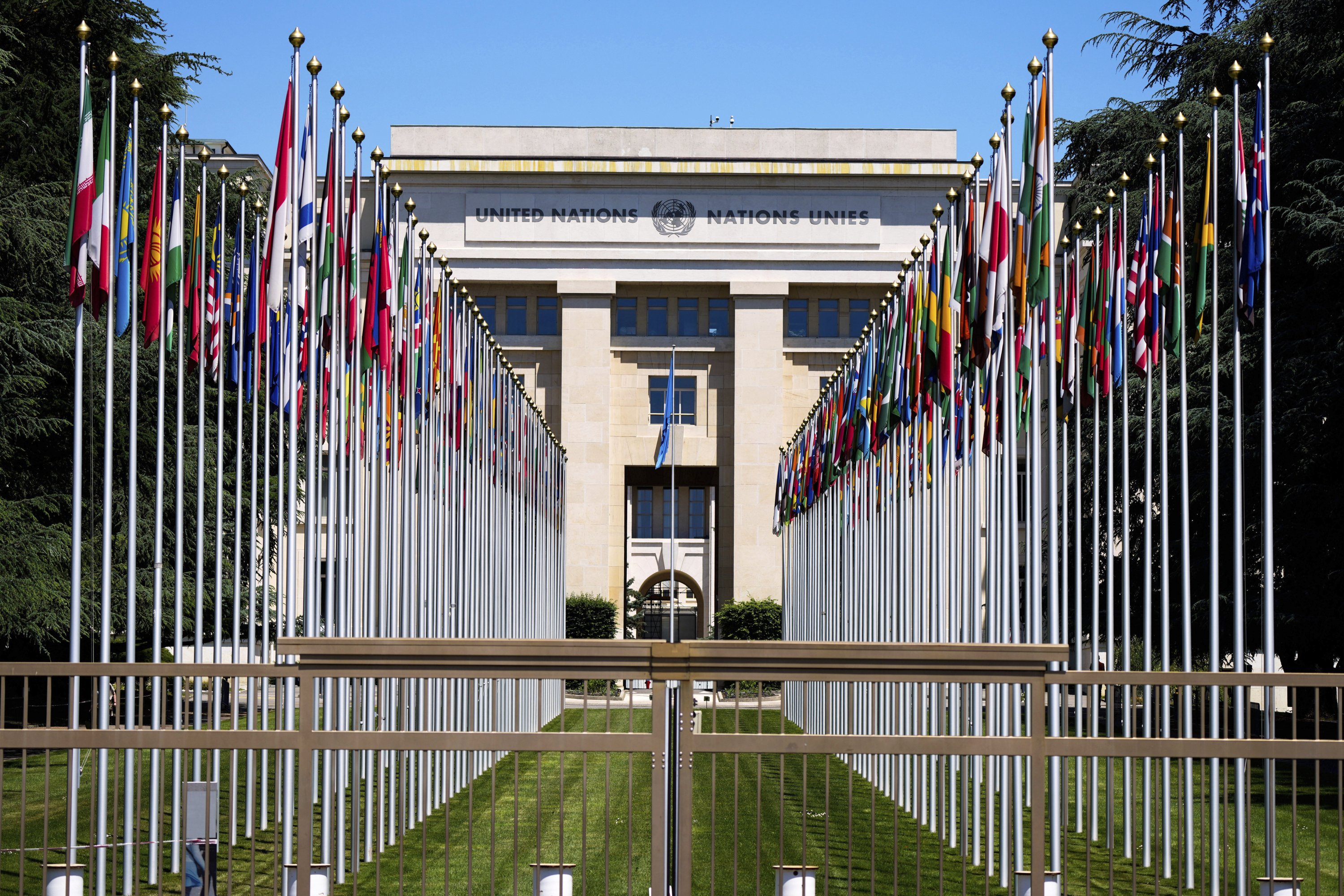
On Friday, Feridun Sinirlioğlu was scheduled to be interviewed by the United Nations in a broadcast session called “interactive dialogue,” as the international body seeks its next secretary-general, a prestigious job a Turkish national has never been nominated for before. His vision statement, presented to the U.N. as part of his application to the post, lays out his aspiration to uphold the body’s mission for global peace. Experts say this aligns well with Türkiye’s advocacy for a fairer world where the U.N. represents more than a bunch of major powers.
The 70-year-old diplomat is no stranger to the atmosphere, with a career that began at the Turkish Foreign Ministry in the 1980s and took him from Kenya to New York over decades. The former foreign minister worked as Türkiye’s representative at the United Nations between 2016 and 2023 and as a U.N. Special Coordinator on Afghanistan. He currently serves as secretary-general of the Organization for Security and Co-operation in Europe (OSCE).
He seems like the perfect candidate for Türkiye, which has raised its diplomatic profile in the past two decades as an influential actor in global affairs.
Professor Nurşin Ateşoğlu Güney of the National Intelligence Academy (MIA), a member of the Presidential Security and Foreign Policy Council, says Sinirlioğlu is “a highly experienced and respected diplomat with an extensive network in international relations.”
Merve Suna Özel Özcan, associate professor and the vice chair of the International Relations Department at Kırıkkale University, says Sinirlioğlu’s nomination is “an institutional and diplomatic manifestation of President Recep Tayyip Erdoğan's longstanding principle that 'the world is bigger than five.’” Erdoğan invokes this motto in almost all U.N.-related speeches, referring to the five members of the U.N. Security Council and how they shape current events, leaving little room for other countries.
“This nomination carries significance far beyond the candidacy of a Turkish diplomat for one of the highest positions in the international system. It reflects an attempt to translate Türkiye's longstanding criticism of the existing international order into a willingness to assume greater institutional responsibility,” Özcan told Daily Sabah.
“For the past 15 years, Türkiye has been among the countries most openly calling for reform of the United Nations in terms of its structure, functions and scope, under the leadership of our president. Against this backdrop, I believe Türkiye’s candidate already stands apart from the other candidates. Indeed, when we look at the vision statement of Mr. Sinirlioğlu, we see important messages that distinguish him from the others, particularly his emphasis on the need for the United Nations to become much more effective, return to its founding principles and embrace reform,” Şuay Nilhan Açıkalın, associate professor at the International Relations Department of Ankara Hacı Bayram Veli University, said.
“International peace and security are under unprecedented strain. War is ravaging peoples and lands across the globe; widening economic inequalities undermine the legitimate aspiration of future generations to achieve greater prosperity than those who came before them; demographic shifts and global migration patterns raise new challenges that demand coordinated international responses; human rights are violated in plain sight and weakened by intolerable double standards; and transnational threats, including organized crime and terrorism, challenge states’ sovereignty and threaten the security of all. At the same time, a new technological revolution is unfolding, generating both extraordinary opportunities and profound uncertainty,” Sinirlioğlu said in his vision statement presented to the United Nations.
Özcan noted that Erdoğan’s “the world is bigger than five” principle “should not be understood merely as criticism directed at the five permanent members of the United Nations Security Council.”
“It represents a broader questioning of the international system's structural problems of representation, justice and legitimacy. The growing discrepancy between the institutional order established after World War II and today's increasingly complex distribution of global power has become more evident. In particular, the deadlocks experienced within the Security Council in responding to crises such as Gaza and the Russia-Ukraine war have exposed serious limitations in the United Nations' ability to maintain international peace and security,” she said.
Conflicts have escalated throughout the past decade and linger to this day, in one way or another, continuing to test the U.N.’s effectiveness in thwarting them as the world edges closer to World War III at times and mobilizes for peace during respites from raging tensions, as was seen during the Russia-Ukraine conflict and in response to Israel’s atrocities that have claimed the lives of tens of thousands of Palestinians since 2023.
Yeliz Albayrak, a lecturer at Istanbul Aydın University and a political science and international relations expert, said the changes Türkiye called for at the United Nations “essentially reflect the recognition that the system established after World War II, particularly the overarching institution designed to regulate the entire international system, has proved inadequate.”
“I believe Sinirlioğlu's nomination should be understood as Türkiye's diplomatic response to the United Nations' growing crisis of institutional effectiveness. Türkiye is not simply identifying the shortcomings of the existing international system. It is also expressing an aspiration to assume greater responsibility in efforts to make that system more inclusive, equitable and effective. In other words, we are witnessing an attempt to transform a longstanding critique of the international order into a concrete diplomatic initiative,” Özcan stated.
“The timing of the nomination should also be considered within this broader framework. Although its announcement at a relatively late stage is noteworthy, appointments to senior positions in international organizations are shaped not only by individual qualifications but also by multilateral negotiations and the dynamics of consensus among major powers. Sinirlioğlu's experience as Türkiye's foreign minister, permanent representative to the United Nations and secretary-general of the OSCE is particularly relevant in this context. Nevertheless, the position of United Nations secretary-general does not serve to represent the foreign policy priorities of any individual country. The broader international legitimacy of this candidacy will therefore depend on its ability to secure the confidence of different member states and demonstrate a genuinely independent commitment to multilateralism. I also associate this development with Türkiye's approach to stability diplomacy. What the international system requires today is not merely a United Nations capable of responding to crises after they emerge, but an institution capable of preventing escalation, maintaining dialogue between conflicting parties and contributing to sustainable international stability. Ultimately, Sinirlioğlu's nomination represents an attempt to translate the systemic criticism embodied in the principle that 'the world is bigger than five' into an aspiration for greater participation and responsibility in shaping the future of international institutions. What I find particularly significant is that Türkiye is not merely arguing that the international system must change; it is also seeking to take part, at the institutional level, in that process,” Özcan said.
“In this respect, the candidacy is quite critical. Of course, the candidacy processes at the United Nations are important for every country, both in terms of lobbying and diplomatic efforts. It is worth noting that securing this position is particularly significant for the candidate’s home country, regardless of which country they represent.
"In recent years, Türkiye has clearly emerged as one of the few countries making significant contributions to regional and global peace and stability through international diplomacy. Both its mediation efforts and its humanitarian aid policy, which places it among the world's leading countries in this field, have made Türkiye a country held up as an example. Considering almost all the conflicts currently taking place around the world, we can say that Türkiye has adopted a much more active approach to these conflict situations. Perhaps it is worth sincerely emphasizing once again just how significant a message Türkiye's decision to field a candidate for the United Nations sends. Türkiye attaches importance to the U.N. returning to its founding principles through a reform-oriented approach. As our president has put it, this is a particularly important candidacy and process in terms of ensuring that the United Nations, as an international organization, plays an effective role within the international system and contributes to building a fairer and more equitable world,” Açıkalın said.
“(Sinirlioğlu’s candidacy) is also directly linked to Ankara’s recognition as a respected and influential middle power in its region. Considering Ankara’s diplomatic engagement and influence both in its region and beyond, we can say that Sinirlioğlu is a highly suitable candidate, given his own expertise and experience,” Güney said.
“The issue of U.N. reform is an important matter that has been repeatedly raised by Türkiye’s president. At a time when serious conflicts are unfolding across the international arena, the U.N. Security Council frequently finds itself deadlocked. This is largely due to the failure to implement the reforms the council needs. Reform is essential to ensuring world peace and enabling the organization to play an effective role in this regard,” Güney said.
"Although some have described Türkiye's decision to nominate a candidate as late or a last-minute move, there were, of course, certain processes that had to be taken into consideration.
"We know that there was an expectation for a candidate from Latin America, as candidates are selected from different regions on a rotational basis. There may have been a waiting period out of respect for this arrangement. However, since no consensus had emerged around a candidate and the end of the five-year term (of Guterres) was approaching, Türkiye put forward a candidate who had previously received broad support and had been endorsed by a large number of countries, including many that are currently at war with one another, through OSCE,” Albayrak said.
“This candidate had already brought these countries together through their joint support for his candidacy. We know that the OSCE has also played a diplomatic role in resolving disputes. It is not a military organization or a defense pact, nor is it an economic bloc; it is an organization for cooperation. In fact, we could describe it as the largest umbrella organization bringing together these states, including countries currently experiencing serious disputes and conflicts. Sinirlioğlu was a candidate jointly selected by countries across this broad spectrum, including Russia, nuclear powers and states involved in crises and wars. Seeking to appoint someone with such an extensive level of international backing to a position at the United Nations is particularly significant. His candidacy carries a much higher degree of acceptance and offers greater potential for cooperation,” Albayrak added.
Sinirlioğlu was in Belarus earlier this week as OSCE secretary-general and met President Aleksandr Lukashenko, as well as visiting Russian Foreign Minister Sergey Lavrov, in the first such visit by an OSCE chief since 2019.
Türkiye is one of the founding members of the United Nations. It joined the body in 1945 shortly after signing the U.N. Charter. As its Foreign Ministry puts it, it is a “strong supporter” of the international organization “at the center of multilateralism.” It was a non-permanent member of the U.N. Security Council for four terms, and its representative Volkan Bozkır served as the president of the 75th session of the U.N. General Assembly between 2020 and 2021. The country also hosts a large number of regional offices of the United Nations.
“Türkiye is proposing a new approach and road map within the United Nations system, including new initiatives that could be pursued where existing mechanisms have failed to produce solutions. Türkiye knows that the system no longer delivers solutions to issues that have been debated for years. It is no longer an effective deterrent against war crimes and crimes against humanity, nor can it enforce sanctions effectively,” Albayrak said.
“Decisions are repeatedly rendered ineffective because they become trapped in the conflicting interests of the five permanent members. We know that the United States has vetoed resolutions that could have been adopted against Israel concerning Palestine and Gaza. In other words, the U.N. Security Council has become a wall standing in the way of virtually every decision that could otherwise be adopted, with a single veto enough to block it,” she stated.
“This is why the call for reform is now also an explicit appeal for transforming the entire international system, including international organizations and the mechanisms through which crises are addressed. All U.N. member states around the world need equal representation and equal opportunities for their problems to be resolved. We know that the system has become deadlocked because decisions cannot continue to be based solely on the conscience, judgments or interests of five members. Change is now necessary.”
“(The U.N.) has failed to find solutions to problems, has not been effective in terms of deterrence and has fallen short in addressing crises once they emerge. In many respects, this umbrella organization, which is supposed to regulate the entire system, has become dysfunctional. Its decision-making mechanisms have virtually lost their power to enforce decisions, leaving it with little more than the ability to produce independent reports. At this point, the proposed changes also concern the issue of permanent membership and represent a continuation of the long-standing message that 'the world is bigger than five.' The fact that an umbrella organization such as the United Nations is currently unable to intervene effectively in global crises, or to provide solutions or deterrence in the face of humanitarian crises, war crimes and major disputes, means that it has reached a point where reform is absolutely necessary,” Albayrak said.
“It is certainly not fair to leave the entire world at the mercy of the U.N. Security Council or the system regulated by its decisions. President Recep Tayyip Erdoğan has repeatedly raised this issue at meetings and on international platforms for years. However, the time has come to turn these calls into reality,” Albayrak added.
“What is needed is a systemic transformation and the introduction of a new approach. Even since its establishment, the United Nations has failed to provide genuine solutions to many problems. What is being proposed here is essentially a new mechanism and an incentive for finding solutions that would make the organization genuinely functional. These institutions must now become capable of taking concrete steps on the ground, genuinely changing circumstances, deterring potential wars before they break out and taking meaningful action to resolve crises. They must be able to offer genuine diplomatic platforms and solutions. Where necessary, they should also be capable of operating effective mechanisms in the field of defense,” she stressed.
For years, Türkiye has been on the margins of the international community in terms of its influence in global affairs. Although its bilateral relations with other countries have been steady, Türkiye had little clout to impose its influence to change the course of global affairs for the better. Albayrak says this changed considerably in recent years, “particularly in the face of the conflicts and humanitarian crises unfolding around us.”
“These shifting balances have also given Türkiye a significant advantage: the ability to prevent crises, manage them and offer solutions, while serving as a diplomatic guide. We have seen Türkiye consistently seek to develop solutions amid the failure to take initiatives, the inability to establish alliances and the absence of viable proposals. It has always sought common ground to bring crises to an end. The Russia-Ukraine conflict is perhaps one example. Had the talks not been derailed by the Ukrainian and British sides, represented by Volodymyr Zelenskyy and Boris Johnson, the conflict might have been resolved at the negotiating table much earlier. Yet even now, Türkiye remains capable of holding talks with both Russia and Ukraine and maintaining dialogue with Moscow while defending Ukraine's territorial integrity. Türkiye also brokered a major agreement, the grain corridor deal, which helped ease pressure on Europe on several fronts. We are talking about a country that can still consult with all parties to a conflict. Zelenskyy has indicated a willingness to return to Istanbul if negotiations are to resume, and Russia has also made statements along similar lines,” Albayrak said.
Indeed, Ankara is engaged in a new push in the Russia-Ukraine conflict, as indicated by the recent visit of Zelenskyy to Istanbul for talks with President Erdoğan. Erdoğan this week also revealed his intent to arrange a meeting with Russian President Vladimir Putin for the revival of comprehensive negotiations between the warring sides.
Being an influential diplomatic actor takes more than having superior military or economic power. Albayrak says Türkiye’s actions give its diplomatic position a stronger foundation, giving examples of Ankara’s support for the territorial integrity of states in the Gulf and the Middle East, its emphasis on the need for countries to remain united under a single central government and its fight against international terrorism.
“Across all the areas, Türkiye has been taking responsibility and working to produce solutions for years. The same applies to the attacks on Iran. Türkiye has done everything it can to help resolve the situation and has pursued shuttle diplomacy to reduce tensions and prevent the conflict from spreading to other countries. It has also consistently highlighted Israel's expansionist policies and the genocidal policies it has pursued over the years, taking the initiative and assuming responsibility on every platform. Türkiye has positioned itself on the right side of history and has repeatedly drawn attention to humanity's most pressing problems and the systemic crises facing the international order,” Albayrak said.
“We are now talking about a Türkiye that has become much stronger in terms of its international standing, diplomacy and foreign policy, as well as its hard power and its ability to combine hard and soft power,” she added.
“Türkiye is also demonstrating its soft power on the international stage and in diplomatic arenas, alongside its hard power. We can perhaps view this development as the cumulative result of the processes Türkiye has gone through, its changing geopolitical position, its growing importance, its increasing hard-power capabilities, its defense industry and indigenous development initiatives, as well as the determination and responsibility it has demonstrated over many years in fighting terrorism both within its region and beyond,” Albayrak said.
“We have gone through extremely difficult periods, and politically, we are on the brink of a major crisis in terms of finding solutions. We are even discussing whether World War III has already begun or whether it is about to break out. Yet even under these circumstances, Türkiye continues to establish new international and regional partnerships and cooperation mechanisms. The Mecca pact has been established, cooperation in the Gulf is expanding and the Organization of Turkic States is rapidly becoming more active and growing. Türkiye is also expanding its influence in Africa and even in the Balkans. It is a country that stands with those who are right and seeks to defend the rights of the oppressed.”