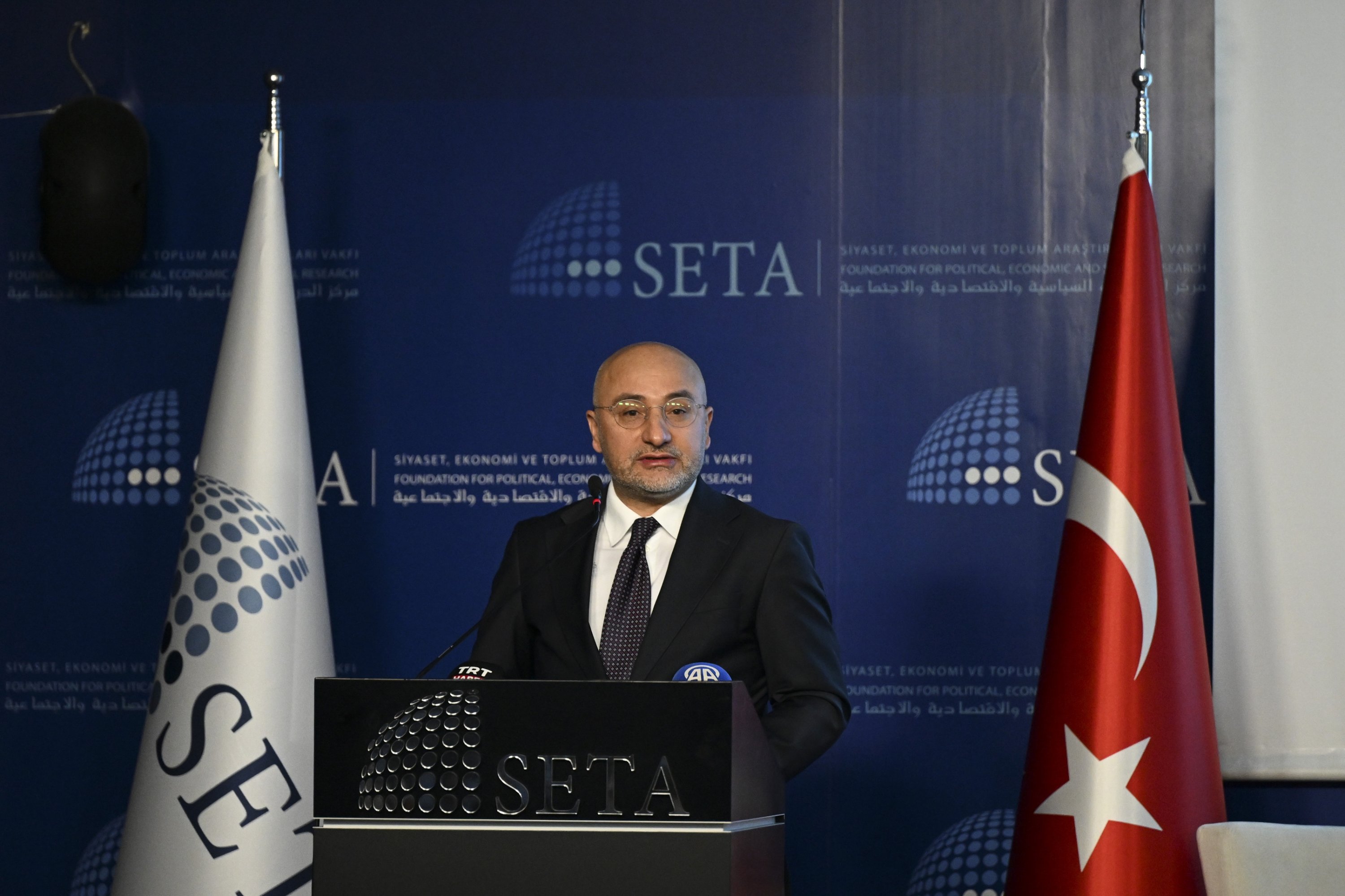
Turkish and Central Asian officials on Wednesday highlighted growing strategic cooperation in trade, energy, connectivity and technology as the Central Asia-Türkiye Forum opened in Ankara amid shifting geopolitical and economic dynamics.
The forum, organized by the Foundation for Political, Economic and Social Research (SETA), the International Institute for Central Asia and Hasan Kalyoncu University under the theme “A Shared Future in a Changing World,” brought together policymakers, diplomats and academics from Türkiye and Central Asia.
Speaking at the opening session, SETA Foreign Policy Research Director Murat Yeşiltaş said the international system is undergoing a period of profound transformation, making dialogue among reliable partners increasingly important.
“Relations between Türkiye and Central Asia are not merely the result of geopolitical calculations,” Yeşiltaş said, emphasizing the role of shared history, culture and heritage in shaping cooperation.
He noted that the region has become increasingly central to global connectivity, energy security, transportation corridors, supply chains and regional stability.
SETA Coordinator General Nebi Miş said strong political will and regular dialogue among leaders had helped transform a common identity into political cooperation. He argued that partnerships based on trust and shared values are becoming a strategic advantage as global supply chains, energy routes and transportation networks are reconfigured.
Miş stressed that infrastructure projects and trade alone are insufficient to sustain long-term cooperation, calling for shared analyses, coordinated regulatory frameworks and joint assessments of global risks.
Javlon Vakhabov, director of the International Institute for Central Asia and deputy foreign policy adviser to the Uzbek president, noted Türkiye has consistently supported the independence, sovereignty and territorial integrity of Central Asian states since they gained independence.
Describing Türkiye as a close friend and strategic partner, Vakhabov said Ankara plays an important role in promoting regional connectivity and dialogue across the Middle East, Central Asia and the broader Eurasian region.
He also highlighted the growing importance of the Middle Corridor, describing it as a backbone of cooperation between Türkiye and Central Asia.
Vakhabov said future collaboration should increasingly focus on technology and digital transformation, including artificial intelligence, cybersecurity, digital public services, agricultural technologies and water-saving solutions.
Uzbek Ambassador Ilham Haydarov pointed to significant progress in bilateral relations over the past 18 months, while Türkiye’s Ambassador to Tashkent Ufuk Ulutaş, speaking virtually, said political dialogue and cooperation between the two countries have expanded rapidly in recent years.
Participants said the forum offers an opportunity to deepen cooperation in trade, investment, energy, logistics and digital connectivity at a time of growing uncertainty in the international system.