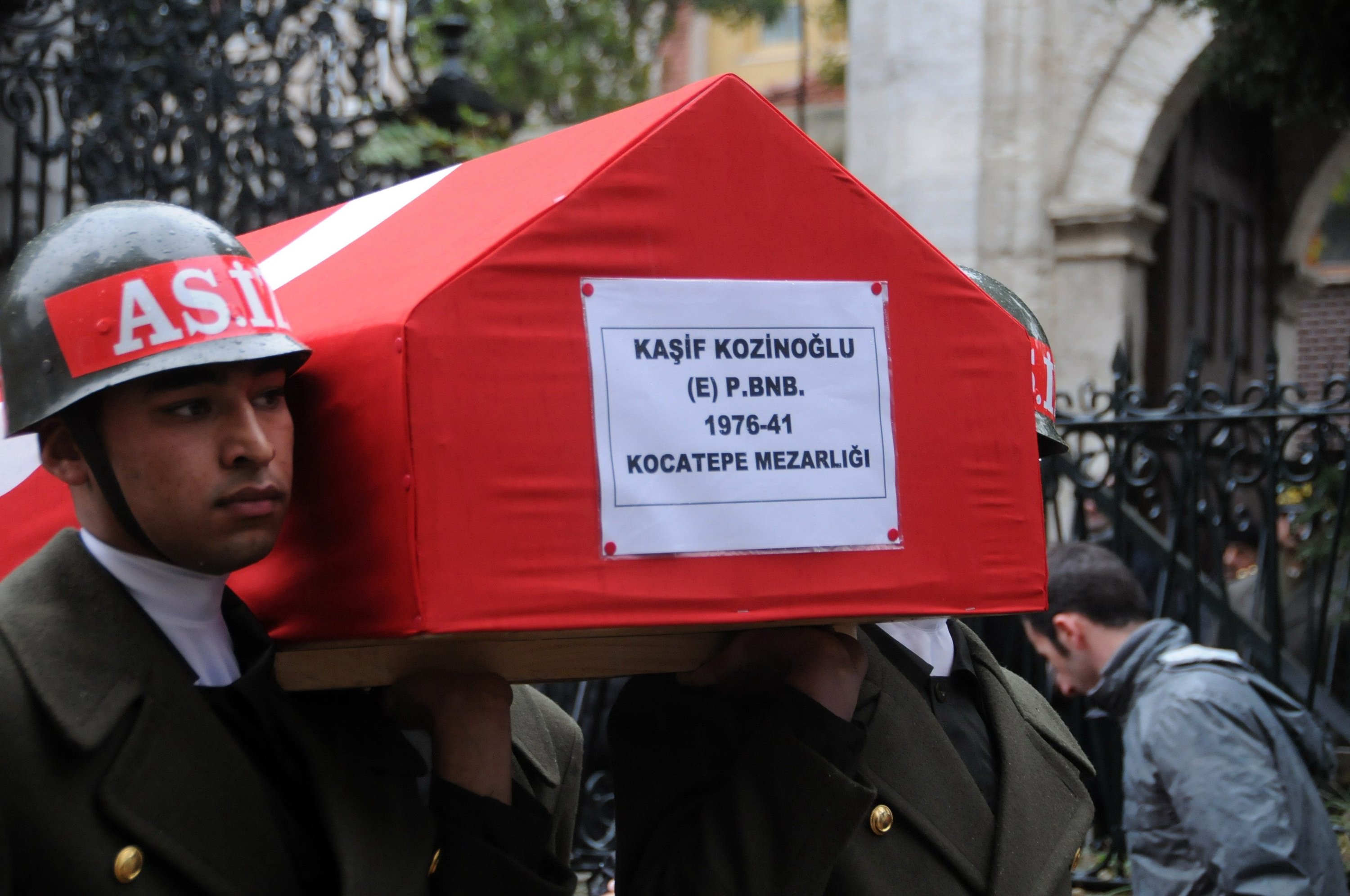
Authorities on Monday detained 10 people who worked at an Istanbul prison where a former top intelligence official was incarcerated in 2011. The death of Kaşif Kozinoğlu, who worked for the National Intelligence Organization (MIT), is being treated as suspicious. At the same time, media outlets reported that investigators are looking into the suspects’ alleged links to the Gülenist Terror Group (FETÖ).
Kozinoğlu, a former major who worked as the MIT’s chief adviser for Central Asia before his arrest in 2011, was detained as part of the far-reaching Ergenekon investigations. Ergenekon was the name given to an alleged “deep state” network by prosecutors, but subsequent investigations and trials found that FETÖ infiltrators had orchestrated the probe within the judiciary and law enforcement. Kozinoğlu’s death at the time was attributed to a heart attack after he reportedly exercised excessively at the prison in Istanbul’s Silivri district.
Most of the suspects detained on Monday were prison guards who worked at Silivri prison while Kozinoğlu was held there. Another suspect remains at large. The Sabah newspaper identified the fugitive suspect as Ferhat Veysi Gül. A report published by Sabah on Monday said Gül was the sole guard in charge of Kozinoğlu’s ward and deliberately ignored an emergency call from the ward on the day Kozinoğlu died.
Security camera footage from the prison reportedly showed Gül turning up the volume of music at the venue to muffle the emergency alarm, ignoring it for several minutes. When other guards arrived about 15 minutes later, he joined them in checking on Kozinoğlu. Kozinoğlu was transferred to a hospital but was pronounced dead. Gül fled to France in August 2016 as Türkiye stepped up its crackdown on suspected FETÖ members following the terrorist group’s coup attempt in July 2016.
Justice Minister Akın Gürlek, who has led efforts to reopen unsolved cases since taking office in February, said in a social media post on Monday that authorities were determined not to leave any suspicious deaths in the dark.
“We are revisiting cases that have raised questions in the public conscience, regardless of how much time has passed, and pursuing every piece of evidence that can be uncovered,” Gürlek said.
“Camera footage and medical records were examined, and statements were taken from prison officials, gendarmerie and medical personnel, his cellmates and the deceased’s wife. On April 10, 2012, a decision of non-prosecution was issued. Our Department for Investigating Unsolved Crimes subsequently re-examined the case. In light of assessments by the Silivri Chief Public Prosecutor’s Office, the investigation was reopened on Aug. 26, 2026,” Gürlek stated.
Kozinoğlu was scheduled to testify in a hearing and said in a statement shortly before his death that he feared he could be killed. Prosecutors had accused him of being a member of a terrorist group and leaking confidential documents, and he was questioned by Zekeriya Öz, a prosecutor who is now on the run after an arrest warrant was issued for him on charges of FETÖ membership.
The Ergenekon case began in 2007 after weapons were discovered in Istanbul's Ümraniye district and eventually led to the prosecution of hundreds of military officers, journalists, academics and other public figures accused of belonging to an alleged clandestine network plotting to overthrow the government.
Following the failed coup attempt in 2016, Turkish authorities reassessed many of the investigations and trials carried out by members of FETÖ's network within the judiciary. Officials have since argued that the Ergenekon proceedings were part of a broader effort by the terrorist group to remove senior military personnel and expand its influence within state institutions.