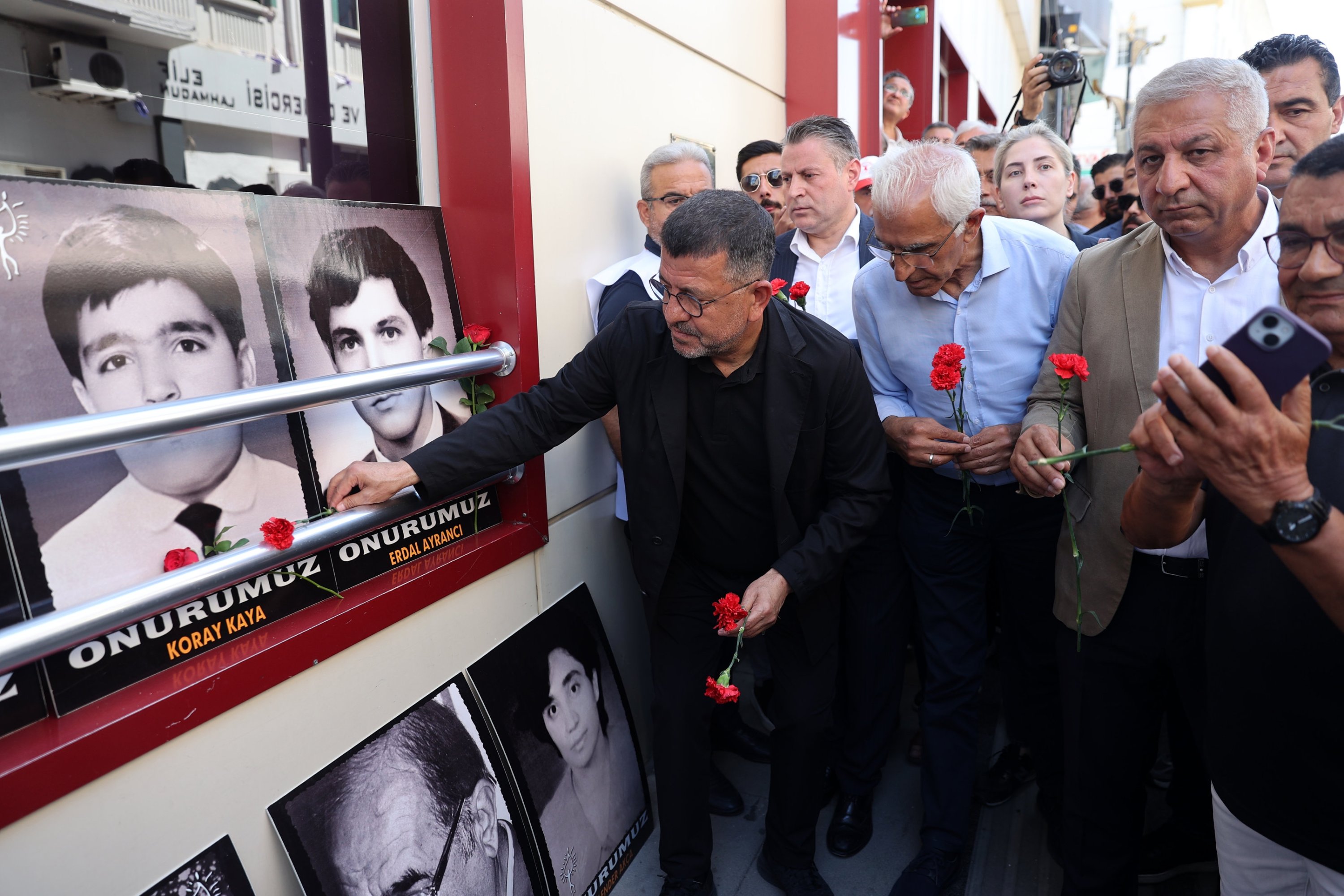
Remembrance ceremonies were held on Wednesday on the 32nd anniversary of a riot that led to the deaths of 37 people in the central province of Sivas. Officials and relatives of victims came together in the city, near the Madımak hotel, which a mob allegedly set on fire in 1993.
The incident apparently sought to pit Sunni Muslims against the Alevi community, as most victims were Alevis, and it is viewed today as a blatant provocation at a time of turmoil in the 1990s. Abdullah Güler, parliamentary group chair of the ruling Justice and Development Party (AK Party) told reporters at the remembrance ceremony that the incident “in the dark year of 1993” hurt everyone and it was apparent that some people sought to incite the public again, to create discord through provocation, referring to outrage over a controversial cartoon of the Prophet Muhammad this week.
Madımak was hosting a festival attended by intellectuals, mostly from an Alevi background. A mob had surrounded the hotel, protesting what they called the anti-Sunni sentiment of the participants. Their main target was notable writer Aziz Nesin, according to the official account. Nesin survived the incident, while other famed figures, like poets Hasret Gültekin and Metin Altıok, were killed in the fire.
Today, it is believed that the “deep state,” a shady coalition of underworld figures, bureaucrats, soldiers and police whose members were never fully revealed, was behind the riot. Two days after the Sivas massacre, 33 people were killed by the PKK terrorist group in Başbağlar, a village in Erzincan province, apparently in response to the Sivas incidents. A total of 190 suspects were detained in connection with the deadly riot. Twenty-two among them were sentenced to 15 years, while others were handed down lesser prison terms. A lengthy retrial process followed after appeals. Most suspects were released, while a trial on five fugitive defendants concluded in 2012 upon a statute of limitations.