No signs of a mass migration have been detected along the Iranian border, Türkiye’s Defense Ministry said Thursday, reiterating Ankara’s readiness to support Syria in its fight against terrorism if requested, amid heightened regional security concerns.
In a statement released after a weekly briefing, the Defense Ministry said border security along Türkiye’s 560-kilometer (348-mile) frontier with Iran remains robust and continuously monitored, despite regional instability.
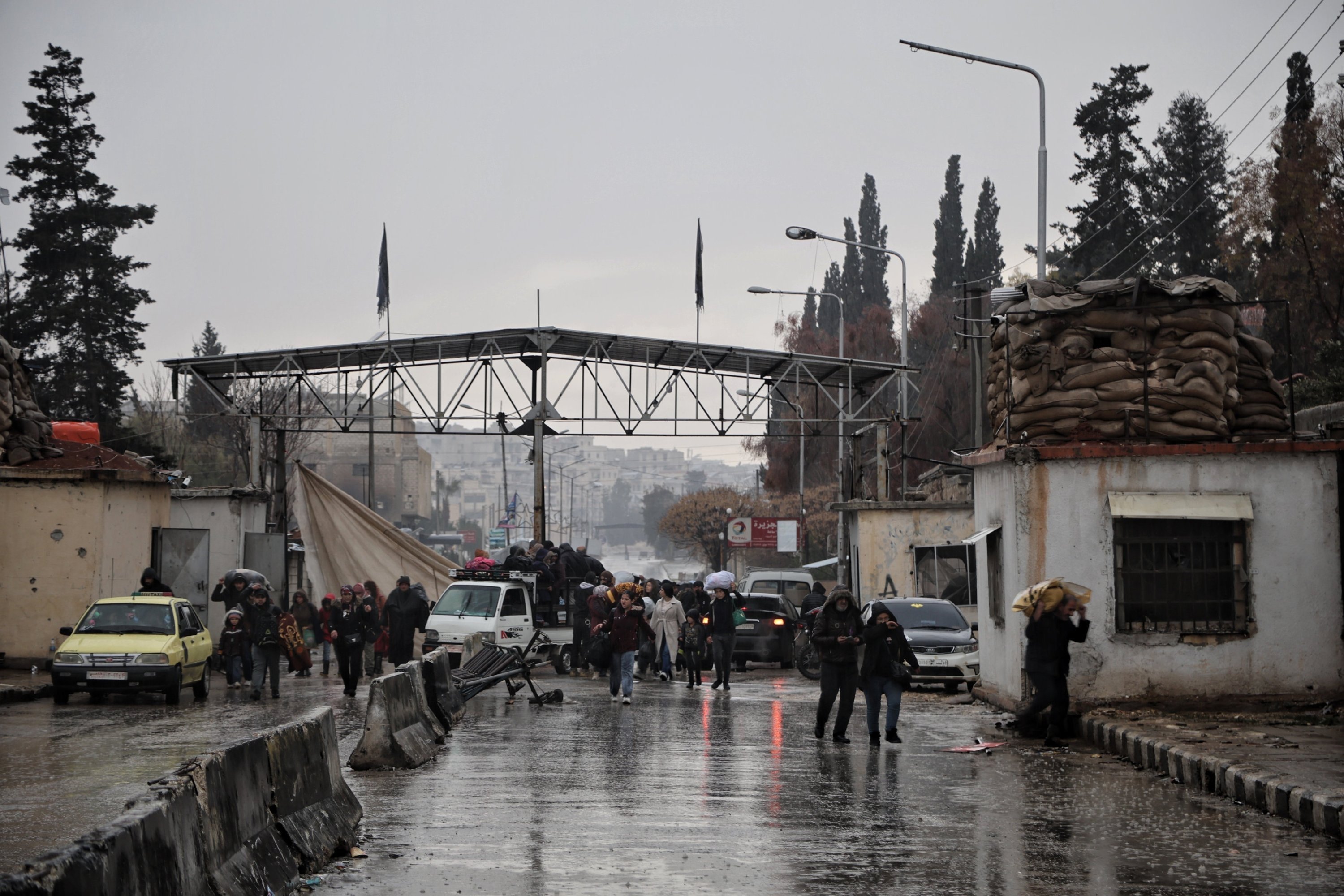
The ministry also commented on recent developments in Syria, particularly military operations carried out by Syrian government forces against the YPG terrorist group in Aleppo. Turkish officials said the Syrian government had successfully reasserted control of the city through counterterrorism operations targeting militants.
“Acting within the principle of equality toward all ethnic groups, the Syrian government has carried out a counterterrorism operation in Aleppo to ensure public order and protect civilian lives.” Türkiye does not view Syria’s security separately from its own. In line with the principle of ‘one state, one army,’ we are prepared to support Syria’s efforts to preserve its unity and territorial integrity should such assistance be requested,” the ministry said.
The YPG controls several areas east of the Euphrates and was accused of dragging its feet to implement a March 2025 deal with Damascus for integration into the post-Assad Syrian army. The group hopes to keep its self-styled autonomy east of the Euphrates alive, while the new Damascus administration seeks a centralized, unified Syria.
Addressing speculation about potential refugee flows, the ministry stressed that no mass migration has been observed along the Iranian border. It said Turkish border units continue to operate under the doctrine of “The border is honor,” maintaining constant vigilance in all weather and terrain conditions.
The ministry detailed extensive physical and technological security measures along the frontier, including the installation of 203 electro-optical towers and 43 elevator-equipped towers, the construction of 380 kilometers of modular concrete walls and the completion of 553 kilometers of trenches. Surveillance is conducted around the clock using ground-based systems as well as unmanned aerial vehicles.
“Although there is currently no indication of mass migration toward our borders, additional precautionary measures have been planned and can be implemented swiftly if needed,” the statement noted.
Türkiye also highlighted its contributions to NATO air policing missions. Turkish fighter jets have previously participated in enhanced air policing deployments in Poland and Romania, and are scheduled to take part in future rotations in Estonia and Romania between 2026 and 2027.
On a separate issue, the ministry said investigations are ongoing into a C-130 military transport aircraft crash near the Georgia-Azerbaijan border. Metallurgical and structural analyses of critical aircraft components are continuing, it said.
During the briefing, Rear Adm. Zeki Aktürk, head of press and public relations, said nine PKK militants had surrendered over the past week, while Turkish forces continued clearing caves, shelters and improvised explosive devices in operational zones. In northern Syria, tunnel demolition efforts continued, with the total length of destroyed tunnels in Tel Rifaat and Manbij reaching 747 kilometers.
Aktürk also criticized Israel for continuing attacks on Gaza, saying cease-fire violations and disruptions to humanitarian aid were undermining international efforts to move toward the second phase of a peace plan.
The weekly briefing was held at the facilities of ASFAT, the state-owned military factory and shipyard operator. Officials said Defense Minister Yaşar Güler was scheduled to meet representatives from BAE Systems and the United Kingdom’s ambassador, while Türkiye’s air force commander is expected to hold talks in Qatar later this month as part of discussions on the procurement of Eurofighter Typhoon jets.