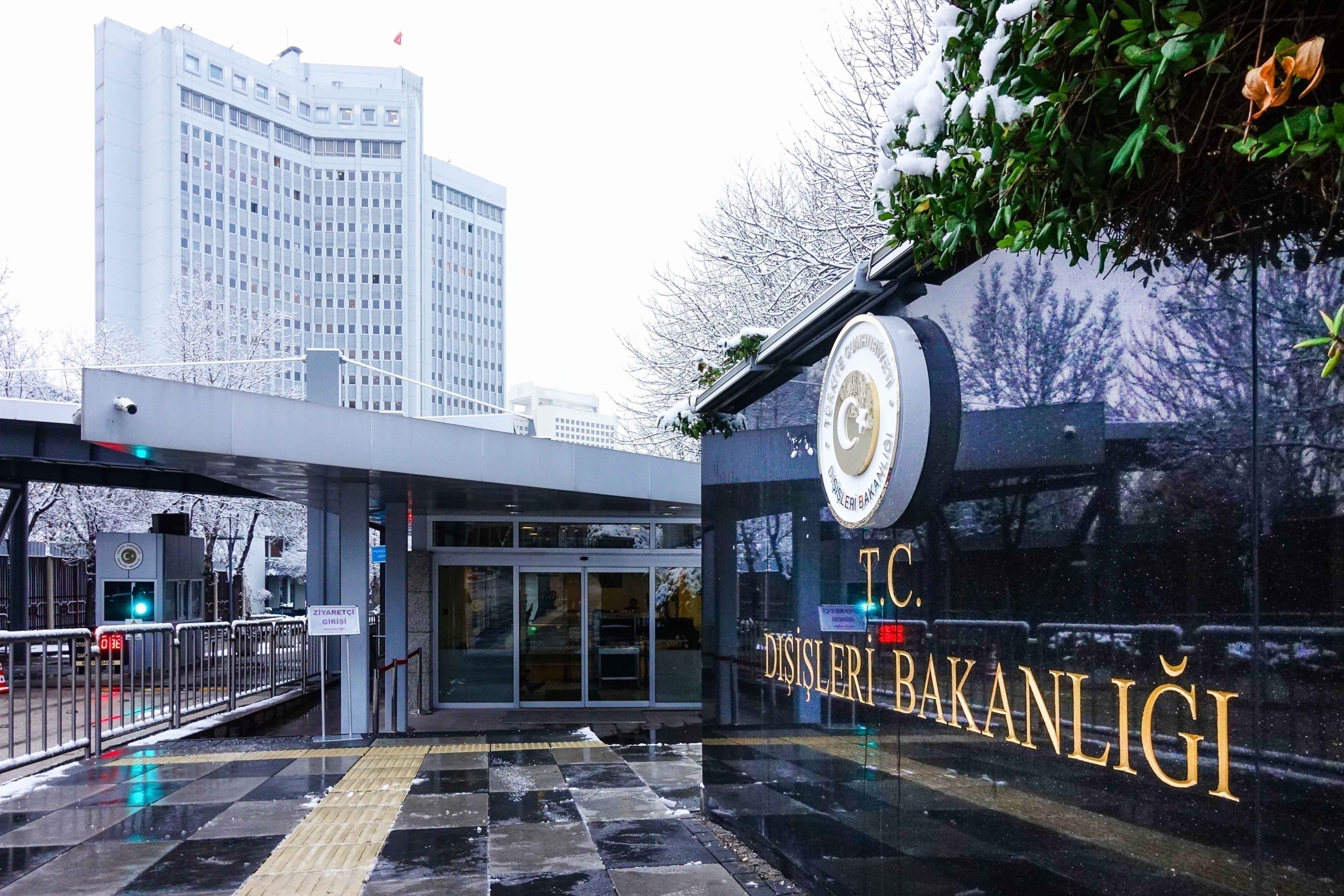
Türkiye on Monday welcomed its acceptance as an associate observer to the Ibero-American Conference.
"We welcome the acceptance of Türkiye's application to become an Associate Observer to the Ibero-American Conference at the Meeting of Ibero-American Foreign Ministers held during the High-Level Week of the 81st session of the United Nations General Assembly," the Foreign Ministry said in a statement.
The ministry thanked all member states, particularly Spain, the current chair of the conference, as well as the Ibero-American Secretariat, for their contributions.
Türkiye will participate as an associate observer at the 30th Ibero-American Conference Summit, scheduled for Nov. 4-5 in Madrid, Spain, the statement said.
The ministry added that Türkiye would continue to deepen its cooperation with the conference's members within the framework of its multidimensional policy toward Latin America and the Caribbean.
According to Turkish diplomatic sources, the decision is expected to be formalized during the summit of heads of state and government in November.
Türkiye formally submitted its application on July 3 through a letter from Foreign Minister Hakan Fidan to Ibero-American Secretary-General Andres Allamand.
The status is expected to help Türkiye deepen political dialogue with member countries and expand cooperation in trade, culture and development.
Angola and India also had their applications for associate observer status approved at the foreign ministers' meeting.
Established through founding summits held in Guadalajara, Mexico, in 1991 and Madrid in 1992, the Ibero-American Conference brings together 22 countries from Latin America and the Iberian Peninsula. Its General Secretariat is based in Madrid.
The conference allows non-member countries to participate as associate observers and international organizations as consultative observers.
Other countries holding associate observer status include Belgium, France, Germany, Haiti, Hungary, Italy, Japan, Luxembourg, Morocco, the Netherlands, the Philippines and South Korea.
Associate observers can participate in summits of heads of state and government, sectoral ministerial meetings, and meetings of foreign ministers, national coordinators and cooperation officials.