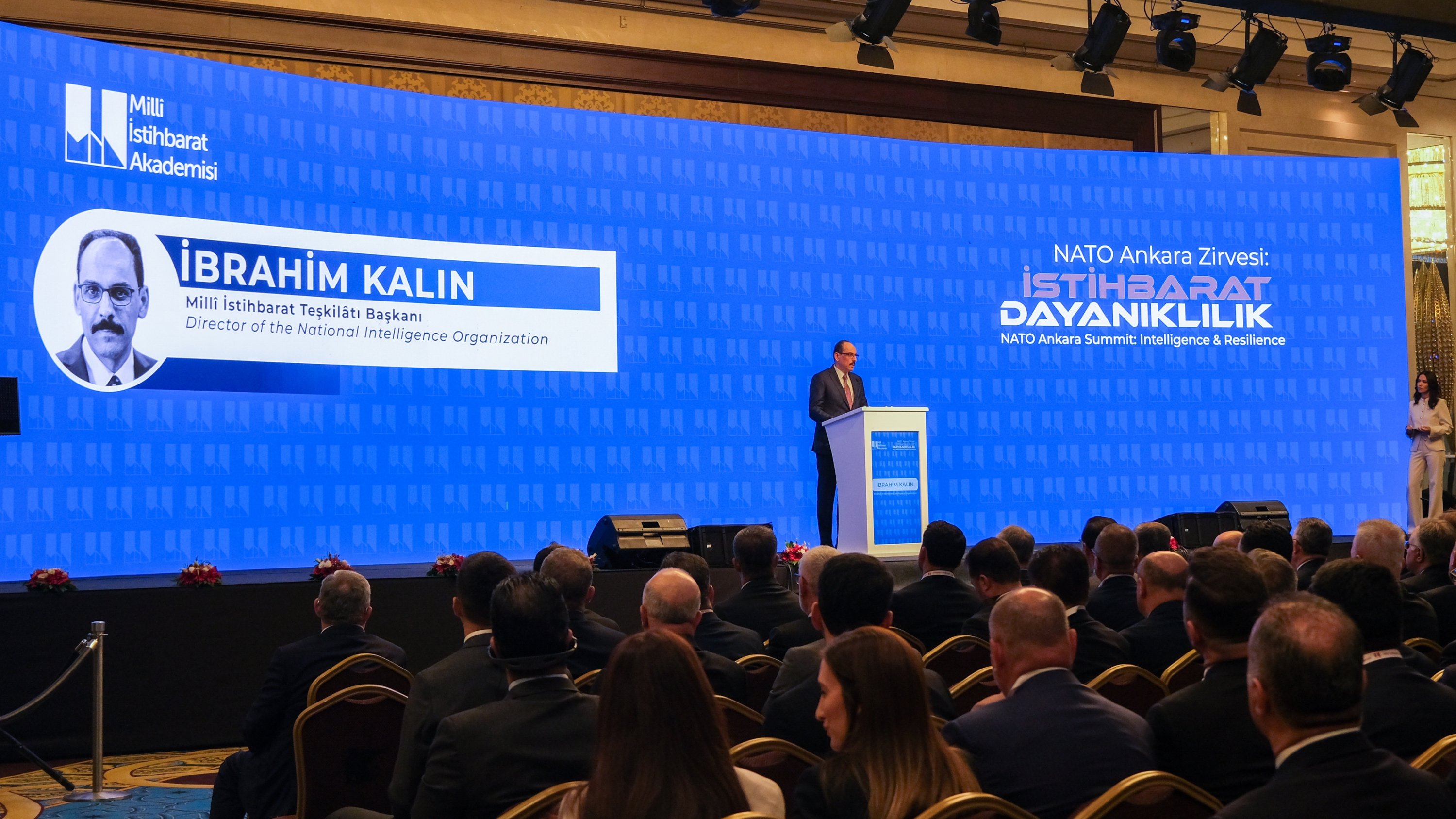
National Intelligence Organization (MIT) Director Ibrahim Kalın on Monday emphasized Türkiye’s role in regional security and NATO’s evolving strategic priorities ahead of next month’s alliance summit in Ankara while welcoming reports of a breakthrough in negotiations between the United States and Iran.
Speaking at a panel titled “NATO Ankara Summit: Intelligence and Resilience,” organized by the National Intelligence Academy in the Turkish capital, Kalın underlined Türkiye’s longstanding role within NATO, describing the alliance as a cornerstone of the country’s security policy since it joined in 1952.
He said Türkiye’s NATO experience had passed through three major phases: the Cold War, the fight against the Gülenist Terror Group (FETÖ), and the security challenges stemming from the conflict in neighboring Syria.
Addressing developments in Syria, Kalın argued that Türkiye’s policies had helped create conditions for postwar reconstruction and social integration following the collapse of the Assad-era political order.
He said the integration of Syrian Kurdish communities into the country’s new political framework was a key element of the stabilization process and maintained that Türkiye had pursued what he described as a pragmatic approach to the issue.
Kalın added that Syria currently poses no direct threat to Türkiye, neighboring countries or NATO, while noting that Turkish and Syrian intelligence services continue to cooperate against remnants of the Daesh terrorist group.
The intelligence chief also referred to President Recep Tayyip Erdoğan’s “Terror-Free Türkiye” initiative, describing it as a broader effort aimed not only at strengthening security but also at promoting economic development, political stability and democratic resilience.
Looking ahead to the NATO leaders’ summit scheduled for July 7-8 in Ankara, Kalın said the gathering would provide a critical platform for allies to assess how the alliance should adapt to a rapidly changing threat environment.
He said leaders would examine questions related to NATO’s future capabilities, burden-sharing mechanisms and strategic coordination as geopolitical competition intensifies and security challenges become increasingly complex.
Following the panel, Kalın presented NATO Assistant Secretary General for Intelligence and Security Scott Bray with an oil painting depicting a mosaic panel originally created by Turkish artist Bedri Rahmi Eyüboğlu and gifted to NATO in 1960.
Kalın also said reports that Washington and Tehran had reached an agreement were received positively.
“The news announced last night that an agreement had been reached between the United States and Iran has been welcomed by all of us,” Kalın said.