
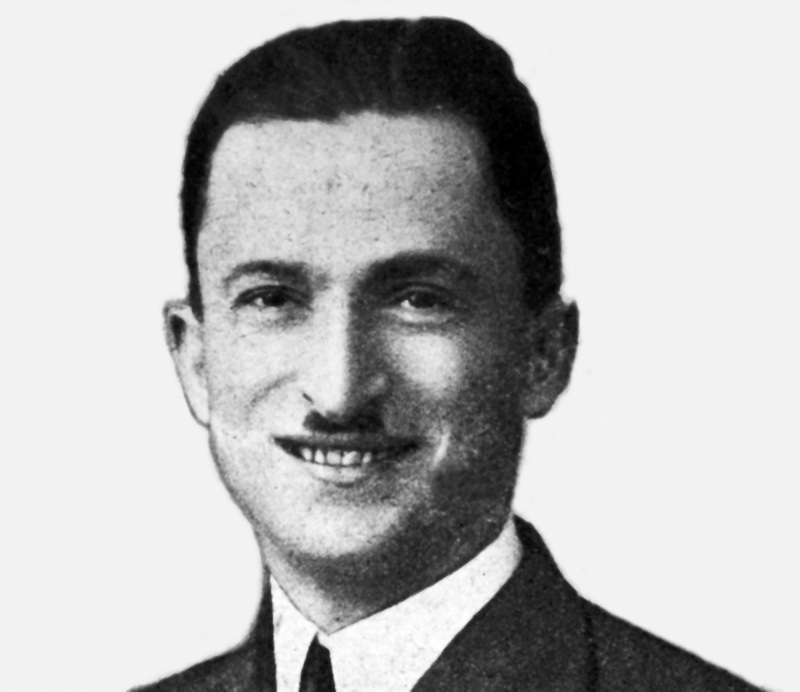
Over the last 10 years private TV channels in Turkey have adapted numerous classic novels to series. Most of them are loved by the masses. Two of the most popular series in Turkish television history were "Yaprak Dökümü" (The Fall of Leaves) from 2005 to 2010, which had 174 episodes, and "Çalıkuşu" (The Wren) from 2013. Both were modern adaptations of two novels written in the 1920s by Reşat Nuri Güntekin.
A writer-born teacher
Güntekin was born in Istanbul, on Oct. 25, 1889. His grandfather, Yaver Paşa, was a governor and his father, Nuri Bey, was a military doctor in the Ottoman army. Raised as the only child of this aristocratic family, Güntekin was lucky to have his father's vast, personal library in front of him. He traveled to Anatolia a lot due to his father's duties and had the chance to observe the local and traditional lifestyles of the region. He graduated from the literature department of Darülfünun, which was the only official institution of high education in the Ottoman Empire in1912.
He later worked as a Turkish literature and French language teacher at Istanbul's most reputable high schools until 1927, the year he married Halide Hanım. He was always interested in the social and political issues of the country since he began writing during World War I. From the 1910s to the 1930s he gained a wide reputation as a realist writer and novelist.
In 1931, Güntekin started to work as an inspector at the National Education Ministry. He supported cultural and symbolic revolutions made by the new Republican governments and served as a deputy for Çanakkale between 1933 and 1943 in Parliament. Even though he did not write much during his years in politics, with his novels had a moral and cultural education, reminding readers of the task of establishing roles for the new Republican ethos.
In addition countless articles, Güntekin also wrote plays. Similar to his novels, the characters in his plays are also described with conflicted psychology within the human condition. Perhaps the reason why Güntekin's works are still read and appreciated is because readers can easily identify with more than one character at a time. Different, even antagonistic, class cultures in Turkish society are perfectly reflected through the personal relationships between all of Güntekin's characters. Generational conflicts, modernization problems and education are the main issues Güntekin used.
Güntekin went to Paris as the representative of the Republic of Turkey for UNESCO in 1950 where he worked as a culture attaché for years. He died from lung cancer in London on Dec. 7, 1956, and was buried in Karacaahmet Cemetery in Istanbul. A theater in Istanbul's Fatih district and two high schools are named after him. When he was alive and living in the Levent neighborhood the municipality decided to name the road he lived on Çalıkuşu.
Güntekin wrote 19 novels, seven story books, 15 plays and one travel book, "Notes from Anatolia." Güntekin's books are still included in primary and secondary school syllabi since his fluent and pleasant style is a good way to encourage children to love literature.


