
Daily Sabah logo

Politics
Diplomacy Legislation War On Terror EU Affairs Elections News Analysis
TÜRKİYE
Istanbul Education Investigations Minorities Expat Corner Diaspora
World
Mid-East Europe Americas Asia Pacific Africa Syrian Crisis Islamophobia
Business
Automotive Economy Energy Finance Tourism Tech Defense Transportation News Analysis
Lifestyle
Health Environment Travel Food Fashion Science Religion History Feature Expat Corner
Arts
Cinema Music Events Portrait Reviews Performing Arts
Sports
Football Basketball Motorsports Tennis
Opinion
Columns Op-Ed Reader's Corner Editorial
PHOTO GALLERY
JOBS ABOUT US RSS PRIVACY CONTACT US
© Turkuvaz Haberleşme ve Yayıncılık 2025

Daily Sabah - Latest & Breaking News from Turkey | Istanbul

  • Politics
    • Diplomacy
    • Legislation
    • War On Terror
    • EU Affairs
    • Elections
    • News Analysis
  • TÜRKİYE
    • Istanbul
    • Education
    • Investigations
    • Minorities
    • Expat Corner
    • Diaspora
  • World
    • Mid-East
    • Europe
    • Americas
    • Asia Pacific
    • Africa
    • Syrian Crisis
    • Islamophobia
  • Business
    • Automotive
    • Economy
    • Energy
    • Finance
    • Tourism
    • Tech
    • Defense
    • Transportation
    • News Analysis
  • Lifestyle
    • Health
    • Environment
    • Travel
    • Food
    • Fashion
    • Science
    • Religion
    • History
    • Feature
    • Expat Corner
  • Arts
    • Cinema
    • Music
    • Events
    • Portrait
    • Reviews
    • Performing Arts
  • Sports
    • Football
    • Basketball
    • Motorsports
    • Tennis
  • Gallery
  • Opinion
    • Columns
    • Op-Ed
    • Reader's Corner
    • Editorial
  • TV

Uzbekistan's fiercely protected iftar traditions shine in Ramadan

by Anadolu Agency

TASHKENT Jun 09, 2017 - 12:00 am GMT+3
No Image
by Anadolu Agency Jun 09, 2017 12:00 am

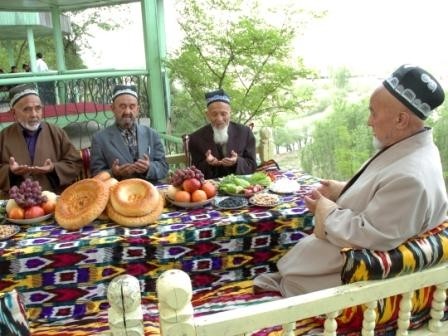
Although Islam and its religious practices, including fasting, were banned during the Soviet Union era, Uzbeks have held on to their religious and national traditions, continuing to invite neighbors, relatives and the needy to their iftar (breaking fast) tables throughout Ramadan.

After gathering for iftar, called "ağız açar" in Uzbekistan, Uzbek families are often led by the head of the family in a common prayer a few minutes before breaking their fast.

A traditional Uzbek dessert called "nişalda," patır bread, a pastry called "samsa" and Uzbek pilaf are all staples of Uzbekistan Ramadans.

Nişalda

Only prepared during the holy month of Ramadan, nişalda consists of egg whites, sugar and a dried native plant root.

Nişalda is sold in markets throughout the country during Ramadan, and preparations for making it start in mountains days before the holy month begins.

To start, a native wild plant from the caryophyllus family, known as "yetmek" in the Uzbek, is collected from the surrounding mountains and dried.

In accordance with local tradition, the recipe is only passed down from father to son. During preparation, the men of the family boil the dried roots, later adding egg whites and a sugary syrup.

According to seasoned nişalda confectioner Barno Polatova, the sweet has many health benefits and can ease digestion.

Patır bread

Uzbeks' favorite staple of iftar and sahur meals is patır bread.

Prepared with milk and butter and cooked in a clay tandoori oven, patır bread is an integral part of Uzbek tables.

Although around 100 types of bread are produced throughout the country, Uzbeks mostly prefer patır for special days, weddings and Ramadan.

Samarqand bread, a specialty found only in its namesake city, is known as one of the most delicious breads in the world due to its long-lasting flavor and is another secret Uzbek recipe passed from father to son.

Uzbek pilaf

Said to have originated from the famous medical scholar Ibn Sina (or Avicenna) who was born in Uzbekistan's historical city of Bukhara, Uzbek pilaf is one of the most delicious recipes in Uzbek cuisine and holds an important place in the country's food culture.

Though traditionally prepared with rice, onion, carrot and beef or lamb, the pilaf's flavor and preparation vary from region to region where cooking preferences lend unique twists to the original recipe.

Where some may add quince or sultanas, others utilize various vegetables in the dish depending on the local traditions.


  • shortlink copied
  • KEYWORDS
    life
    The Daily Sabah Newsletter
    Keep up to date with what’s happening in Turkey, it’s region and the world.
    You can unsubscribe at any time. By signing up you are agreeing to our Terms of Use and Privacy Policy. This site is protected by reCAPTCHA and the Google Privacy Policy and Terms of Service apply.
    No Image
    Israel-Palestine conflict: Gaza under full blockade
    PHOTOGALLERY
    • POLITICS
    • Diplomacy
    • Legislation
    • War On Terror
    • EU Affairs
    • News Analysis
    • TÜRKİYE
    • Istanbul
    • Education
    • Investigations
    • Minorities
    • Diaspora
    • World
    • Mid-East
    • Europe
    • Americas
    • Asia Pacific
    • Africa
    • Syrian Crisis
    • İslamophobia
    • Business
    • Automotive
    • Economy
    • Energy
    • Finance
    • Tourism
    • Tech
    • Defense
    • Transportation
    • News Analysis
    • Lifestyle
    • Health
    • Environment
    • Travel
    • Food
    • Fashion
    • Science
    • Religion
    • History
    • Feature
    • Expat Corner
    • Arts
    • Cinema
    • Music
    • Events
    • Portrait
    • Performing Arts
    • Reviews
    • Sports
    • Football
    • Basketball
    • Motorsports
    • Tennis
    • Opinion
    • Columns
    • Op-Ed
    • Reader's Corner
    • Editorial
    • Photo gallery
    • DS TV
    • Jobs
    • privacy
    • about us
    • contact us
    • RSS
    © Turkuvaz Haberleşme ve Yayıncılık 2021