Daily Sabah logo

Politics
Diplomacy Legislation War On Terror EU Affairs Elections News Analysis
TÜRKİYE
Istanbul Education Investigations Minorities Expat Corner Diaspora
World
Mid-East Europe Americas Asia Pacific Africa Syrian Crisis Islamophobia
Business
Automotive Economy Energy Finance Tourism Tech Defense Transportation News Analysis
Lifestyle
Health Environment Travel Food Fashion Science Religion History Feature Expat Corner
Arts
Cinema Music Events Portrait Reviews Performing Arts
Sports
Football Basketball Motorsports Tennis
Opinion
Columns Op-Ed Reader's Corner Editorial
PHOTO GALLERY
JOBS ABOUT US RSS PRIVACY CONTACT US
© Turkuvaz Haberleşme ve Yayıncılık 2025

Daily Sabah - Latest & Breaking News from Turkey | Istanbul

  • Politics
    • Diplomacy
    • Legislation
    • War On Terror
    • EU Affairs
    • Elections
    • News Analysis
  • TÜRKİYE
    • Istanbul
    • Education
    • Investigations
    • Minorities
    • Expat Corner
    • Diaspora
  • World
    • Mid-East
    • Europe
    • Americas
    • Asia Pacific
    • Africa
    • Syrian Crisis
    • Islamophobia
  • Business
    • Automotive
    • Economy
    • Energy
    • Finance
    • Tourism
    • Tech
    • Defense
    • Transportation
    • News Analysis
  • Lifestyle
    • Health
    • Environment
    • Travel
    • Food
    • Fashion
    • Science
    • Religion
    • History
    • Feature
    • Expat Corner
  • Arts
    • Cinema
    • Music
    • Events
    • Portrait
    • Reviews
    • Performing Arts
  • Sports
    • Football
    • Basketball
    • Motorsports
    • Tennis
  • Gallery
  • Opinion
    • Columns
    • Op-Ed
    • Reader's Corner
    • Editorial
  • TV

Mercury's 'once in 13 years' journey across Sun wows stargazers worldwide

by

CAPE CANEVERAL May 09, 2016 - 12:00 am GMT+3
 AFP Photo
| AFP Photo
by May 09, 2016 12:00 am

Tiny Mercury, the solar system's innermost planet, sailed across the face of the sun on Monday, a celestial dance that occurs about once every decade as Earth and its smaller neighboring planet align in space.

The journey, which astronomers refer to as a "transit," began with what looked to be a small, black dot on the edge of the sun at 7:12 a.m. EDT (1112 GMT), images relayed live on NASA TV showed.

Over the next seven and a half hours, Mercury, which travels at a speed of 30 miles (48 km) a second, crossed the face of the sun, a spectacle last seen in 2006.

"It's all about perspective," NASA planetary sciences chief Jim Green said during a panel discussion aired on NASA TV.

Mercury's orbit around the sun is more tilted than Earth's so it only rarely appears to cross the sun relative to Earth's line of sight, Green said.

About 13 times a century, Mercury and Earth line up, giving armchair stargazers and professional astronomers a chance to view Mercury as it passes between Earth and the sun.

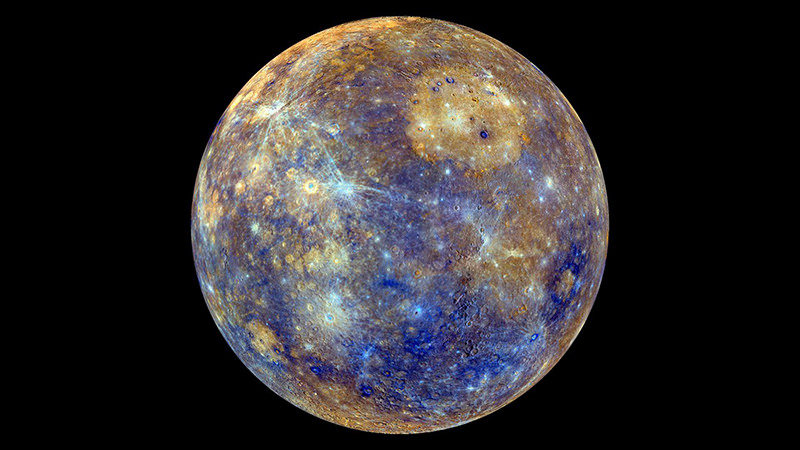
Monday's transit was the first since NASA's MESSENGER mission to Mercury, which orbited the planet from 2011 to 2015. The spacecraft relayed startling details of Mercury's heavily cratered and unexpectedly diverse landscape.

Though temperatures on Mercury's surface reach 800 degrees Fahrenheit (427 degrees Celsius) – hot enough to melt lead – the planet also has deep craters where the sun never shines. These pits, where temperatures rival the coldest places in the solar system, contain frozen water and organic materials.
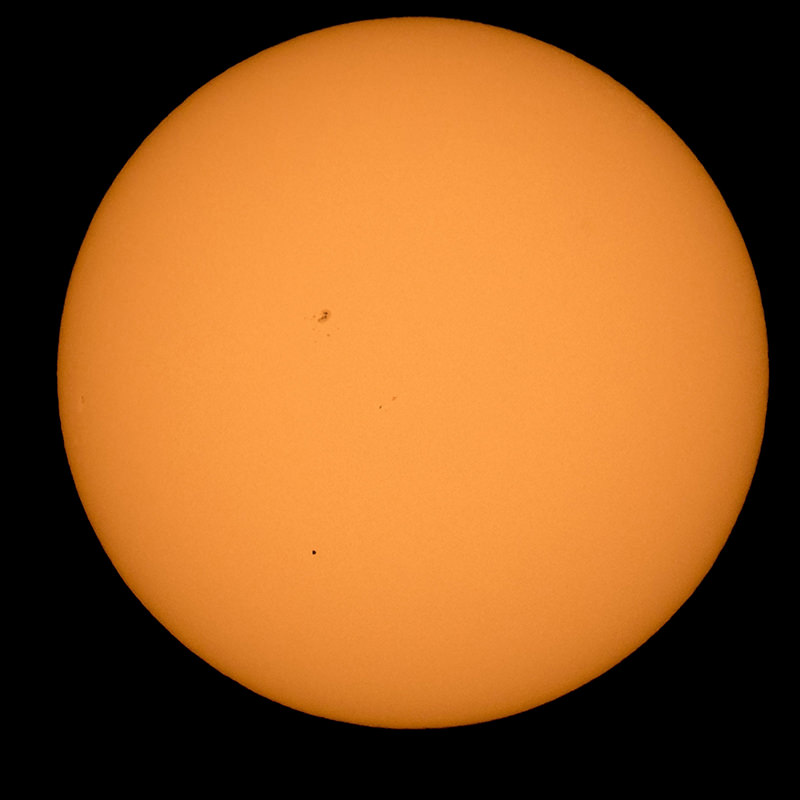
Mercury is seen in silhouette, lower third of image, as it transits across the face of the sun May 9, 2016, as viewed from Pennsylvania. During Monday's transit, astronomers hope to build on MESSENGER's findings by learning more about gases vaporizing from the planet's surface. The "out-gassing" may be a factor in why Mercury is shrinking, Green said.

Astronomers also used the transit to calibrate sensors on a trio of space-based solar telescopes and refine techniques to look for planets beyond the solar system.

"When a planet crosses in front of the sun, it causes the sun's brightness to dim. Scientists can measure similar brightness dips from other stars to find planets orbiting them," NASA said.

Mercury will pass between the sun and Earth again in 2019. After that, the next opportunity to witness the event will not come until 2032.

The tiny planet, slightly larger than Earth's moon, will start off as a small black dot on the edge of the sun at 7:12 a.m. Eastern (1112 GMT). Traveling 30 miles (48 km) a second, Mercury will take 7.5 hours to cross the face of the sun, which is about 864,300 miles (1.39 million km) in diameter, or about 109 times larger than Earth.


About the author
Research Associate at Center for Islam and Global Affairs (CIGA) at Istanbul Sabahattin Zaim University
  • shortlink copied
  • Last Update: May 09, 2016 10:10 pm
    KEYWORDS
    life
    The Daily Sabah Newsletter
    Keep up to date with what’s happening in Turkey, it’s region and the world.
    You can unsubscribe at any time. By signing up you are agreeing to our Terms of Use and Privacy Policy. This site is protected by reCAPTCHA and the Google Privacy Policy and Terms of Service apply.
    No Image
    Aliağa shipyard is where old ships go to die
    PHOTOGALLERY
    • POLITICS
    • Diplomacy
    • Legislation
    • War On Terror
    • EU Affairs
    • News Analysis
    • TÜRKİYE
    • Istanbul
    • Education
    • Investigations
    • Minorities
    • Diaspora
    • World
    • Mid-East
    • Europe
    • Americas
    • Asia Pacific
    • Africa
    • Syrian Crisis
    • İslamophobia
    • Business
    • Automotive
    • Economy
    • Energy
    • Finance
    • Tourism
    • Tech
    • Defense
    • Transportation
    • News Analysis
    • Lifestyle
    • Health
    • Environment
    • Travel
    • Food
    • Fashion
    • Science
    • Religion
    • History
    • Feature
    • Expat Corner
    • Arts
    • Cinema
    • Music
    • Events
    • Portrait
    • Performing Arts
    • Reviews
    • Sports
    • Football
    • Basketball
    • Motorsports
    • Tennis
    • Opinion
    • Columns
    • Op-Ed
    • Reader's Corner
    • Editorial
    • Photo gallery
    • DS TV
    • Jobs
    • privacy
    • about us
    • contact us
    • RSS
    © Turkuvaz Haberleşme ve Yayıncılık 2021