Daily Sabah logo

Politics
Diplomacy Legislation War On Terror EU Affairs Elections News Analysis
TÜRKİYE
Istanbul Education Investigations Minorities Expat Corner Diaspora
World
Mid-East Europe Americas Asia Pacific Africa Syrian Crisis Islamophobia
Business
Automotive Economy Energy Finance Tourism Tech Defense Transportation News Analysis
Lifestyle
Health Environment Travel Food Fashion Science Religion History Feature Expat Corner
Arts
Cinema Music Events Portrait Reviews Performing Arts
Sports
Football Basketball Motorsports Tennis
Opinion
Columns Op-Ed Reader's Corner Editorial
PHOTO GALLERY
JOBS ABOUT US RSS PRIVACY CONTACT US
© Turkuvaz Haberleşme ve Yayıncılık 2026

Daily Sabah - Latest & Breaking News from Turkey | Istanbul

  • Politics
    • Diplomacy
    • Legislation
    • War On Terror
    • EU Affairs
    • Elections
    • News Analysis
  • TÜRKİYE
    • Istanbul
    • Education
    • Investigations
    • Minorities
    • Expat Corner
    • Diaspora
  • World
    • Mid-East
    • Europe
    • Americas
    • Asia Pacific
    • Africa
    • Syrian Crisis
    • Islamophobia
  • Business
    • Automotive
    • Economy
    • Energy
    • Finance
    • Tourism
    • Tech
    • Defense
    • Transportation
    • News Analysis
  • Lifestyle
    • Health
    • Environment
    • Travel
    • Food
    • Fashion
    • Science
    • Religion
    • History
    • Feature
    • Expat Corner
  • Arts
    • Cinema
    • Music
    • Events
    • Portrait
    • Reviews
    • Performing Arts
  • Sports
    • Football
    • Basketball
    • Motorsports
    • Tennis
  • Gallery
  • Opinion
    • Columns
    • Op-Ed
    • Reader's Corner
    • Editorial
  • TV

'Wrinkled sack' Saccorhytus could be oldest human ancestor

by

WASHINGTON Jan 31, 2017 - 12:00 am GMT+3
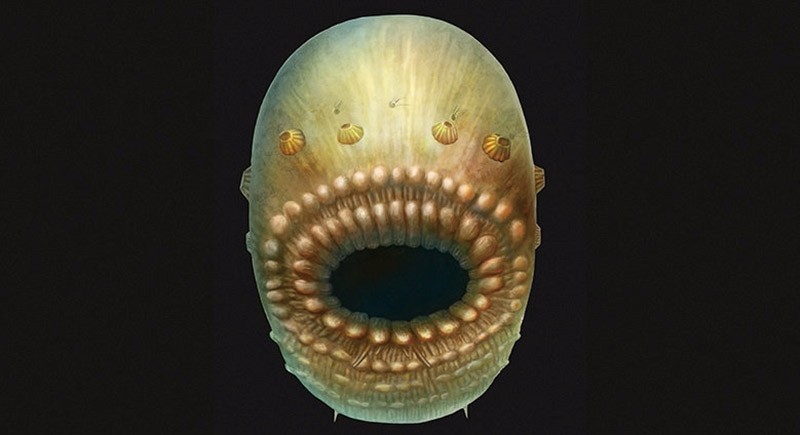
Artist's reconstruction of Saccorhytus coronarius, based on the original fossil finds, whose actual size was probably no more than a millimeter in size, is shown in this image released on January 30, 2017. (Reuters Photo)
by Jan 31, 2017 12:00 am

Scientists on Monday said a tiny marine creature from China that wriggled in the seabed mud about 540 million years ago may be the earliest-known animal in the lengthy evolutionary path that eventually led to humans. It was a weird-looking beastie with a bag-like body and, for its size, a really big mouth.

University of Cambridge paleontologist Simon Conway Morris noted that humans, who appeared a relatively recent 200,000 years ago, have a series of "evolutionarily deeper ancestors" than monkeys and apes. That point is exemplified by the unique-looking creature called Saccorhytus, whose name means wrinkled sack.


"And is not beauty in the eye of the beholder?" Conway Morris asked.

Saccorhytus, measuring about four-hundredths of an inch (1 millimeter), appears to be the most primitive member of the broad animal group called deuterostomes.

This group includes vertebrates - fish, amphibians, reptiles, birds and mammals including people - as well as animals called echinoderms including starfish and sea urchins and obscure creatures called hemichordates including acorn worms.

Saccorhytus lived during the Cambrian Period, a time of exceptional evolutionary experimentation. The primitive biological traits possessed by Saccorhytus helped pave the way for the various deuterostomes including vertebrates. Fish, the vanguard of the vertebrates, appeared roughly 10 to 15 million years after Saccorhytus.


"Saccorhytus now gives us remarkable insights into the very first stages of the evolution of a group that led to the fish, and ultimately, to us," paleontologist Degan Shu of China's Northwest University said in a statement provided by the University of Cambridge.

Fossils of about 40 Saccorhytus individuals, including a few superbly preserved specimens, were unearthed in Shaanxi Province in central China and look like miniscule black grains.

Saccorhytus probably lived between individual grains of sediment on the bottom of a shallow sea.

With its large mouth, it probably ate by simply engulfing food particles or smaller creatures whole. The researchers found no evidence that it had an anus, meaning that its waste material may have been expelled out of the mouth. Conway Morris said that process "from our perspective sounds rather unappealing."

It also boasted small conical structures on its body, which was covered with a thin, flexible skin. These structures may have allowed water it swallowed to escape, possibly the evolutionary forerunner of fish gills.

The research was published in the journal Nature.

About the author
Research Associate at Center for Islam and Global Affairs (CIGA) at Istanbul Sabahattin Zaim University
  • shortlink copied
  • Last Update: Jan 31, 2017 10:23 am
    KEYWORDS
    life
    The Daily Sabah Newsletter
    Keep up to date with what’s happening in Turkey, it’s region and the world.
    You can unsubscribe at any time. By signing up you are agreeing to our Terms of Use and Privacy Policy. This site is protected by reCAPTCHA and the Google Privacy Policy and Terms of Service apply.

    No Image
    Uprooted trees, flooded streets: Hurricane Sally hits US Gulf Coast
    PHOTOGALLERY
    • POLITICS
    • Diplomacy
    • Legislation
    • War On Terror
    • EU Affairs
    • News Analysis
    • TÜRKİYE
    • Istanbul
    • Education
    • Investigations
    • Minorities
    • Diaspora
    • World
    • Mid-East
    • Europe
    • Americas
    • Asia Pacific
    • Africa
    • Syrian Crisis
    • İslamophobia
    • Business
    • Automotive
    • Economy
    • Energy
    • Finance
    • Tourism
    • Tech
    • Defense
    • Transportation
    • News Analysis
    • Lifestyle
    • Health
    • Environment
    • Travel
    • Food
    • Fashion
    • Science
    • Religion
    • History
    • Feature
    • Expat Corner
    • Arts
    • Cinema
    • Music
    • Events
    • Portrait
    • Performing Arts
    • Reviews
    • Sports
    • Football
    • Basketball
    • Motorsports
    • Tennis
    • Opinion
    • Columns
    • Op-Ed
    • Reader's Corner
    • Editorial
    • Photo gallery
    • DS TV
    • Jobs
    • privacy
    • about us
    • contact us
    • RSS
    © Turkuvaz Haberleşme ve Yayıncılık 2021