Daily Sabah logo

Politics
Diplomacy Legislation War On Terror EU Affairs Elections News Analysis
TÜRKİYE
Istanbul Education Investigations Minorities Expat Corner Diaspora
World
Mid-East Europe Americas Asia Pacific Africa Syrian Crisis Islamophobia
Business
Automotive Economy Energy Finance Tourism Tech Defense Transportation News Analysis
Lifestyle
Health Environment Travel Food Fashion Science Religion History Feature Expat Corner
Arts
Cinema Music Events Portrait Reviews Performing Arts
Sports
Football Basketball Motorsports Tennis
Opinion
Columns Op-Ed Reader's Corner Editorial
PHOTO GALLERY
JOBS ABOUT US RSS PRIVACY CONTACT US
© Turkuvaz Haberleşme ve Yayıncılık 2026

Daily Sabah - Latest & Breaking News from Turkey | Istanbul

  • Politics
    • Diplomacy
    • Legislation
    • War On Terror
    • EU Affairs
    • Elections
    • News Analysis
  • TÜRKİYE
    • Istanbul
    • Education
    • Investigations
    • Minorities
    • Expat Corner
    • Diaspora
  • World
    • Mid-East
    • Europe
    • Americas
    • Asia Pacific
    • Africa
    • Syrian Crisis
    • Islamophobia
  • Business
    • Automotive
    • Economy
    • Energy
    • Finance
    • Tourism
    • Tech
    • Defense
    • Transportation
    • News Analysis
  • Lifestyle
    • Health
    • Environment
    • Travel
    • Food
    • Fashion
    • Science
    • Religion
    • History
    • Feature
    • Expat Corner
  • Arts
    • Cinema
    • Music
    • Events
    • Portrait
    • Reviews
    • Performing Arts
  • Sports
    • Football
    • Basketball
    • Motorsports
    • Tennis
  • Gallery
  • Opinion
    • Columns
    • Op-Ed
    • Reader's Corner
    • Editorial
  • TV

Saturn and Jupiter's icy moons Enceladus and Europa may never be as habitable as Earth

by

PARIS Jul 31, 2017 - 12:00 am GMT+3
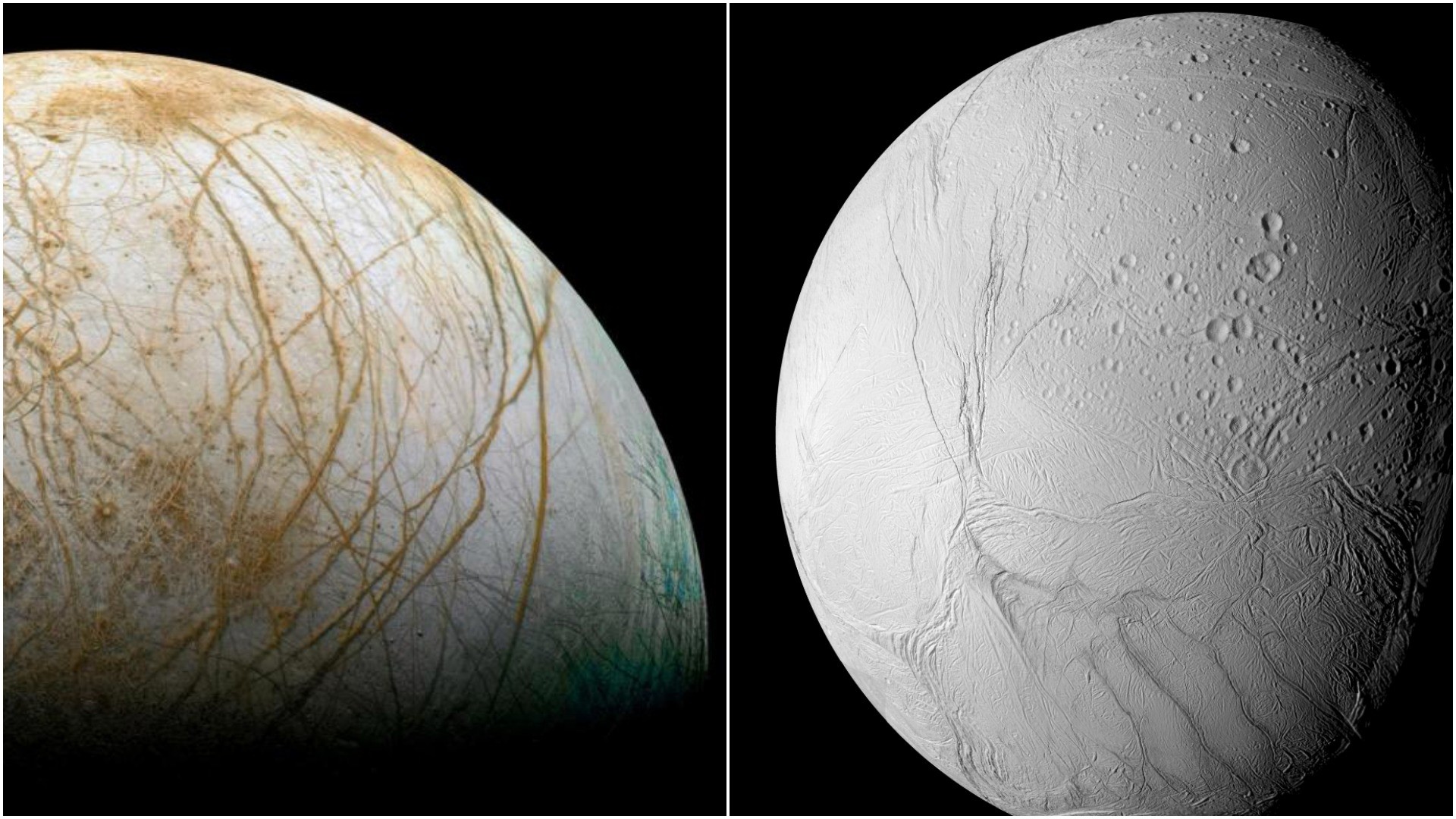
Scientists say that Europa (L) and Enceladus (R) might not be as habitable as NASA thinks, even after their icy surfaces melt. (AP Photos)
by Jul 31, 2017 12:00 am

Scientists dealt a blow Monday to the quest for organisms inhabiting worlds besides Earth, saying our planet was unusual in its ability to host liquid water -- the key ingredient for life.

It was thought likely that distant worlds orbiting stars similar to our Sun would go through water-rich phases.

This would happen when the young, dim star of an icy, lifeless planet -- such as early Earth -- starts warming, becomes Sun-like, and melts the ice on planets orbiting it at just the right distance -- the so-called "Goldilocks" zone.

Icy orbs in our own Solar System, including Jupiter's moon Europa and Saturn's Enceladus, or "exoplanets" in other star systems, may become habitable in this way, the theory goes.

But a team wrote in the journal Nature Geoscience on Monday that this was unlikelier than had been imagined.

Jun Yang, of Peking University in China, and a team used climate models to simulate the evolution of icy planets.

Without atmospheric greenhouse gases -- a feature of Earth -- the energy required to thaw an icy planet would be so high that it would transit from frozen to inferno without an intermediate, liveable phase, they found.

"We find that the stellar fluxes that are required to overcome a planet's initial snowball state are so large that they lead to significant water loss and preclude a habitable planet," the team wrote.

Some icy bodies, they suggested, may therefore never pass through a habitable Earth-like state.

Among these, Europa and Enceladus will likely morph from iceballs into fireballs by the time the Sun reaches it's super-hot red giant phase heat in billions of years from now, said the team.

Earth was an example of an icy world that thawed just enough, some 600-800 million years ago, thanks to planet-warming atmospheric greenhouse gases emitted by volcanic eruptions during its snowball phase, the team said.

This meant that less solar heat would have been required for the ice to melt, enabling our planet to achieve a temperate middle ground.

Greenhouse gases, which are naturally present in the atmosphere but also released by humans burning coal, oil and gas, are what has kept our planet warm enough for humans, animals and plants to inhabit.

But humankind's addition of mainly CO2 since the Industrial Revolution has caused the atmosphere to retain ever more solar heat, to a point that scientists say we are harming Earth's perfectly-balanced climate beyond repair.


  • shortlink copied
  • Last Update: Jul 31, 2017 8:00 pm
    KEYWORDS
    life
    The Daily Sabah Newsletter
    Keep up to date with what’s happening in Turkey, it’s region and the world.
    You can unsubscribe at any time. By signing up you are agreeing to our Terms of Use and Privacy Policy. This site is protected by reCAPTCHA and the Google Privacy Policy and Terms of Service apply.
    No Image
    Colorado battles largest wildfire in its history
    PHOTOGALLERY
    • POLITICS
    • Diplomacy
    • Legislation
    • War On Terror
    • EU Affairs
    • News Analysis
    • TÜRKİYE
    • Istanbul
    • Education
    • Investigations
    • Minorities
    • Diaspora
    • World
    • Mid-East
    • Europe
    • Americas
    • Asia Pacific
    • Africa
    • Syrian Crisis
    • İslamophobia
    • Business
    • Automotive
    • Economy
    • Energy
    • Finance
    • Tourism
    • Tech
    • Defense
    • Transportation
    • News Analysis
    • Lifestyle
    • Health
    • Environment
    • Travel
    • Food
    • Fashion
    • Science
    • Religion
    • History
    • Feature
    • Expat Corner
    • Arts
    • Cinema
    • Music
    • Events
    • Portrait
    • Performing Arts
    • Reviews
    • Sports
    • Football
    • Basketball
    • Motorsports
    • Tennis
    • Opinion
    • Columns
    • Op-Ed
    • Reader's Corner
    • Editorial
    • Photo gallery
    • DS TV
    • Jobs
    • privacy
    • about us
    • contact us
    • RSS
    © Turkuvaz Haberleşme ve Yayıncılık 2021