Daily Sabah logo

Politics
Diplomacy Legislation War On Terror EU Affairs Elections News Analysis
TÜRKİYE
Istanbul Education Investigations Minorities Expat Corner Diaspora
World
Mid-East Europe Americas Asia Pacific Africa Syrian Crisis Islamophobia
Business
Automotive Economy Energy Finance Tourism Tech Defense Transportation News Analysis
Lifestyle
Health Environment Travel Food Fashion Science Religion History Feature Expat Corner
Arts
Cinema Music Events Portrait Reviews Performing Arts
Sports
Football Basketball Motorsports Tennis
Opinion
Columns Op-Ed Reader's Corner Editorial
PHOTO GALLERY
JOBS ABOUT US RSS PRIVACY CONTACT US
© Turkuvaz Haberleşme ve Yayıncılık 2025

Daily Sabah - Latest & Breaking News from Turkey | Istanbul

  • Politics
    • Diplomacy
    • Legislation
    • War On Terror
    • EU Affairs
    • Elections
    • News Analysis
  • TÜRKİYE
    • Istanbul
    • Education
    • Investigations
    • Minorities
    • Expat Corner
    • Diaspora
  • World
    • Mid-East
    • Europe
    • Americas
    • Asia Pacific
    • Africa
    • Syrian Crisis
    • Islamophobia
  • Business
    • Automotive
    • Economy
    • Energy
    • Finance
    • Tourism
    • Tech
    • Defense
    • Transportation
    • News Analysis
  • Lifestyle
    • Health
    • Environment
    • Travel
    • Food
    • Fashion
    • Science
    • Religion
    • History
    • Feature
    • Expat Corner
  • Arts
    • Cinema
    • Music
    • Events
    • Portrait
    • Reviews
    • Performing Arts
  • Sports
    • Football
    • Basketball
    • Motorsports
    • Tennis
  • Gallery
  • Opinion
    • Columns
    • Op-Ed
    • Reader's Corner
    • Editorial
  • TV

New images from asteroid probe offer clues on planet formation

by

WASHINGTON Aug 22, 2019 - 9:41 pm GMT+3
 AFP Photo
| AFP Photo
by Aug 22, 2019 9:41 pm

Photographs snapped by a shoebox-sized probe that explored the near-Earth asteroid Ryugu have offered new clues about its composition, insights that will help scientists understand the formation of our solar system.

The German-French Mobile Asteroid Surface Scout (MASCOT) hitched a ride on Japan's Hayabusa2 spaceship, touching down on the 900-meter (3,000 feet) wide asteroid, whose orbit lies mostly between Earth and Mars, on October 3, 2018.

Ryugu's gravity is 66,500 times weaker than Earth's, and the forward motion of wheels would have launched MASCOT back into space.
So it instead hopped around the surface using the tiny amount of momentum generated by a metal swing arm attached to its boxy body, which weighed 10 kilograms (22 pounds).

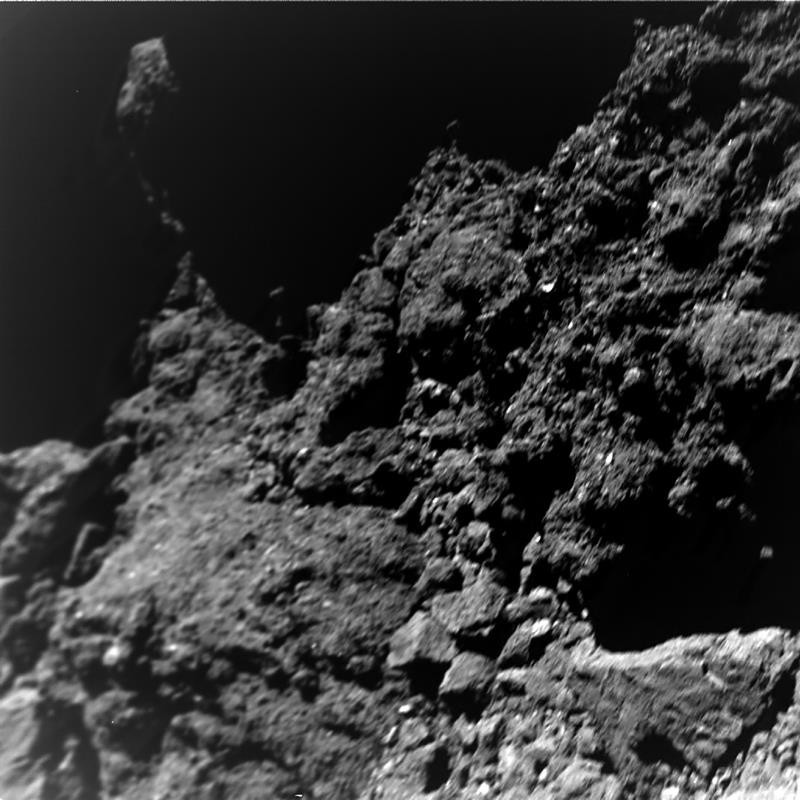
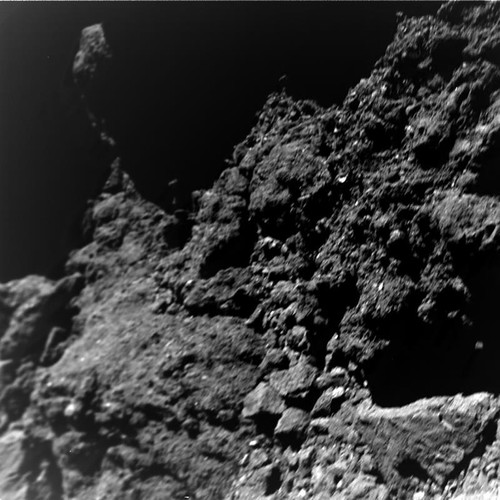
In addition to taking temperature readings and other measurements, MASCOT reeled off a series of pictures showing the asteroid is covered with rocks and boulders that fall into one of two categories: dark and rough with crumbly surfaces that resemble cauliflowers, or bright and smooth.

"The interesting thing there is it really shows that Ryugu is the product of some kind of violent process," Ralf Jaumann of the German Aerospace Center and the lead author of a paper describing the findings in the journal Science on Thursday, told AFP.

Ryugu may be the "child" of two parent bodies that collided, broke up, and then came back together through gravity, the researchers say.

Another theory is that it could have been struck by another body that created different interior temperature and pressure conditions, resulting in the two types of material.

Many of the rocks also contained small blue and red "inclusions" -- material that was trapped in the rock during its formation -- making them extremely similar to a type of rare, primitive meteorites found on Earth called carbonaceous chondrites.

"This material is primitive material -- it's the very first material of the solar nebula," or the cloud of interstellar dust and gas that formed the planets of our system, said Jaumann.

Hayabusa2 will eventually return to Earth carrying samples, but MASCOT's observations provide information on the material's original geologic context: how it is exposed to temperature changes, how it gets weathered, and so on.

Why is this important?

"We don't know how planets formed in the beginning," said Jaumann.

"And in order to understand this, (we must) go to the small bodies, these primitive bodies, primordial in their history in their evolution, in order to understand the first 10 to 100 million years of planetary formation."


  • shortlink copied
  • KEYWORDS
    life
    The Daily Sabah Newsletter
    Keep up to date with what’s happening in Turkey, it’s region and the world.
    You can unsubscribe at any time. By signing up you are agreeing to our Terms of Use and Privacy Policy. This site is protected by reCAPTCHA and the Google Privacy Policy and Terms of Service apply.
    No Image
    In photos: Millions without power as extreme cold hits US
    PHOTOGALLERY
    • POLITICS
    • Diplomacy
    • Legislation
    • War On Terror
    • EU Affairs
    • News Analysis
    • TÜRKİYE
    • Istanbul
    • Education
    • Investigations
    • Minorities
    • Diaspora
    • World
    • Mid-East
    • Europe
    • Americas
    • Asia Pacific
    • Africa
    • Syrian Crisis
    • İslamophobia
    • Business
    • Automotive
    • Economy
    • Energy
    • Finance
    • Tourism
    • Tech
    • Defense
    • Transportation
    • News Analysis
    • Lifestyle
    • Health
    • Environment
    • Travel
    • Food
    • Fashion
    • Science
    • Religion
    • History
    • Feature
    • Expat Corner
    • Arts
    • Cinema
    • Music
    • Events
    • Portrait
    • Performing Arts
    • Reviews
    • Sports
    • Football
    • Basketball
    • Motorsports
    • Tennis
    • Opinion
    • Columns
    • Op-Ed
    • Reader's Corner
    • Editorial
    • Photo gallery
    • DS TV
    • Jobs
    • privacy
    • about us
    • contact us
    • RSS
    © Turkuvaz Haberleşme ve Yayıncılık 2021