Club football offers a long list of trophies, but not all silverware carries the same weight. A domestic league title tests a team's consistency across an entire season, a continental championship measures it against the best clubs in its region, while global competitions determine which team can claim to be the best in the world.
The hierarchy is not officially defined and varies by country and football culture. Still, the biggest prizes generally sit at the top: the leading continental championships, domestic league titles and global club championships.
Major domestic cups and super cups follow, while secondary continental competitions and league cups occupy the next level.
Here, Daily Sabah compiles a guide to the principal trophies available to clubs, with the latest results and formats as of late August 2026.
Continental competitions are the centerpiece of club football outside the domestic game. Each of FIFA's six confederations runs a premier competition for its leading clubs, although the names, formats and qualification systems differ.
UEFA Champions League
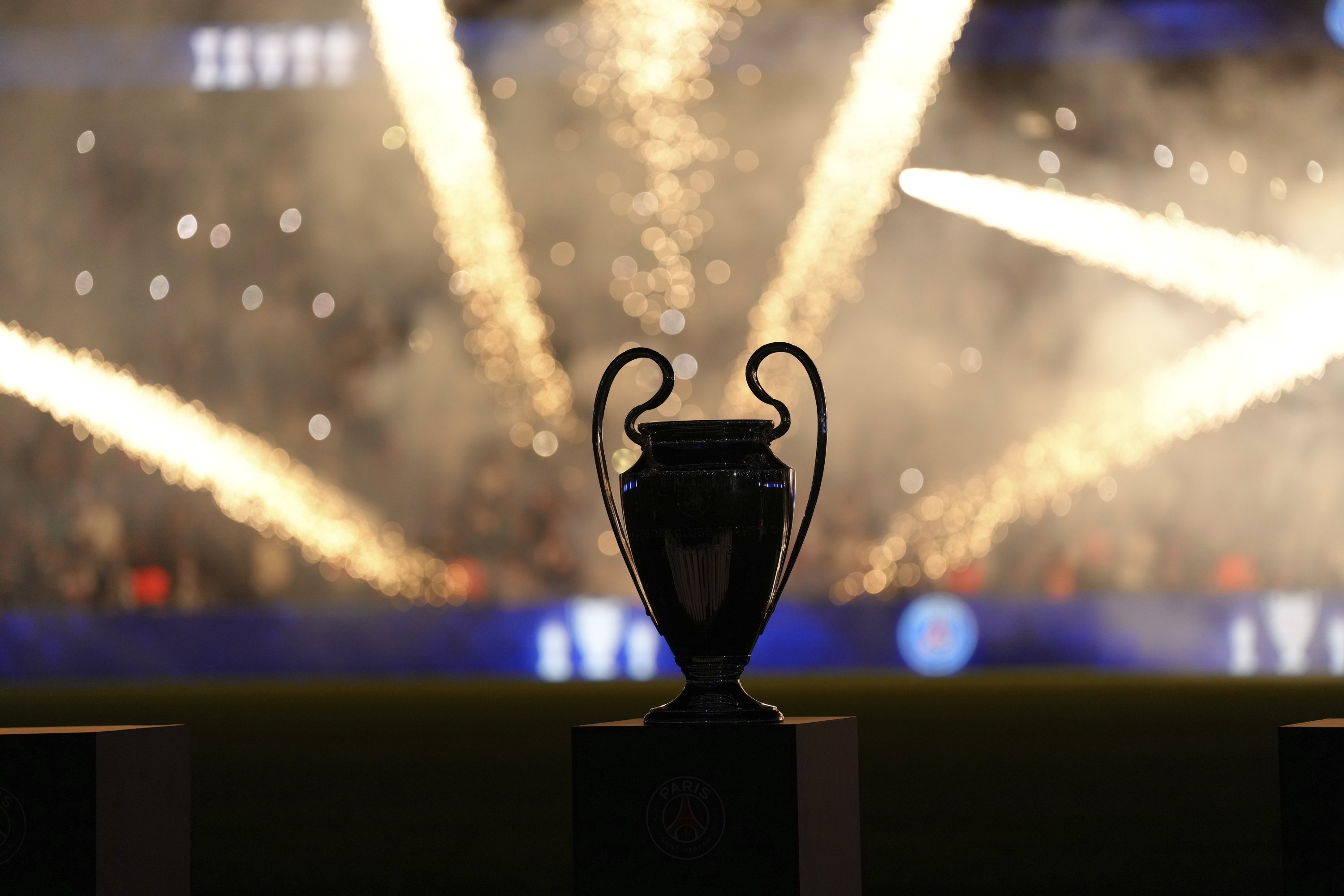
The UEFA Champions League is widely regarded as the most prestigious annual club competition in world football.
The tournament began as the European Champion Clubs' Cup in 1955-56 and adopted the Champions League name in 1992-93. Real Madrid remain the record winners with 15 European Cups and Champions League titles.
The competition underwent its biggest structural change in decades in 2024-25, replacing the traditional group stage with a 36-team league phase. Each club plays eight matches against eight different opponents. The top eight teams advance directly to the round of 16, while teams finishing ninth through 24th enter a knockout playoff for the remaining places.
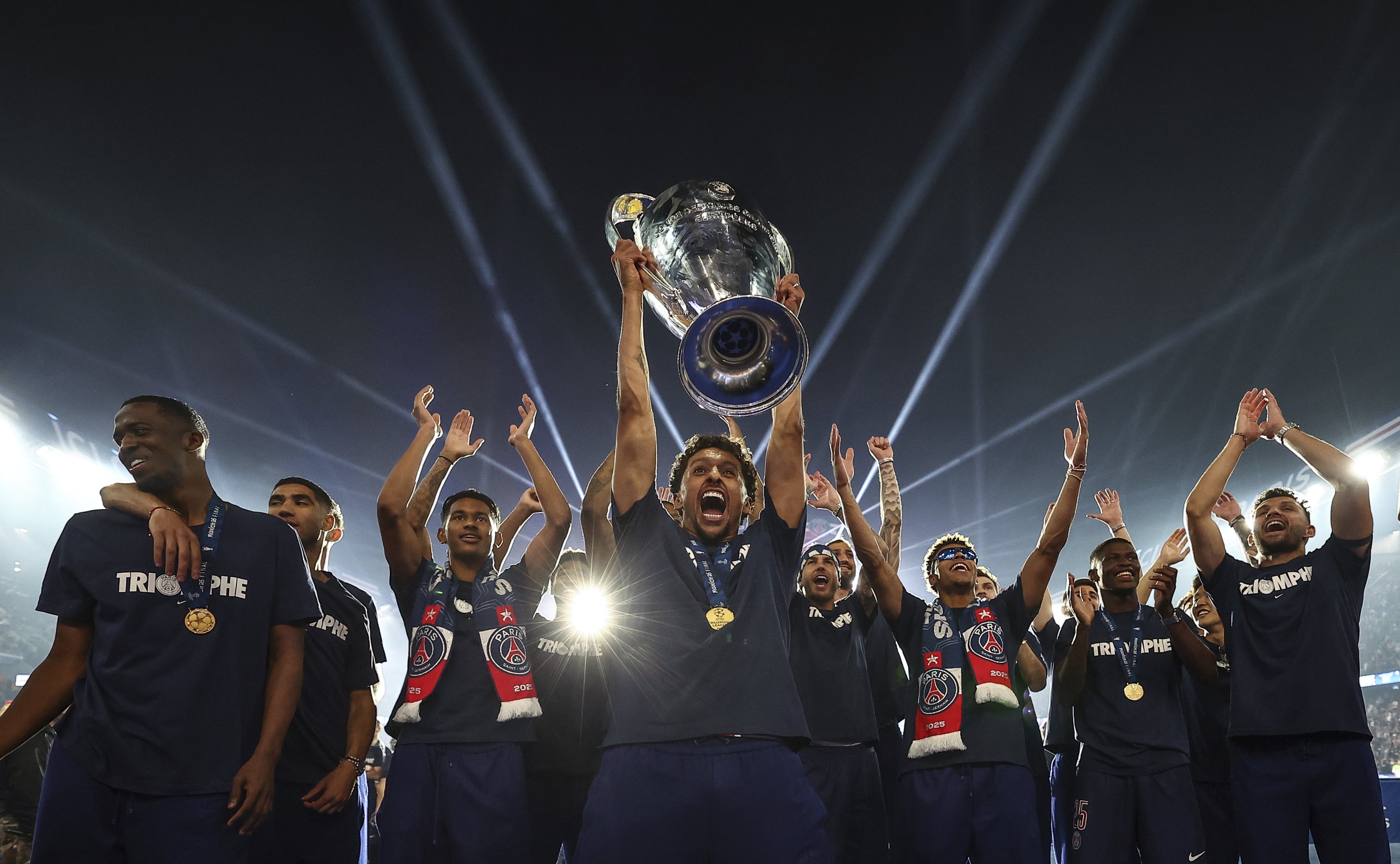
Paris Saint-Germain have become the latest dominant force in the competition. After winning their first Champions League title in 2025, PSG successfully defended the crown in 2026, beating Arsenal 4-3 on penalties after a 1-1 draw in the final in Budapest. They became only the second club in the Champions League era to retain the trophy, after Real Madrid's three consecutive titles between 2016 and 2018.
The Champions League winner also earns places in the UEFA Super Cup and FIFA's global club competitions.
Copa Libertadores
South America's premier club competition, the Copa Libertadores, was founded in 1960 and is the continent's equivalent of the Champions League.
Argentine club Independiente remain the record winners with seven titles, followed by Boca Juniors with six. Peñarol have five, while River Plate, Estudiantes and Flamengo have four each.
The competition traditionally begins with qualifying rounds before moving into a 32-team group stage. The knockout rounds lead to a single-match final, a format introduced in 2019.
The Libertadores winner also qualifies for the Recopa Sudamericana and FIFA's global competitions.
AFC Champions League Elite
The AFC Champions League Elite is Asia's top club competition. It replaced the previous AFC Champions League format as part of a broader restructuring of Asian club football.
The tournament brings together the leading clubs from across Asia and crowns the continent's top side. Its elite status makes it the most prestigious club trophy available to teams in the Asian Football Confederation.
CAF Champions League
Africa's premier club competition is the CAF Champions League.
Egyptian giants Al Ahly are the competition's most successful club and have established a level of dominance unmatched by any other African side. The tournament brings together the continent's leading clubs through qualifying rounds, a group or league-stage structure and knockout rounds.
The champion earns continental prestige and a route into FIFA's global club competitions.
CONCACAF Champions Cup
The CONCACAF Champions Cup is the leading club competition in North America, Central America and the Caribbean.
Mexican clubs have historically dominated the tournament, with América, Cruz Azul and other Liga MX powers accounting for much of its history.
The competition crowns the region's representative for FIFA's global club competitions and has become increasingly important as Major League Soccer clubs have challenged the traditional Mexican dominance.
OFC Champions League
The OFC Champions League is Oceania's premier club tournament.
New Zealand's Auckland City have dominated the competition and are the region's most successful club. Their continental success has repeatedly taken them onto the global stage.
The second tier of continental football remains highly significant, particularly for clubs that cannot regularly compete in the top-level championship.
UEFA Europa League
The Europa League is European football's second-tier continental competition, having evolved from the UEFA Cup.
Spanish clubs have historically dominated it, with Sevilla holding the record for most titles.
Since 2024-25, the competition has used a 36-team league phase similar to the Champions League. The winner receives a place in the following season's Champions League league phase if it has not already qualified domestically.
Aston Villa won the 2025-26 Europa League, beating Freiburg 3-0 in the final at Beşiktaş Park in Istanbul, Türkiye.
UEFA Conference League
The UEFA Conference League was introduced in 2021-22 to provide more European clubs with meaningful continental competition.
It sits below the Champions League and Europa League in UEFA's hierarchy but can be a major achievement for clubs from smaller football associations.
The winner qualifies for the following season's Europa League.
Chelsea have completed an unusual collection of UEFA club trophies, having won the Champions League, Europa League, Conference League and the now-discontinued European Cup Winners' Cup.
Copa Sudamericana
The Copa Sudamericana is South America's second major continental competition.
It is broadly comparable to the Europa League in UEFA's system and provides clubs outside the Libertadores elite with the opportunity to win a major international trophy.
The winner faces the Copa Libertadores champion in the Recopa Sudamericana.
Other confederations operate comparable second-tier competitions, including the CAF Confederation Cup and AFC Champions League Two.
These trophies generally carry less prestige than the leading continental championships but remain important because they provide international exposure, qualification opportunities and a route toward higher-level competitions.
If continental football measures a club against its region, the domestic league measures its consistency over an entire season.
A league championship is often regarded as the most important domestic trophy because it rewards sustained performance rather than a single knockout run.
Premier League
England's Premier League was established in 1992 and features 20 teams playing 38 matches each.
Manchester United are the record Premier League champions with 13 titles, followed by Manchester City with eight. Chelsea have five, while Arsenal moved to four after winning the 2025-26 championship.
Arsenal ended a 22-year wait for the English top-flight title in 2026, finishing seven points clear of Manchester City with 85 points.
The bottom three teams are relegated to the Championship, while the highest finishers qualify for European competitions.
La Liga
Spain's top division was founded in 1929 and is also contested by 20 teams over 38 matches.
Real Madrid are the record champions with 36 titles. Barcelona have 29, Atlético Madrid have 11 and Athletic Club have eight.
Barcelona successfully defended their title in 2025-26, finishing with 94 points under Hansi Flick. Lamine Yamal was named the league's best player after contributing 16 goals and 12 assists.
Serie A
Italy's top division remains one of Europe's most prestigious domestic championships.
Juventus are historically the most successful club, while Inter Milan, AC Milan and Napoli have also enjoyed significant periods of dominance.
Bundesliga
Germany's Bundesliga is another major European league, with Bayern Munich the clear record champion.
The Bavarian club's sustained domestic dominance has made the Bundesliga one of the clearest examples of a league where a single club has established long-term superiority.
Ligue 1
France's top division has been increasingly dominated by Paris Saint-Germain during the modern era.
PSG's domestic success has accompanied their rise as a European power, although clubs such as Marseille, Lyon, Monaco and Lille have also enjoyed significant periods of success.
Other important league titles include Portugal's Primeira Liga, the Netherlands' Eredivisie, Brazil's Série A, Argentina's Primera División, Türkiye's Süper Lig, Scotland's Premiership and numerous other national championships.
The importance of a league title depends heavily on its football culture. In some countries, winning the domestic championship can carry more emotional weight than a continental trophy.
Domestic cups are knockout competitions that typically involve clubs from multiple divisions.
Their appeal lies partly in their unpredictability. Lower-division teams can eliminate elite clubs, creating the possibility of giant-killing runs that are almost impossible in a league campaign.
FA Cup
The FA Cup is England's principal domestic knockout competition and one of the oldest national cup tournaments in football.
It was first staged in 1871-72 and has traditionally been open to a huge number of clubs across the English football pyramid.
Arsenal are the record winners with 14 FA Cup titles. The final is traditionally played at Wembley Stadium.
Copa del Rey
Spain's principal domestic cup is the Copa del Rey.
Barcelona are the record winners with 32 titles, followed by Athletic Club with 24 and Real Madrid with 20.
Unlike a league championship, the Copa del Rey can be won by a club that has struggled domestically, making it one of Spain's most unpredictable major trophies.
Almost every major football nation has its own principal knockout competition.
Examples include:
The exact format differs between countries, but most use knockout rounds and give smaller clubs opportunities to face top-flight opposition.
Cup winners often earn qualification for continental competition, adding another layer of importance.
Some countries also operate a separate knockout competition exclusively or primarily for clubs in their professional league system.
England's EFL Cup is the best-known example.
The League Cup is considered less prestigious than the Premier League and FA Cup but remains a significant trophy, particularly because it offers clubs a relatively direct route to silverware and European qualification.
Other countries have comparable competitions, although their importance varies considerably.
Super cups usually bring together the winners of two major competitions from the previous season.
They are normally single-match events and are often played shortly before or during the opening weeks of a new season.
UEFA Super Cup
The UEFA Super Cup pits the Champions League winner against the Europa League winner.
Paris Saint-Germain won the 2026 edition, defeating Aston Villa 2-1 in Salzburg. PSG became only the third club to win consecutive UEFA Super Cups.
The competition is prestigious, but it generally ranks below the Champions League and Europa League because it is decided by one match rather than an extended campaign.
Domestic super cups
Many national associations stage similar competitions.
Major examples include:
Some super cups involve two teams, while others use a small tournament format.
South America's Recopa pits the Copa Libertadores winner against the Copa Sudamericana champion.
Unlike many European super cups, it is traditionally contested over two legs, adding another layer of competition.
Global competitions occupy a special place because they bring together champions from different confederations.
FIFA Club World Cup
FIFA relaunched the Club World Cup as a 32-team tournament in 2025, with the competition moving to a four-year cycle.
The inaugural expanded edition was held in the United States and featured eight groups of four teams, followed by a knockout phase.
Chelsea became the first champions of the expanded tournament, defeating Paris Saint-Germain 3-0 in the final at MetLife Stadium in July 2025.
The tournament is designed to determine a global club champion on a scale comparable to FIFA's national-team World Cup, although its place in the traditional club-football hierarchy is still developing.
The next edition is scheduled for 2029.
FIFA Intercontinental Cup
The FIFA Intercontinental Cup provides an annual global competition after the Club World Cup moved to a four-year cycle.
It brings together the champions of FIFA's six confederations through a knockout pathway, with the UEFA Champions League winner advancing directly to the final.
Real Madrid won the inaugural edition in 2024.
Paris Saint-Germain won the 2025 edition, defeating Flamengo on penalties after a 1-1 draw in Qatar.
The competition effectively preserves an annual global championship opportunity for continental champions.
Intercontinental Cup, 1960-2004
The former Intercontinental Cup was a different competition.
Played between the European Cup or Champions League winner and the Copa Libertadores champion, it was one of the most prestigious club fixtures in world football for decades.
FIFA now recognizes the historical competition as part of the world club championship lineage.
It was replaced by the FIFA Club World Championship in 2000 and ultimately discontinued after 2004.
There is no universally accepted ranking because prestige depends on geography, history and club culture. However, a broad hierarchy can be established.