As Galatasaray marks its 120th anniversary in 2025, the club reflects a journey that began long before stadiums, roaring crowds, and Champions League glory.
Founded in 1905 by a group of visionary high school students, Galatasaray has grown from the classrooms of Galatasaray High School to become Türkiye’s most iconic sports institution, leaving an indelible mark on football, basketball, volleyball, and beyond.
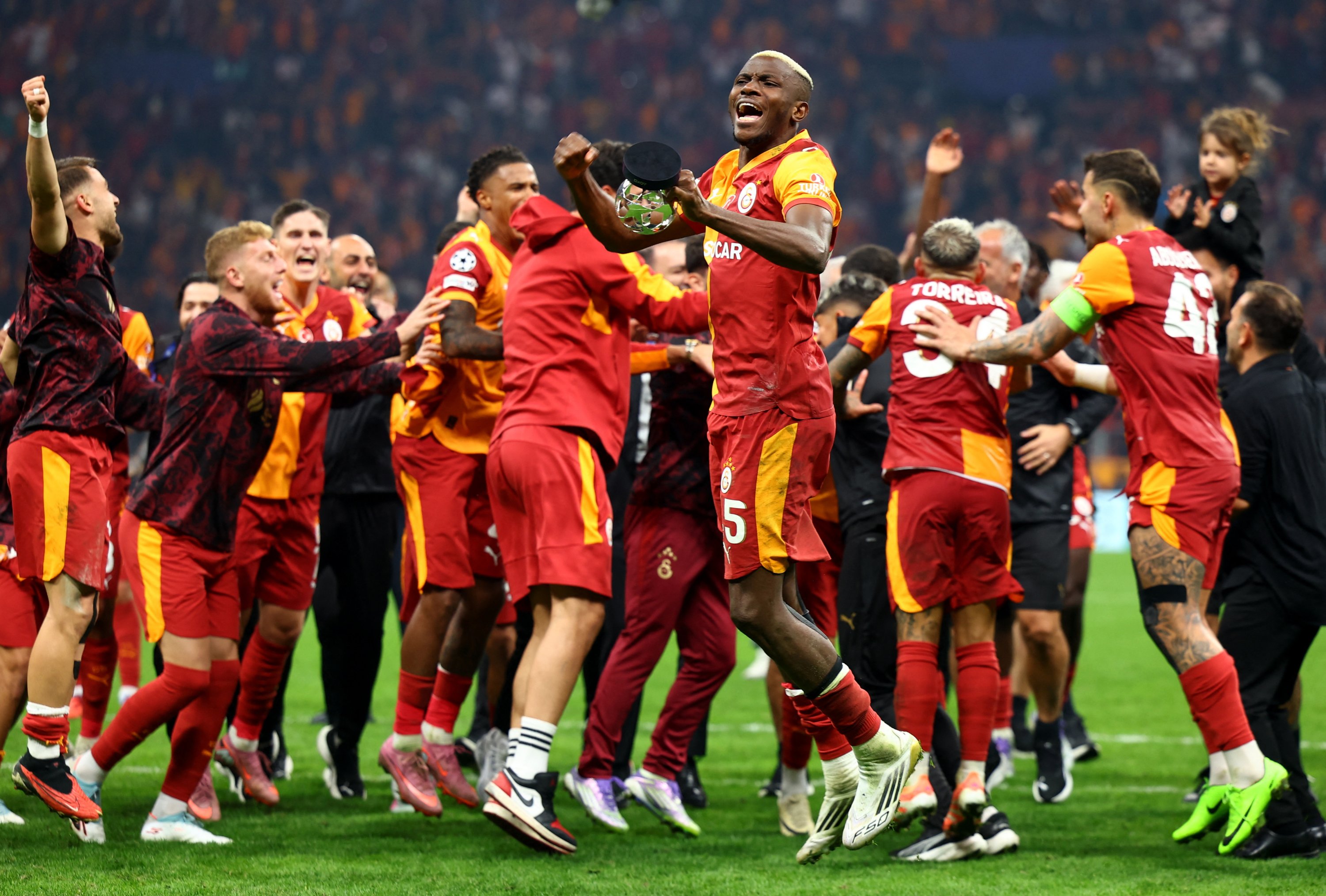
This milestone coincided with a symbolic moment on the pitch: a 1-0 UEFA Champions League win over Liverpool at RAMS Park, a victory that ended a seven-match European winless streak.
Yet, while the result sparked celebrations among 51,160 fans, the true story lies in the club’s deep historical roots and enduring legacy.
Galatasaray’s origins trace back to 1481, when Sultan II. Beyazıt established the Galatasaray High School (Mektebi Sultani) in Istanbul to educate the Ottoman elite.
The institution became a crucible not only for intellectual growth but also for physical culture.
In 1868, gymnastics instructor Monsieur Curel introduced structured physical education, followed by successors M. Moiroux, Signor Martinetti, and Stangali, who expanded the curriculum to include athletics, swimming, rowing, and apparatus gymnastics.
The turn of the 20th century saw sports flourishing in Istanbul, especially among youth in high schools.
Galatasaray students, inspired by the athletic programs and the broader football movement in the city, embraced the sport with enthusiasm. Football, which had been gaining traction among foreign and minority communities in Istanbul, found eager adopters among the students.
On 1 Teşrin 1905, Ali Sami Yen, a fifth-grade student, and 12 classmates officially founded Galatasaray Sports Club.
Their aim was clear: to emulate the teamwork of English clubs, adopt a unique name and colors, and challenge non-Turkish teams.
Early debates considered names like “Gloria” or “Audace,” yet they ultimately settled on “Galatasaray,” honoring their school and the district of Galata Sarayı.
The club’s official registration would come eight years later, in 1913, after the Ottoman Cemiyetler Kanunu legalized associations.
Until then, the club operated informally, training and playing matches while building its identity and tradition.
Galatasaray’s first football match took place on Nov. 10, 1905, against Kadıköy Faure Mektebi, a Rum school team.
The student squad triumphed 2-0, marking the birth of the first Turkish football team. The victory set the tone for decades of competition, innovation, and pride.
Early on, the club established its iconic red and yellow colors.
Ali Sami Yen described discovering two wools in Bahçekapı that “shone like the head and wings of a small bird in sunlight, leading us from victory to victory.”
Some accounts trace the choice to the yellow and red roses given by Gül Baba to Sultan II. Beyazıt.
In 1923, Galatasaray’s first emblem appeared, designed by student Ahmet Ayetullah and published in the high school magazine Kara Kedi, cementing the club’s visual identity.
Galatasaray was more than a football club; it was a symbol of Turkish pride and modernity.
In 1928, the club won the Gazi Büstü, a trophy personally linked to Mustafa Kemal Atatürk, awarded in a match against Fenerbahçe.
The victory represented not only sporting success but also national recognition, embedding the club into Türkiye’s cultural fabric.
Over the years, Galatasaray has been guided by 38 presidents, from founder Ali Sami Yen to current chairman Dursun Özbek.
Each era contributed to the club’s legacy, expanding its reach across football, basketball, volleyball, water polo, and individual sports, building a multi-disciplinary institution with global recognition.
Galatasaray remains Türkiye’s most successful football club: 25 Süper Lig titles, 19 Turkish Cups, 10 Presidential Cups, and multiple other trophies.
Its European success is unmatched among Turkish clubs, highlighted by the 2000 UEFA Cup victory under Fatih Terim and the 2001 UEFA Super Cup under Mircea Lucescu.
Beyond football, the club excels in other disciplines.
Men’s basketball has claimed five league titles and a ULEB Europe Cup, while women’s basketball has 13 league titles and multiple European trophies.
Volleyball, water polo, and swimming continue to flourish.
The club counts more than 11,800 active members, with over 3,200 long-standing members in the prestigious Divan Council.
The recent Champions League victory over Liverpool is a fitting, contemporary echo of Galatasaray’s enduring spirit.
Victor Osimhen’s 16th-minute penalty not only delivered three points but also highlighted the club’s continuing capacity to compete at the highest level, bridging past achievements with modern triumphs.