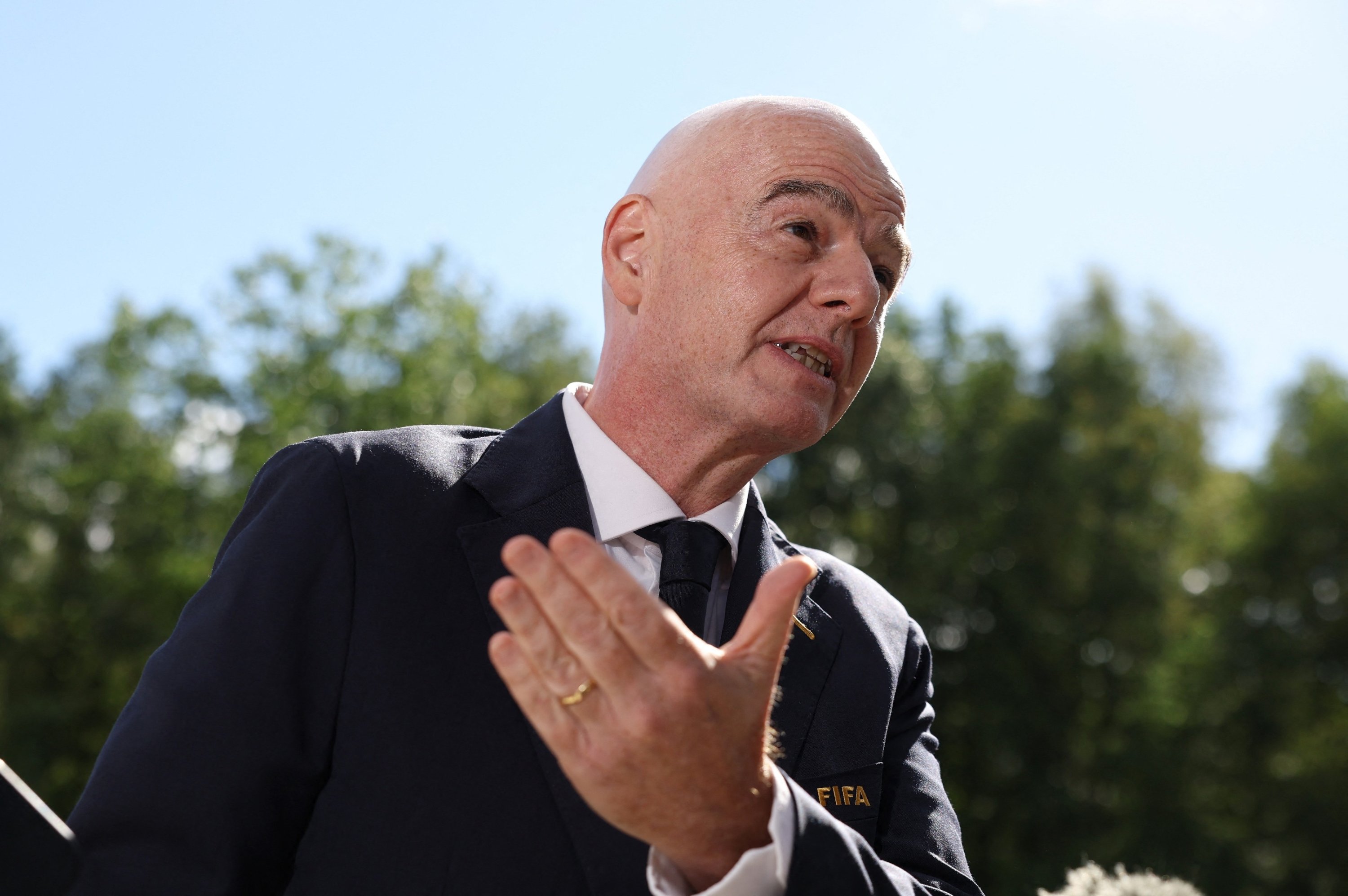
The battle to remove Gianni Infantino as FIFA president appears to be losing momentum, but the dispute shaking world football is far from over.
Instead of focusing on who could succeed him, senior figures increasingly expect the crisis to shift toward how much power Infantino should retain if he remains in office.
Two possibilities are emerging. FIFA could reach a governance compromise in which Infantino stays president but accepts limits on his authority.
Or the organization could enter a prolonged confrontation in which clubs, confederations, national associations and player representatives challenge FIFA over competitions, finances and control of the international calendar.
"What is clear now ... is that he's going nowhere," a senior world football executive told Reuters. "A hot-cold war is a very real problem for FIFA and for world football."
Another veteran sports executive questioned how FIFA could function if many of the game's most powerful institutions continued to oppose Infantino.
"You would have effectively a civil war within the governance which I cannot recall in a sports body before," the executive said. "Unprecedented."
Two other senior football officials independently backed that assessment, according to Reuters, raising the prospect of a prolonged internal struggle that could make major FIFA initiatives harder to implement.
"Does he become a lame duck?" the veteran executive asked.
Infantino has proposed an independent review of FIFA's governance framework for major strategic initiatives.
In a letter to the FIFA Council and presidents of all 211 member associations, he called for an external review of major decision-making and consultations with confederations, associations and other stakeholders on strengthening FIFA's governance.
Infantino has said he remains committed to leading FIFA and has called for greater dialogue. But the proposals have done little to restore trust among some critics.
UEFA President Aleksander Ceferin said Wednesday that Infantino's abandoned private-investment proposal had damaged confidence in FIFA.
"The project that shattered the unity of world football may be abolished, but the trust it broke has not returned," Ceferin said at the Portugal Football Summit.
"Football is not for sale," he added.
Ceferin was referring to the proposal to sell a 20% stake in FIFA's commercial rights, including rights connected to the World Cup. The plan was abandoned in July after opposition from UEFA, the Asian Football Confederation and CONCACAF.
England's Football Association has also asked FIFA to release documents related to the investment proposal and its handling of the decision to overturn the red card shown to U.S. forward Folarin Balogun during this summer's tournament.
For Infantino, who has led FIFA since 2016, a compromise could allow him to remain in office while easing tensions.
One senior football executive suggested creating a new governance structure to dilute the president's authority, describing Infantino's current proposals as the "bare minimum" needed to create room for him to continue.
The debate carries historical irony. Reforms introduced after the downfall of former FIFA president Sepp Blatter were intended partly to prevent excessive power from being concentrated in the presidency. A decade later, football is again debating the limits of presidential authority.
Without a compromise, the conflict could become less dramatic but more persistent.
Clubs could challenge FIFA over the Club World Cup, financial distributions and player-release rules. Player representatives could contest the crowded international calendar, while national associations and confederations could resist FIFA initiatives or competition changes.
"One, a compromise where Gianni gives up some of his power and there are some new bodies that are created or, two, a permanent hot-cold war where all the stakeholders just fight every issue," the executive said.
Such disputes could involve expanded World Cups, larger or more frequent Club World Cups and FIFA's commercial revenue distribution.
The focus on governing alongside Infantino reflects another reality: his position appears to have strengthened since the investment controversy erupted.
A national association president told Reuters, on condition of anonymity, that Infantino's opponents may have missed their strongest opportunity when the backlash was at its peak.
Infantino has several opportunities in the coming months to meet national association leaders at tournaments, congresses and confederation events ahead of the FIFA presidential election in March 2027.
Africa could be particularly important. Infantino has been invited to a CAF strategy conference in Cape Verde in October, while CAF President Patrice Motsepe remains a supporter. Africa's 54 member associations represent a significant bloc within FIFA's 211-member Congress.
Ceferin and CONCACAF President Victor Montagliani have also proposed that FIFA distribute at least $10 million from its reserves to each member association during the next financial cycle.
For smaller associations reliant on FIFA funding, such payments could have major implications for football development.
If Infantino is reelected, some federations opposing him could eventually decide that prolonged confrontation offers little benefit and seek a more practical relationship with his administration.
Infantino has sought to reinforce that message publicly.
Writing on Instagram Thursday while attending the Arabian Gulf Cup in Saudi Arabia, he said he had received positive responses to his governance proposal and stressed the need for dialogue.
"There must be a culture of dialogue, of listening to each other and respecting one another," Infantino wrote.
"This is not about generating positive headlines, it is about doing what is right for the game."
The FIFA Council is due to consider the issue at its next meeting in October.