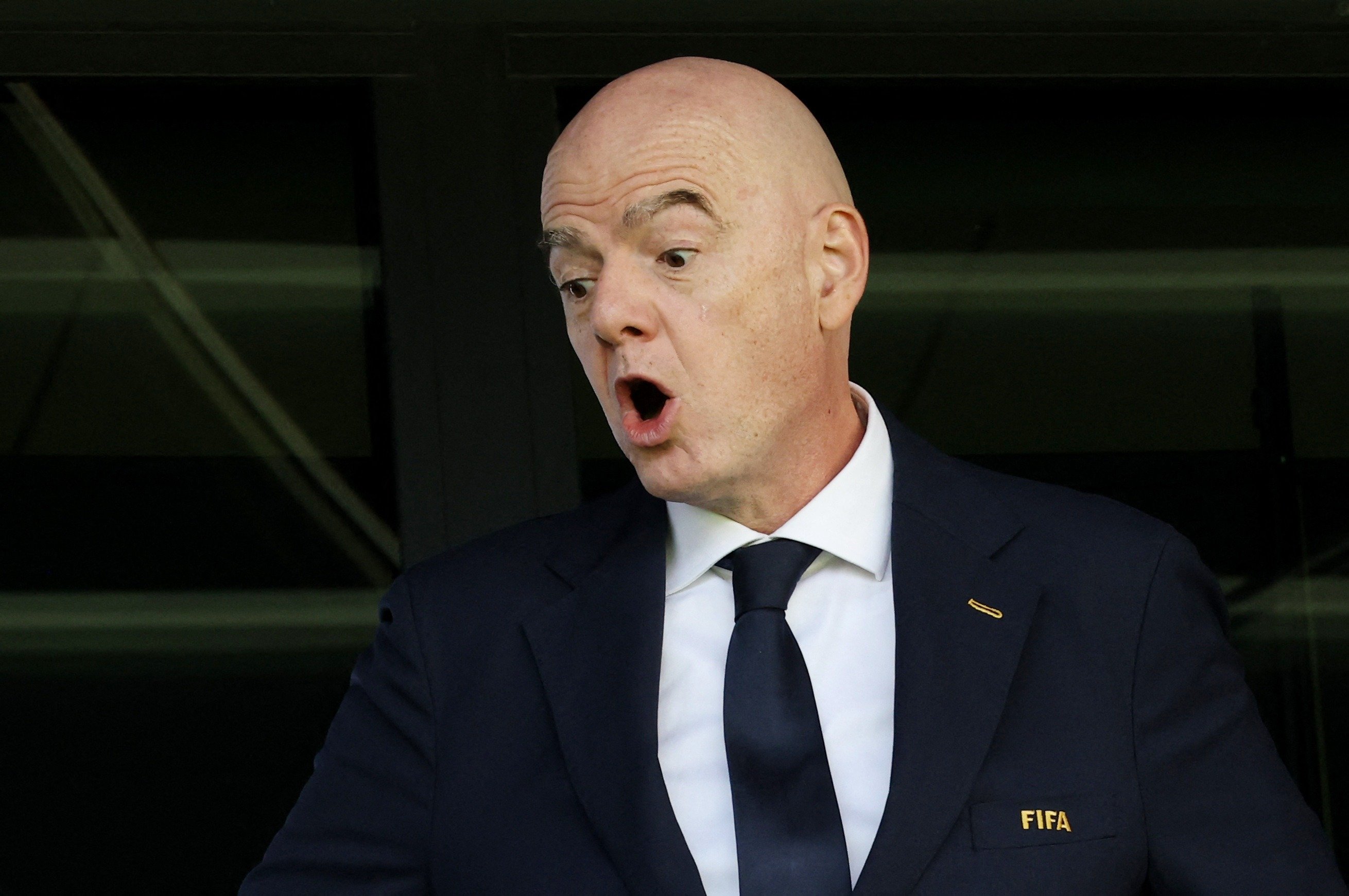
FIFA President Gianni Infantino’s proposal for an independent review of the governing body’s decision-making process has failed to ease concerns among several major member associations, with Germany, the Netherlands, Sweden and Wales calling for deeper changes to FIFA’s leadership and governance.
Infantino wrote to FIFA’s 211 member associations and Council members Monday, proposing an independent external review of how FIFA handles major strategic initiatives and consultations with confederations, national associations and other stakeholders on possible governance reforms.
The proposals are expected to be discussed at the FIFA Council meeting in Zurich on Oct. 15.
The move comes after the collapse of FIFA Forward Enterprise, a proposal that would have created a FIFA-owned commercial subsidiary and involved outside investment in rights linked to FIFA competitions, including the World Cup.
FIFA withdrew the plan in July following strong opposition from several continental confederations.
Infantino struck a conciliatory tone in his letter, saying FIFA needed to examine how major strategic decisions are made and consider ways to improve transparency, participation and accountability.
He also sought to reassure member associations that their positions on governance proposals would not affect their treatment by FIFA and that development and solidarity programs would continue under existing rules. Infantino said he remained fully committed to leading the organization.
The proposals, however, have done little to quell criticism of the FIFA president.
Germany Football Association President Bernd Neuendorf, who also sits on the FIFA Council, dismissed the initiative as an attempt by Infantino to strengthen his position ahead of next year’s presidential election.
“I regard Gianni Infantino’s letter as a transparent ploy to secure his re-election next year,” Neuendorf said Tuesday.
“FIFA now seems to have recognised that changes are essential. However, Gianni Infantino is definitely not the right person to lead a reform process. He has squandered all credibility.”
The Dutch Football Association also said the proposals had not restored its confidence in FIFA, although it acknowledged that some of the measures were consistent with reforms it had previously advocated.
The KNVB, one of FIFA’s founding members, has called for an international summit in Amsterdam to discuss an overhaul of the organization and has urged a change in FIFA’s leadership by 2027.
A KNVB spokesperson said the proposals were partly in line with its calls for reform, but added that their effectiveness would ultimately depend on how they were implemented.
Swedish Football Association President Simon Aström similarly welcomed elements of Infantino’s proposal but said the measures had come too late and did not go far enough.
“The content of the letter is in line with what we have been calling for over a long period of time,” Aström said.
“These initiatives come late, and several of the measures should have been implemented long ago.”
Åström said the letter had not changed Sweden’s position that FIFA needed new leadership.
In Wales, Football Association of Wales Chief Executive Noel Mooney questioned whether Infantino’s proposals amounted to a broad reform of FIFA itself.
“It doesn’t actually say reform of FIFA itself. It talks about reform around strategic projects and initiatives,” Mooney said in an interview with BBC Radio Wales.
Mooney also reiterated the FAW’s opposition to FIFA’s abandoned private investment proposal, arguing that the governing body should use its existing financial resources to support football development rather than seek outside investors.
“You’re not looking for somebody to sell off parts of the game. The World Cup does not need private equity,” he said.
The dispute stems from FIFA Forward Enterprise, which FIFA had presented as a way to increase revenues available for football development. FIFA said the proposed subsidiary would remain under its ownership and control and that sporting and regulatory decisions would remain with FIFA.
Critics, however, objected to the way the proposal was handled and argued that national associations and confederations had not been adequately consulted. UEFA, the Asian Football Confederation and CONCACAF were among those opposing the plan, while UEFA subsequently expressed a loss of confidence in Infantino’s leadership.
Infantino, who has led FIFA since his election in 2016, is seeking another term at the FIFA Congress in March 2027. With no strong challenger having emerged so far, opposition within parts of the membership has increasingly focused on changes to the powers and decision-making structure of the presidency. Reuters reported that people familiar with the discussions believe Infantino retains enough support to remain in contention for another term.