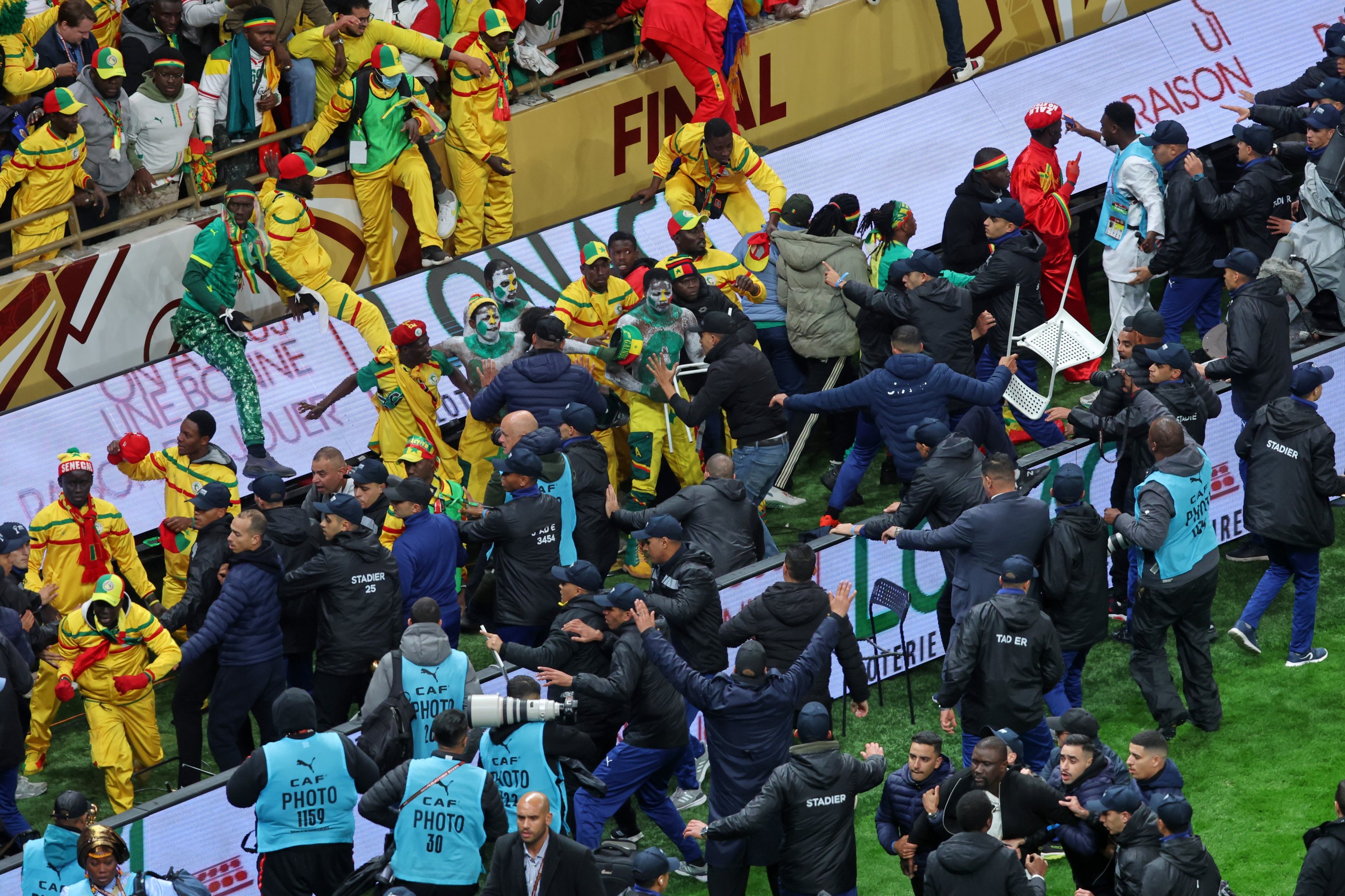
A Moroccan court on Thursday handed prison terms of up to one year to 19 foreign football fans, capping a high-profile legal battle that followed chaotic scenes at last month’s Africa Cup of Nations (AFCON) final between Morocco and Senegal.
After more than five hours of hearings, the court convicted 18 Senegalese nationals and one French supporter of hooliganism, violence at a sporting event and damaging public property.
The ruling followed weeks of pretrial detention for the defendants, who had been held since Jan. 18, the night Senegal beat the hosts 1-0 in a final overshadowed by disorder.
Judges handed 11 defendants one year in prison and fines of 5,000 Moroccan dirhams ($550). Four received six months and fines of 2,000 dirhams. The remaining four were sentenced to three months and fined 1,000 dirhams. Defense lawyers described the penalties as severe and said they would appeal.
The courtroom scene reflected the tension that has surrounded the case. One defendant fainted as the verdict was read. Others protested from the dock, refusing to stand when ordered to be escorted away. Relatives insisted their family members were innocent, arguing they had been swept up in a broader melee rather than instigating violence.
The unrest erupted in stoppage time after the referee awarded Morocco a late penalty. Senegal’s players halted the match for nearly 20 minutes in protest. In the stands, anger spilled over. Some Senegalese supporters attempted to breach security and enter the pitch. Chairs and other objects were thrown toward the field. Stewards and police moved in to restore order as the scenes were broadcast live across Africa.
Prosecutors said the accused deliberately sought to disrupt the match and relied on surveillance footage and medical reports documenting injuries among security personnel. They estimated damage to the stadium at more than 4 million dirhams.
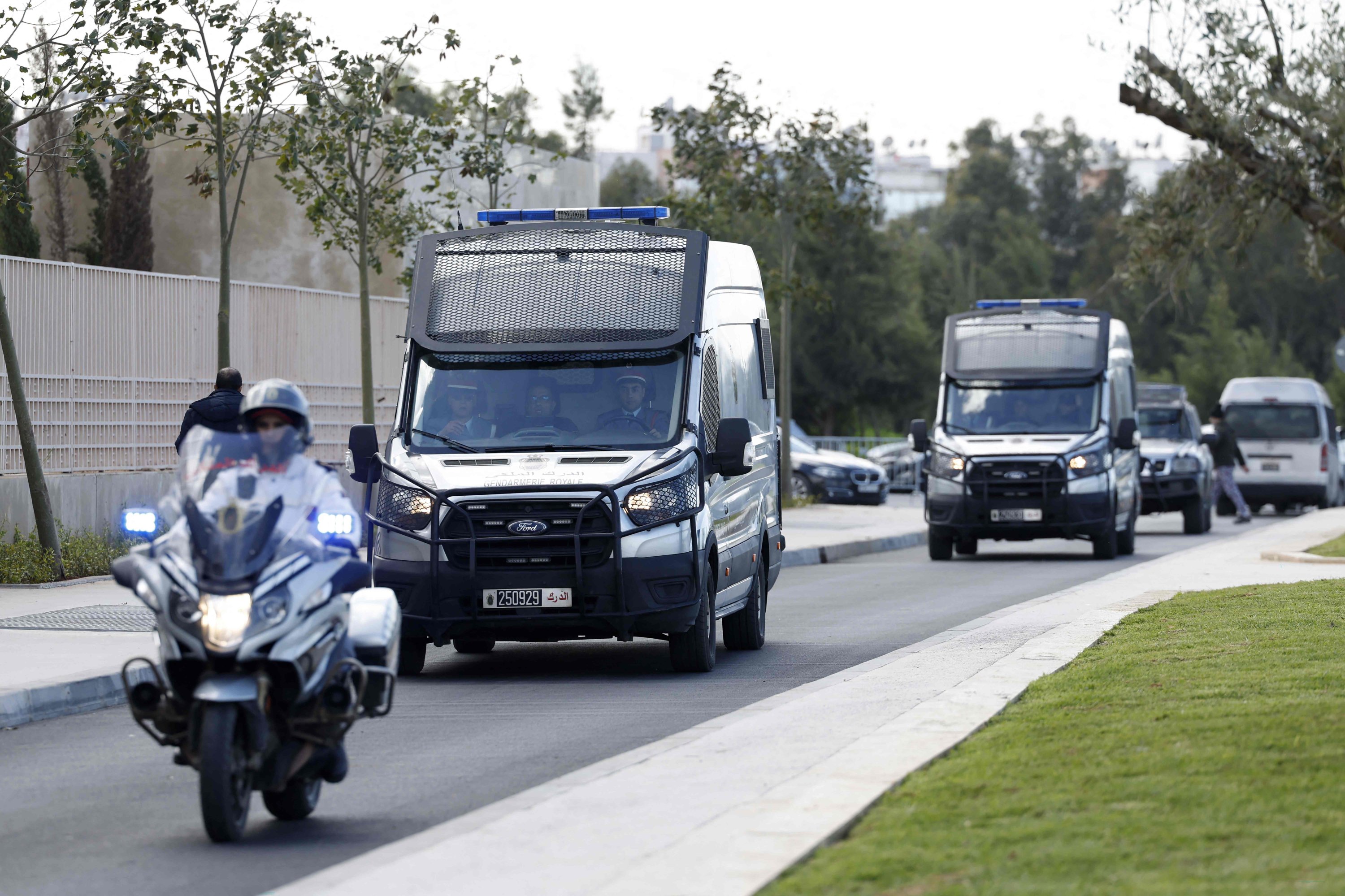
The public prosecutor pushed for penalties of up to two years, arguing the conduct posed a serious threat to public safety and the integrity of the event.
Defense attorneys challenged the strength of the evidence, saying the footage did not provide irrefutable proof that any of their clients assaulted security staff or destroyed property.
They argued the men were victims of collective blame in a charged atmosphere.
Lawyers also cited sanctions imposed by CAF on both the Senegalese and Moroccan federations, including heavy fines for breaches of discipline and fair play, suggesting the matter had already been addressed at the sporting level.
Lawyers representing injured members of the security forces rejected that argument, saying disciplinary sanctions by a sports body do not replace criminal accountability. The court ultimately agreed.
The case has carried diplomatic sensitivity.
Senegalese and French diplomats attended the hearing as officials in Rabat and Dakar worked to calm tensions fueled by heated rhetoric and a spike in hostile online commentary.
Senior leaders from both countries stressed their economic and political partnership in the aftermath of the final, keen to prevent a football dispute from spilling into broader relations.
Morocco has grappled with episodes of football-related violence in the past, but this case was unusual in that all those convicted were foreign nationals.
The verdict also comes as Morocco prepares to co-host the 2030 World Cup with Spain and Portugal, placing renewed focus on stadium security and crowd management.