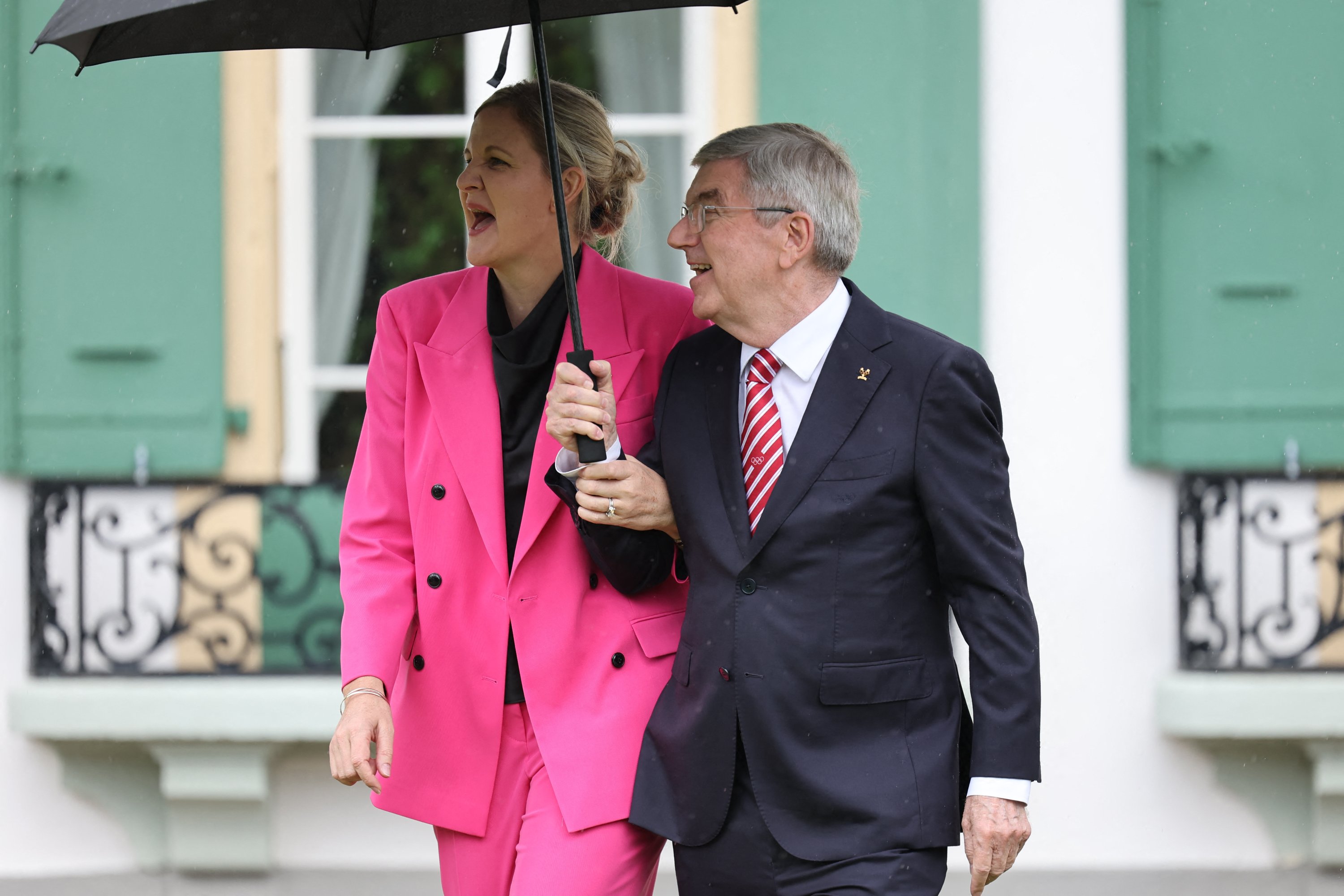
First impressions can mislead, but Kirsty Coventry has already proven she’s more than just a friendly face.
When she takes over from Thomas Bach as president of the International Olympic Committee on Monday, the 41-year-old Zimbabwean, set to become the first woman and first African to lead the world’s most powerful sporting body, will step into a role requiring serious grit.
And one name already looms large: Donald Trump.
With Los Angeles set to host the 2028 Olympics, the former U.S. president is expected to become a recurring figure on Coventry’s radar.
Trump, never one to mince words, has famously lashed out at world leaders – including Ukraine’s Volodymyr Zelenskyy and South Africa’s Cyril Ramaphosa.
Coventry’s test will be navigating those political ripples while keeping the Olympic flame steady.
Judging by her initial response, after a commanding first-round victory in the presidential election in March, she may have Trump’s measure.
“I have been dealing with, let’s say, difficult men in high positions since I was 20 years old,” she said, adding, “Communication will be key.”
Unlike Trump, though, Coventry embraces the word “failure,” for it helped forge her stellar career.
“Everything’s scary. Embrace that. You have to fail,” Coventry told the swimming team at her American alma mater, Auburn University, last year.
“I’ve learned the best lessons by failing, and I have failed at many things. Life has a really good way of humbling you.”
At the same time, a steely resolve surfaces when winning is at stake.
“I was banned from playing card games with the family because they didn’t like to deal with me when I lost,” she said.
A glance at Coventry’s resume suggests failure in her life has been relative.
Coventry, who had the Olympic rings tattooed on a leg after her first Games in 2000, is a two-time Olympic gold medalist and has contributed seven of Zimbabwe’s overall Games medal tally of eight.
She has accrued domestic political experience, serving as Zimbabwe’s minister of youth, sport, arts and recreation from 2019 to this year.
That drew some flak, as she served in a government whose 2023 election was declared “neither free nor fair” by the International Commission of Jurists.
“I don’t think you can stand on the sidelines and scream and shout for change,” she said in her defense.
“I believe you have to be seated at the table to try and create it.”
Her record as a minister has been heavily criticized by Zimbabwe’s arts community in particular.
Zimbabwean President Emmerson Mnangagwa – whose predecessor, Robert Mugabe, labeled Coventry “a golden girl” and awarded her $100,000 after she brought home gold from Beijing in 2008 – hit back.
“Whoever was not impressed by her can appoint someone else when they become president,” said the 82-year-old.
In 2004, Coventry gave insight into why she would later accept such a poisoned chalice and how white Zimbabweans often must strike a delicate balance.
“Zimbabwe is my home,” she said after returning to a heroine’s parade following her first Olympic gold at the Athens Games.
“It’s where I was born. It’s my culture. I will always represent Zimbabwe. Color doesn’t matter to me.
“I think every country goes through bad years and good years.”
Coventry had a largely urban upbringing. Her parents, Rob and Linn, owned a chemical company in a suburb of Harare. But the farming evictions – in which predominantly white farm owners were forced off their land in the early 2000s – affected her too.
“I have had very close family members and friends on farms who have gone through very hard times,” Coventry said.
Away from controversy, she has shown decisive leadership in dealing with Zimbabwean football officials and FIFA.
She backed the government body, the Sports and Recreation Commission, when it suspended the Zimbabwe Football Association over allegations of fraud and the sexual harassment of referees.
FIFA has a zero-tolerance policy for political interference in its associations and barred Zimbabwe from international football in February 2022.
By September that year, however, the country was reinstated. A ZIFA official was later banned for five years for sexually harassing three female referees.
Coventry said in 2023 that the process had been “hard, but it was worth it, to have a way forward that’s going to benefit us as a country.”
Those tempted to underestimate Coventry in the years ahead have been duly warned.