With the opening ceremony days away, Olympic officials insist the Milano-Cortina Winter Games will deliver on their promise despite unfinished venues, logistical hurdles and political noise swirling outside the field of play.
Organisers are racing to complete facilities across Milan and several Alpine clusters, including the much-delayed Santagiulia ice hockey arena, while addressing transport challenges in one of the most geographically spread-out Winter Olympics in history.
Yet the International Olympic Committee struck a confident tone Sunday, brushing aside concerns over last-minute construction and infrastructure delays.
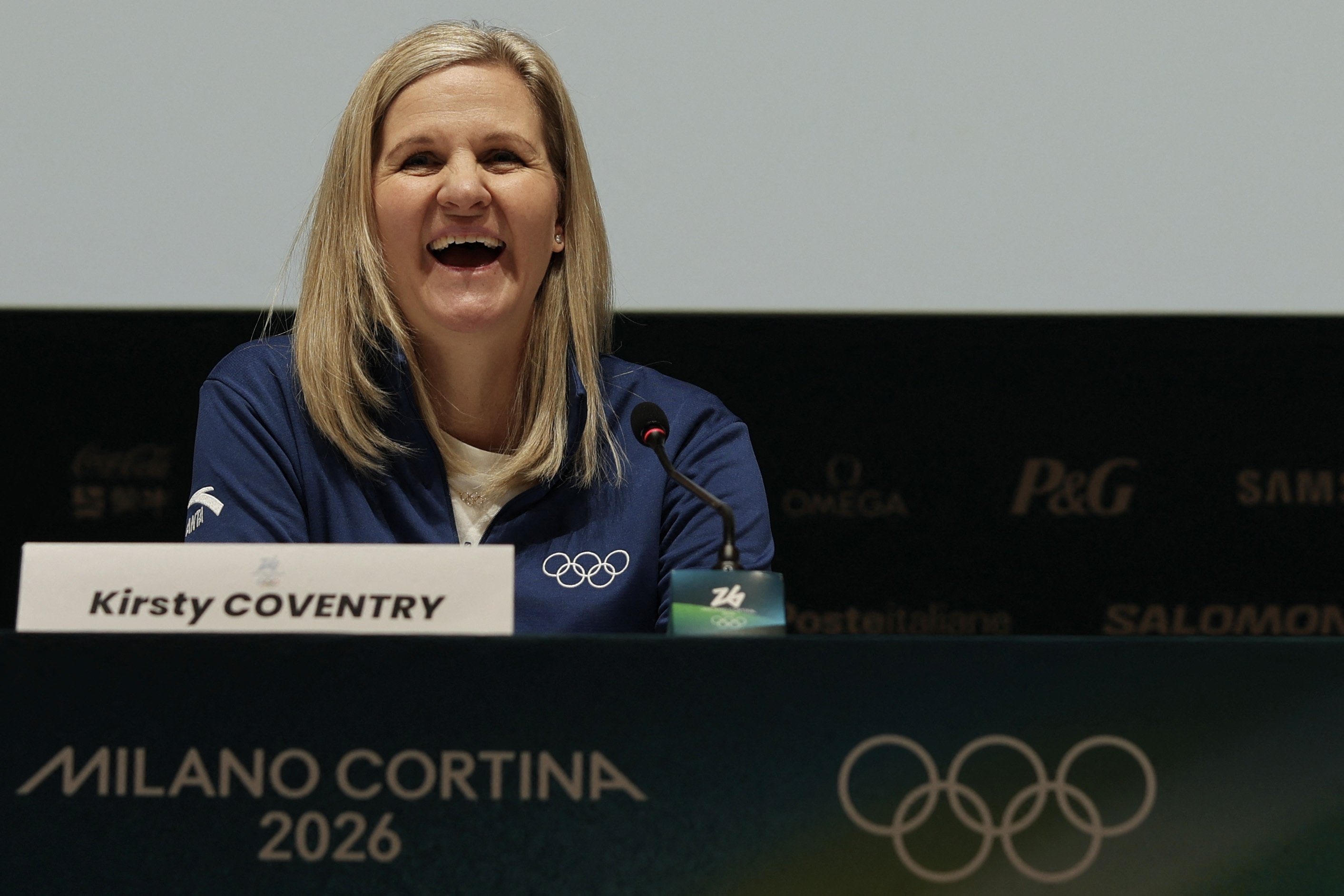
“The preparation is going extremely well,” IOC President Kirsty Coventry said at a press conference. “The team is working very hard. All stakeholders are aligned. We are exactly where we need to be.”
The 2026 Games mark the first Winter Olympics staged in the European Alps in two decades and are built around multiple mountain hubs, Cortina, Bormio, Livigno and Val di Fiemme, each several hours from Milan.
That sprawl has made transportation, particularly in mountainous terrain, one of the organising committee’s biggest tests.
Complicating matters, a cable car designed to ferry spectators to women’s alpine skiing events in Cortina will not be ready for the Feb. 6 start, Reuters reported Saturday.
Coventry acknowledged the scale of the challenge but said organisers had maximized available resources to ensure a smooth Games experience.
“We have to see how the Games unfold,” said Coventry, overseeing her first Olympics since being elected IOC president last year.
In Milan, attention has centered on the Santagiulia ice hockey venue, a 15,300-seat arena that suffered a delayed start and sluggish construction progress. The stadium was only partially tested in January during domestic competitions, hosting limited crowds.
IOC Olympic Games Executive Director Christophe Dubi said the venue would be competition-ready when it matters most.
“Do we have every single space finished? No,” Dubi said. “Is everything that athletes, media and spectators need going to be top level? Absolutely. There’s still work ongoing, frantic work, but we’ll be ready.”
The Games will also feature the long-awaited return of NHL players to Olympic competition for the first time since 2014, a major boost to the men’s ice hockey tournament and one of the event’s marquee attractions.
Away from construction sites, political tensions briefly spilled into the streets of Milan over the weekend, with demonstrations against the planned presence of U.S. Immigration and Customs Enforcement agents assigned to protect American delegations. The issue has drawn scrutiny but will have little room inside Olympic venues, where athletes face strict limits on political expression.
Under Rule 50.2 of the Olympic Charter, demonstrations or political, religious or racial propaganda are prohibited at Olympic sites, including fields of play, medal podiums, the Olympic Village, and opening and closing ceremonies.
The IOC says the rule exists to preserve political neutrality and ensure peaceful coexistence among athletes from more than 200 nations.
Athletes may express personal views in press conferences, interviews, mixed zones, team meetings or on social media, and may do so before competition as long as the message does not violate anti-discrimination principles.
Visible gestures, symbolic kneeling, unauthorised flags, armbands or signs inside venues are banned.
Violations of the rule have carried consequences in the past, from warnings to expulsion. The most iconic case remains the 1968 Mexico City Games, when U.S. sprinters Tommie Smith and John Carlos raised black-gloved fists on the podium.
More recently, Afghan breakdancer Manizha Talash was disqualified at the Paris 2024 Olympics after wearing a cape reading “Free Afghan Women.”
Sanctions for breaches range from loss of accreditation to removal from the Games or future Olympic exclusion, with each case reviewed by the IOC, the relevant international federation and the athlete’s national Olympic committee.