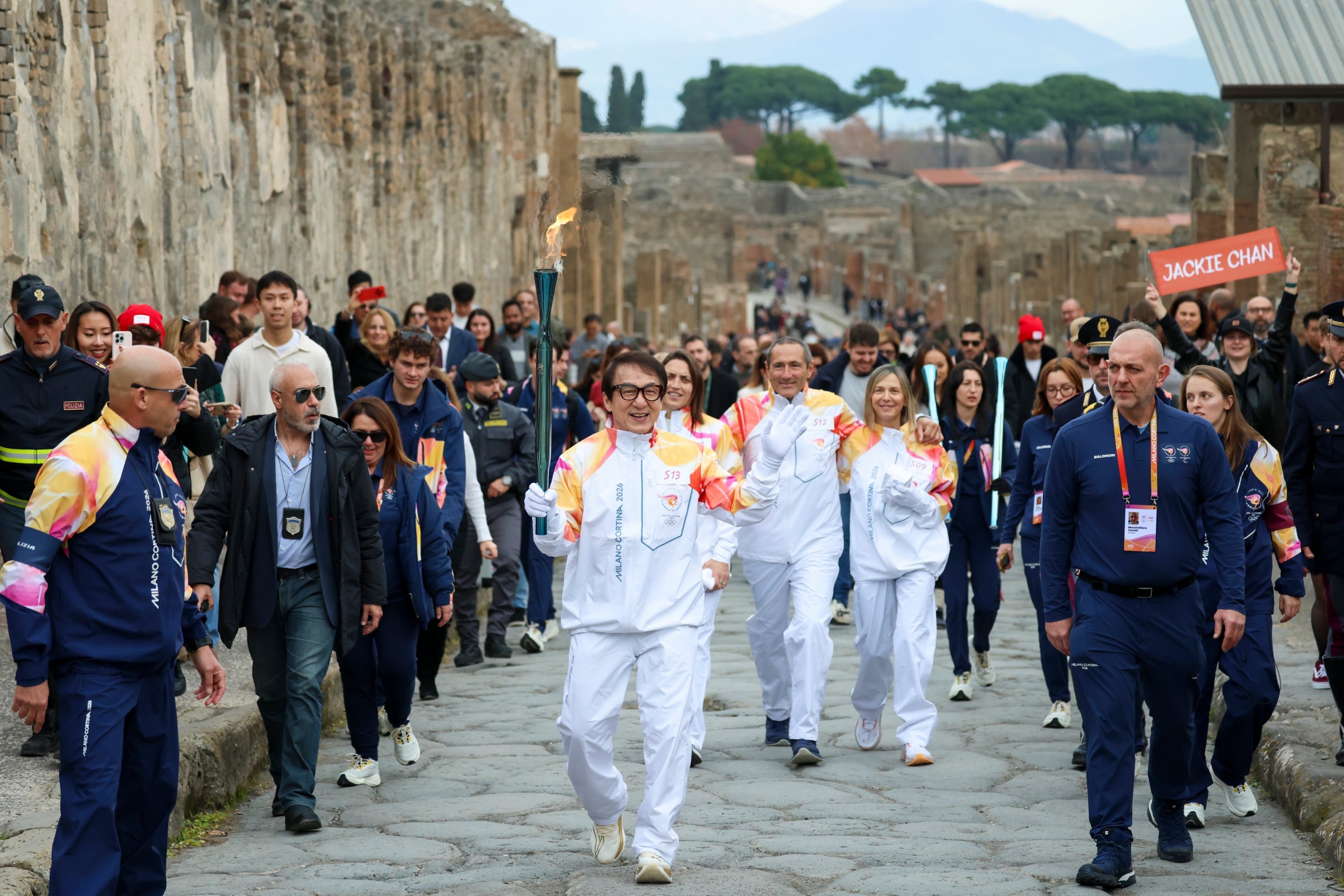
The Olympic torch pushed through heavy snow to reach the northern Italian city of Bologna on Tuesday, with just one month remaining before the Milano Cortina Winter Games begin.
The flame set off from Rome a month ago and has since crossed Italy from end to end, visiting the islands of Sardinia and Sicily and stopping in southern cities including Naples and Bari.
The relay covers a 12,000-kilometer (7,450-mile) route that will culminate at Milan’s San Siro Stadium on Feb. 6.
On Tuesday, the torch also passed through the Formula One circuit in Imola, though snowfall blanketing the Emilia-Romagna region slowed its progress.
Teenage presenters from local broadcaster Radioimmaginaria, who helped carry the torch across Bologna, dedicated their run to peers killed in a New Year’s Eve fire at the Swiss ski resort of Crans-Montana.
Giovanni Tamburi, a 16-year-old from Bologna, was among those who died in the blaze.
The relay has been part of efforts to generate excitement across the country ahead of the Games, which will be staged at a variety of locations, with financial capital Milan and the Alpine resort of Cortina d’Ampezzo serving as the two main bases.
As the Games approach, concerns over whether competition venues will be ready and accessible appear to be easing after weeks of uncertainty.
Additional tickets will go on sale Wednesday for the women’s Alpine skiing races in Cortina, local organizers said, indicating that some fears over transport issues have eased.
Reuters reported in November that ticket sales for the Cortina venues had been capped because of concerns over congestion and access to the Alpine resort.
Johan Eliasch, president of the International Ski and Snowboard Federation, told Reuters on Tuesday that preparations were back on schedule, with snowmaking progressing well across the mountain venues after a slow start.
In Milan, the main ice hockey venue will host its first test event this coming weekend, leaving little time to iron out any teething problems.
The surface at the new Santagiulia ice hockey arena will be slightly shorter than NHL specifications, raising concerns about the risk of more high-speed collisions.
Players from the elite North American NHL are due to return to the Olympics for the first time since 2014.