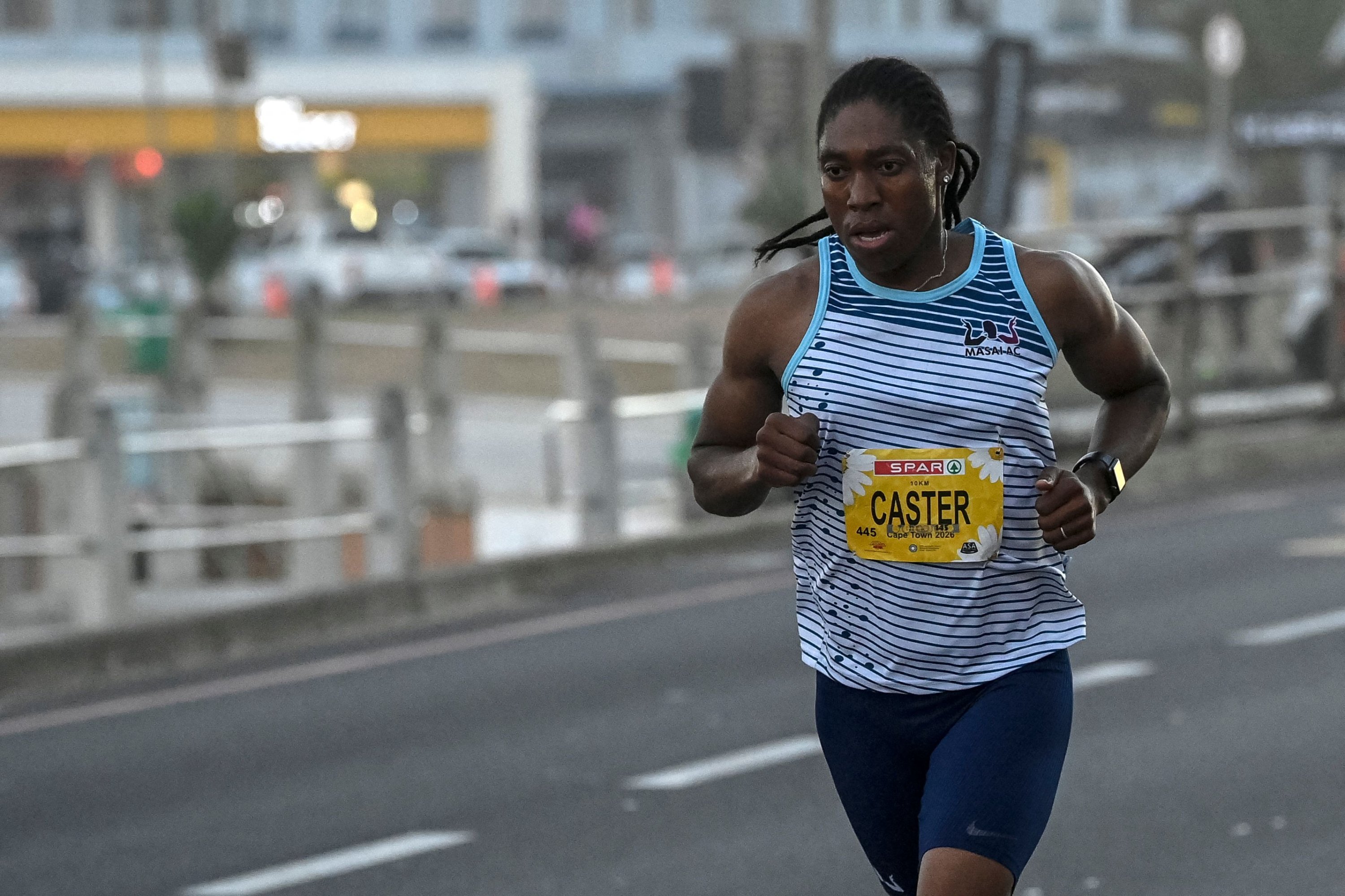
Double Olympic champion Caster Semenya has vowed to challenge the proposed introduction of gender testing in the women’s category at the Olympics, arguing the measure erodes fundamental rights and sets a troubling precedent for female athletes.
The International Olympic Committee unveiled the policy last week, with plans for it to become a universal standard across elite women’s sports, aiming to replace years of inconsistent regulations that have repeatedly sparked debate and division.
Semenya has long stood at the heart of that debate, engaged in a protracted legal battle with World Athletics over her eligibility to compete despite having a difference of sexual development (DSD), a case that continues to shape the conversation around fairness, inclusion, and athletes’ rights.
“We’re going to be vocal about it, we’re going to make noise until we’re heard,” the 35-year-old athlete told Reuters from Pretoria on Monday.
“Now it’s a matter of women standing for themselves to say enough is enough. We are not going to be told how to do things.
“If we are accepted as women to take part, why should my appearance or my voice, why should my inner parts be a problem to take part in the sport?”
Differences of sexual development are a group of rare conditions involving genes, hormones, and reproductive organs. Some people with DSDs are raised as female but have XY sex chromosomes and blood testosterone levels in the typical male range.
The IOC policy document said including “androgen-sensitive XY-DSD athletes” in the female category in events that rely on strength, power, or endurance “runs fundamentally counter to ensuring fairness, safety, and integrity in elite competition.”
Semenya, who won two Olympic titles and three world championships in the 800 meters before being limited to shorter events, believes the IOC got the science wrong.
Semenya said “there’s no science” that XY-DSD gives an athlete an advantage.
“I’ve been there, I’ve done that. There’s no such thing,” she said.
“There are people who are delusional. There are people who are convinced because a woman is masculine or born with intersex conditions, with DSD, they assume an advantage.
“But what I say is that if you’re going to be a great athlete, it’s through hard work.”
The test applied to all athletes who want to compete in the female category will be conducted by cheek swab or saliva analysis.
There will be further investigation for any athletes who test positive for the SRY gene, which is on the Y chromosome and triggers the development of male characteristics in mammals.
“What this decision does, it undermines women. It undermines women’s dignity. It violates women’s rights because we know historically these tests have failed before,” Semenya said.
“Women need to be celebrated. Women are not supposed to be questioned about their gender, their physique, or how they look. It doesn’t matter, nor do hormone levels. Those are genetic factors that cannot be controlled.”
Semenya said IOC President Kirsty Coventry, the first woman and first African to hold the office, had failed to properly consult her or other athletes living with DSDs about the policy.
“They sent us a letter the day they were going to publish whatever they were going to publish,” she said.
“If you’re going to consult, consult with a genuine heart. Don’t consult because you’re ticking a box. Unfortunately, they ticked the wrong box.”