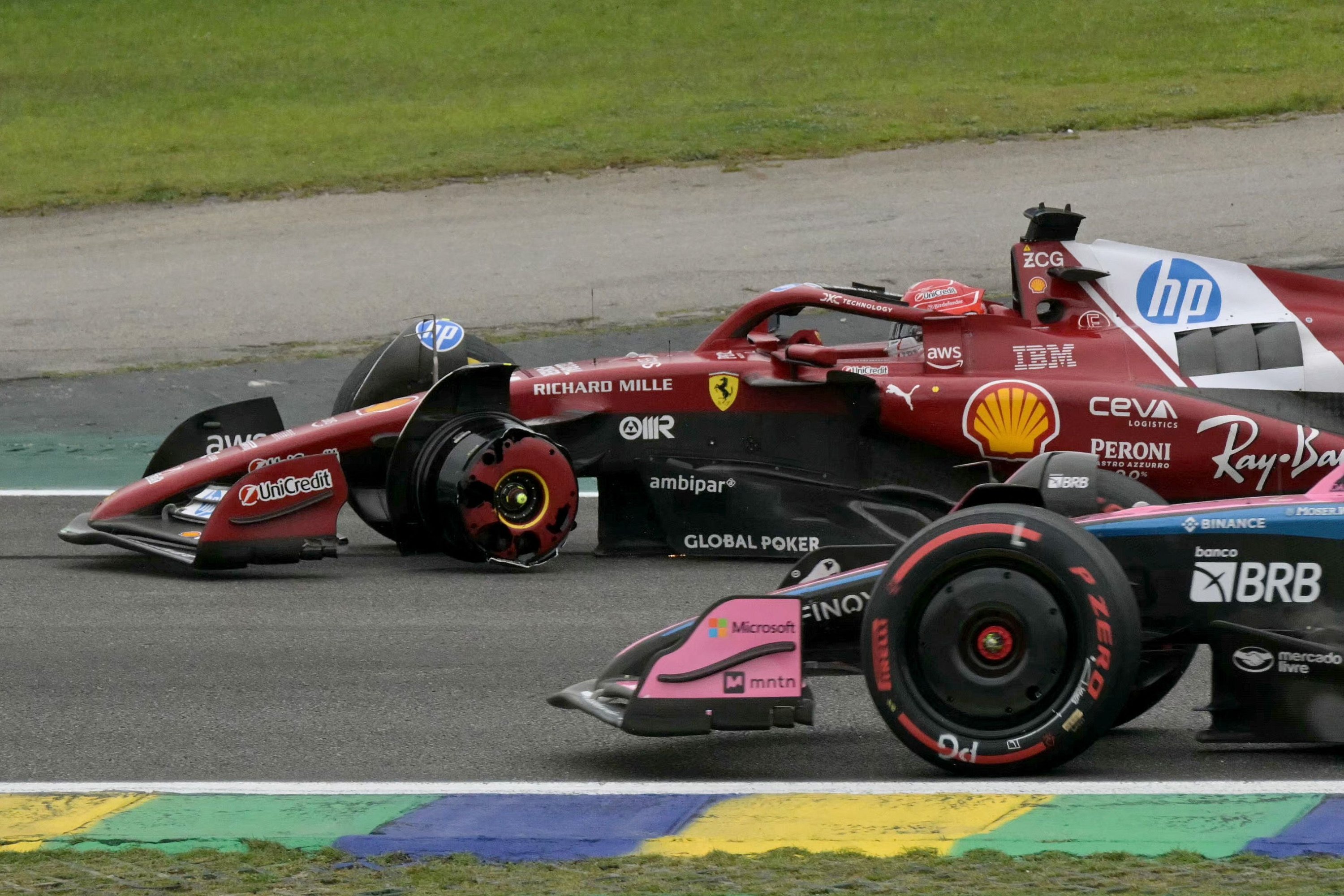
Formula 1’s financial boom shifted into another gear this year as Ferrari again topped Sportico’s annual team valuations, anchoring a grid now collectively worth more than $34 billion – a striking marker of the sport’s commercial ascent.
Ferrari leads the field at $6.4 billion, a valuation that reflects the Italian team’s unrivaled heritage, massive global following and near-mythic standing in motorsport.
Mercedes ranks second at $5.88 billion, followed by McLaren at $4.73 billion and Red Bull Racing at $4.32 billion.
Even Haas, the smallest operation on the grid, carries a $1.68 billion valuation – higher than Sportico’s estimate for Major League Baseball’s Milwaukee Brewers.
According to Sportico, the average Formula 1 team is now worth $3.42 billion, edging past MLB and trailing only the NFL and NBA among major global leagues.
The surge tracks closely with Liberty Media’s stewardship, which has turned Formula 1 into a global entertainment property fueled by soaring broadcast revenue, expanding U.S. markets and a sponsorship boom driven by tech and financial giants.
Prize money continues to underpin much of this value. The 10 teams shared $1.27 billion in distributions for the 2024 season, with payouts determined by Constructor standings, commercial revenue and long-standing heritage bonuses.
Ferrari remains the only team to receive a dedicated “historical” payment worth tens of millions annually, while back-to-back Constructors’ champion McLaren secured the largest slice of last year’s prize pool.
Financially, the sport is stronger than ever. Team revenues climbed to $4.5 billion in 2024, led by Mercedes with more than $800 million, while the cost cap introduced in 2021 has turned the majority of the grid profitable.
Mercedes generated a sport-leading $205 million in EBIT, and McLaren – once saddled with heavy losses – has become one of Formula 1’s most lucrative operations after its competitive resurgence.
Ferrari’s top valuation speaks not only to its history but to its stability, blending racing prestige with a powerful road-car business.
Mercedes continues to attract premium sponsorships even as it navigates a post-Hamilton era.
McLaren’s upward trajectory has been reinforced by recent stake sales at multibillion-dollar figures, while Red Bull’s value reflects Max Verstappen’s dominance despite ongoing leadership turbulence.
Top-to-bottom, the list underscores the sport’s rare economic depth.
Ferrari leads at $6.4 billion, followed by Mercedes at $5.88 billion, McLaren at $4.73 billion and Red Bull Racing at $4.32 billion.
Aston Martin stands at $3 billion; Williams at $2.14 billion; Alpine at $2.08 billion; RB at $2.05 billion; Kick Sauber at $1.88 billion; and Haas rounds out the grid at $1.68 billion.
With Audi preparing to enter via Sauber’s rebranding in 2026 and no further expansion expected before then, Formula 1 continues to benefit from a scarcity premium that keeps valuations rising as investor demand outpaces supply.
Negotiations for the 2026-31 Concorde Agreement are expected to bring even larger revenue pools, new commercial pathways and potentially more private investment.
Yet the sport must also navigate challenges ranging from shifting geopolitical conditions to sweeping engine regulation changes that will test research budgets.