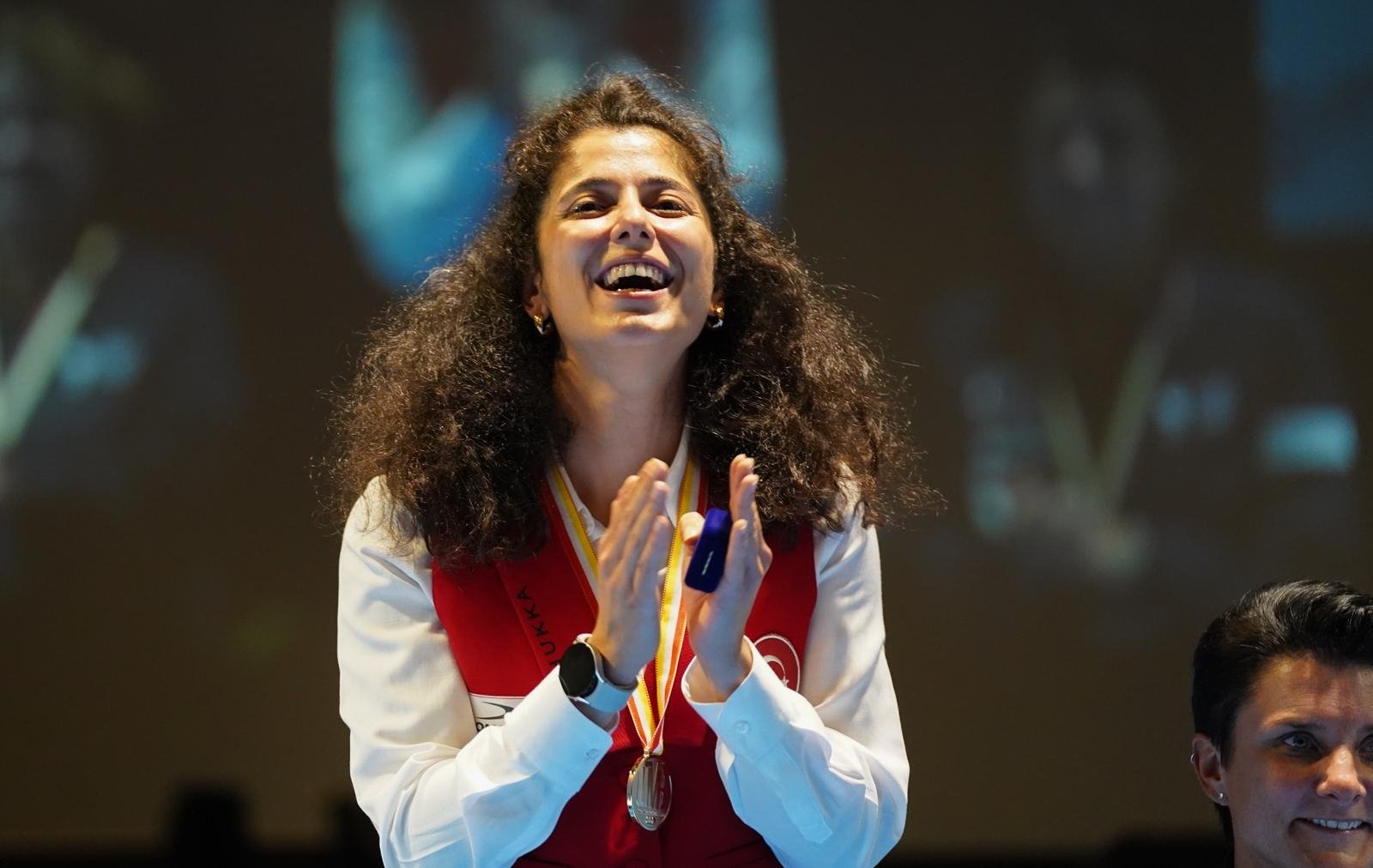
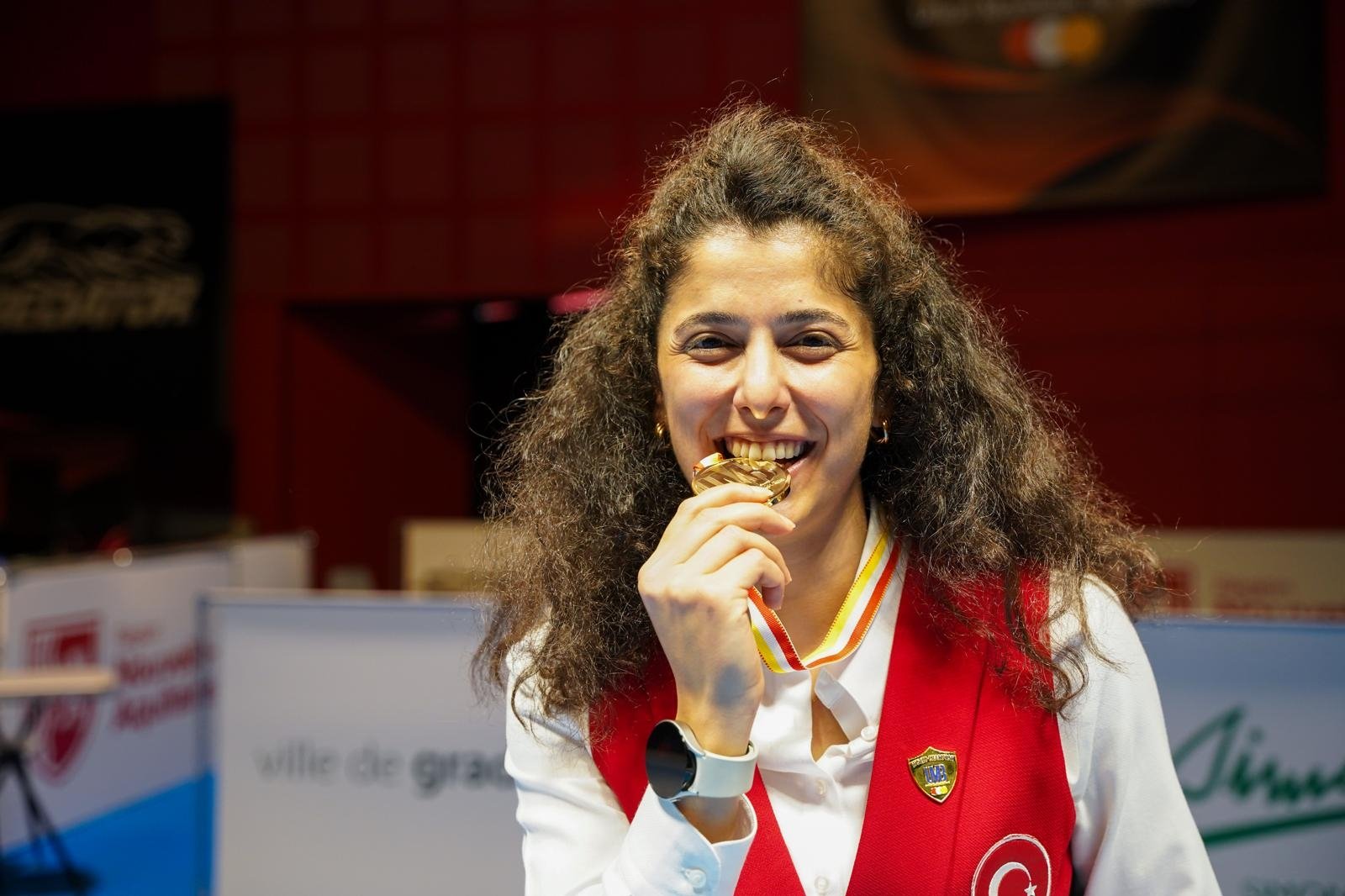
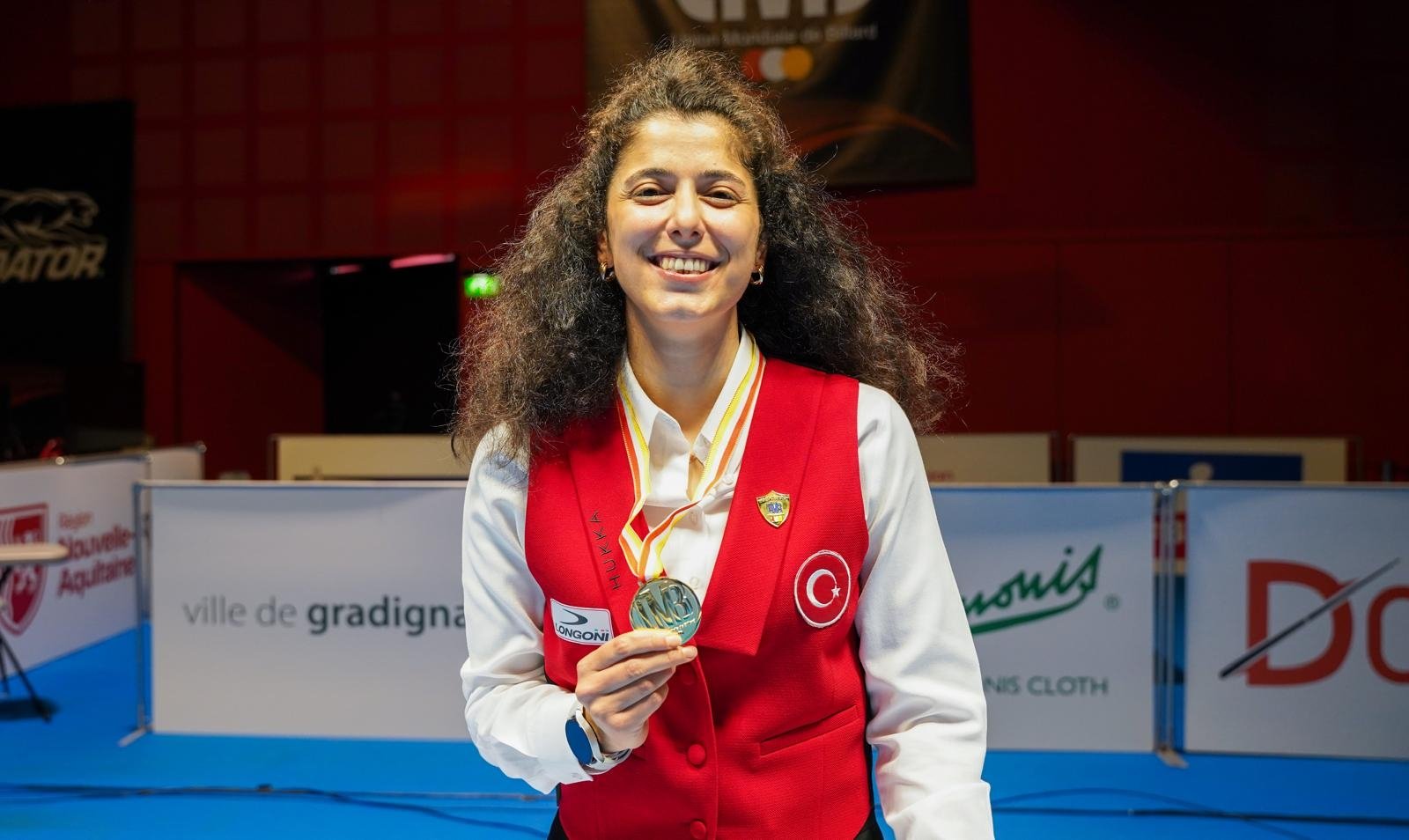
Güzin Müjde Karakaşlı has spent years balancing a legal career with elite billiards, and in France, she brought both worlds together by making history as a world champion.
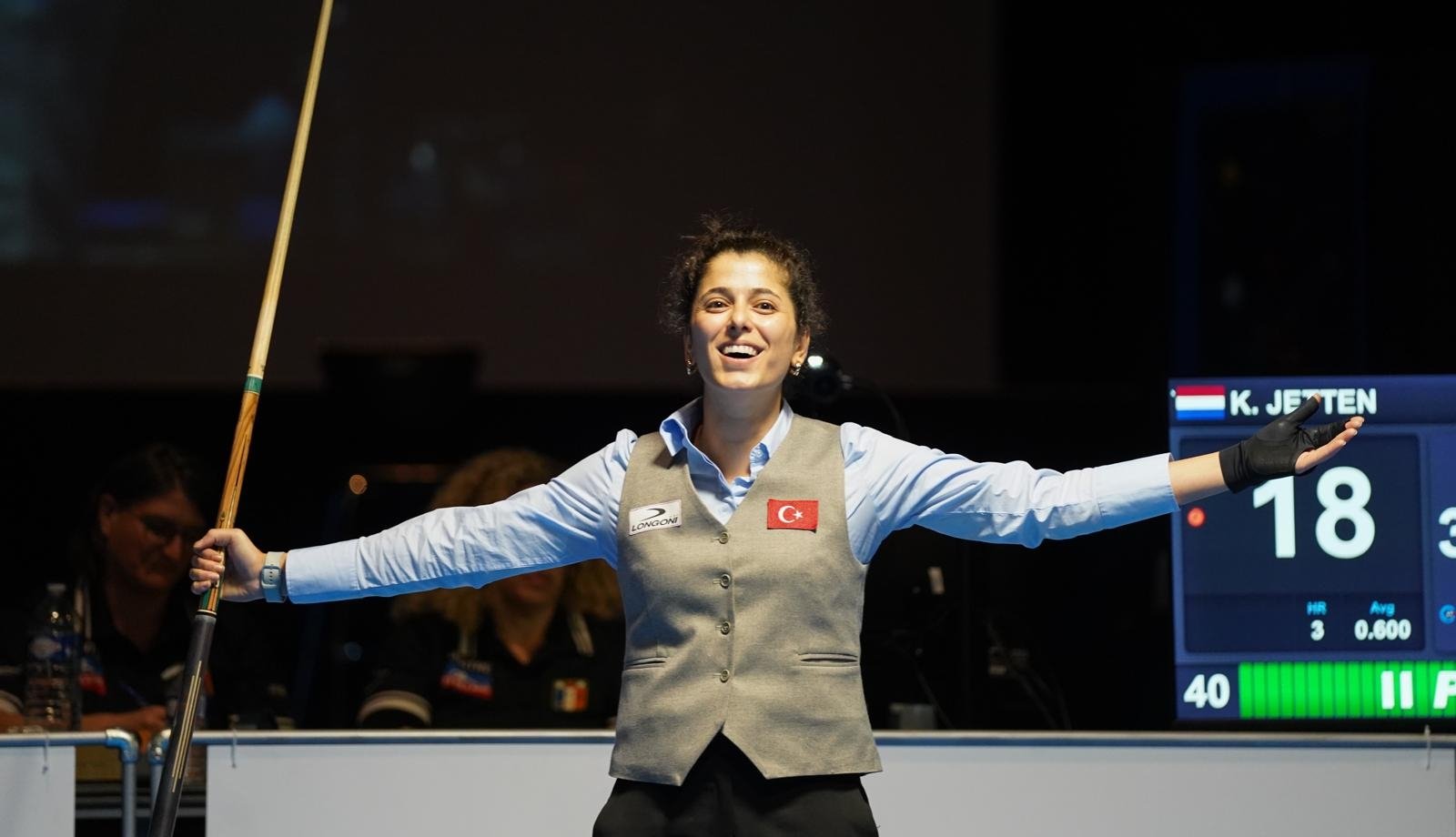
The Turkish attorney defeated Dutch player Karina Jetten 30-18 to become the women's three-cushion billiards world champion, winning the first individual world title of her career and making history for Turkish women's billiards.
Three days after the final, Karakaşlı paused when asked how it felt to become a world champion.
"My feet aren't touching the ground," she said.
It was an appropriate description for a woman who had spent years pursuing a goal that once seemed distant.
"I don't know, but I'll do my best," Karakaşlı said with a laugh. "Billiards is a game with endless difficulties, but it is equally perfect and fascinating. Throughout my journey, I have always tried to become better, learn new techniques and read the game more accurately. I still know there is a lot I need to improve."
The significance of her victory, however, goes beyond the title.
"I went there not only for myself, but also to represent my country as the Turkish champion," she said. "When I look back at those few days in France, I am proud not only because I became world champion, but also because of my composure at the table, my fight and, especially, the mental strength I showed."
Becoming the first Turkish woman to win the world title was difficult to put into words.
"My biggest wish is for this achievement to be a gift and an inspiration to all of Türkiye, especially young girls," she said. "The medal is around my neck, but I believe the meaning it carries belongs to all of us."
Sport was part of Karakaşlı's life long before billiards became her passion.
Her parents met while playing volleyball, and their home was one where sport was constantly watched and discussed. As a child, she remembers watching Turkish billiards great Semih Saygıner defeat Belgian legend Raymond Ceulemans.
"Volleyball was the sport in our home at first," she said. "But we watched all sports, especially those played with a ball. I remember that famous match between Semih Saygıner and Raymond Ceulemans almost like a photograph from my childhood."
Karakaşlı sees strong similarities between her careers as a lawyer and professional billiards player.
"Both require the highest level of reasoning and a mathematical approach," she said. "They are two of the most important parts of my life."
The similarities extend to strategy and decision-making.
"You need to know when to attack and when to defend, read the situation and choose the right strategy and the optimum tools," she said.
At the billiards table, however, the margin for error can be microscopic.
"The table is 142 by 284 centimeters, and there are billions of possibilities," Karakaşlı said. "You have 40 seconds when you approach the table for a position. You have to make the finest possible decisions about thickness, spin, collision and the strength of the shot, and then execute them."
That demands extraordinary concentration.
"You have to be completely in the moment," she said. "On one hand, you feel all the tension of the world in your mind and arms. On the other, you are trying to see the ball near the short cushion so precisely that you can hit it without moving another ball. When you look at it that way, it is almost crazy."
The final against Jetten produced a decisive 30-18 victory, but Karakaşlı does not consider it the easiest match of the tournament.
"There is no easy match because every match is difficult," she said.
Her control of the game prevented Jetten from finding a way back.
"I never gave up control of the game, and I was able to break my opponent's resistance to a point where she could not recover," she said.
Preparation also played an important role. Karakaşlı credited her work with Berceste Şeber and Prof. Dr. Nurullah Genç before the final.
Perhaps the most striking moment came when she won the championship point.
There was no scream, dramatic jump or prolonged celebration.
Karakaşlı had made herself a promise before the match.
"No matter what happens, I will never lose my focus or the connection between my mind and the table," she said. "I kept the promise I made to myself."
Only after the final point could she relax.
"It was over. From that moment, I could finally let go."
The first person to call her after the championship was Ersan Ercan, president of the Turkish Billiards Federation.
"He said he was very happy that I had brought home the last missing trophy in our museum with the Women's World Championship title I won in France," Karakaşlı said.
Rather than making a call herself immediately after the victory, Karakaşlı ran toward Dutch sports photographer Ton Smilde and embraced him.
"He was the closest witness to all the effort I had put in," she said. "He is a colleague of yours who never left me alone."
She later called her twin sister, Merve.
"It was such an emotional moment that we could hardly speak between the tears and prayers," Karakaşlı said.
The world title did not come at the expense of Karakaşlı's legal career.
For years, she has organized her professional responsibilities, court appearances, case files and training around one another.
She remembers making a promise to herself at 23, when she won her first international medal and became the youngest woman in the field at the time.
"Don't make your dreams smaller. Don't give up on your talents," she told herself.
The world championship became another fulfillment of that promise.
Her experience as a lawyer has also shaped the way she views challenges facing women in sport.
"Gender barriers are mostly not barriers that we create ourselves," she said. "But by telling our stories and adding new achievements every day, we can gradually remove them."
She believes greater access to billiards through school sports and development projects can help more girls discover the sport.
"The Turkish Billiards Federation museum is filled with incredible achievements," she said. "I hope that this legacy, together with the contributions of women athletes at the beginning, will inspire girls several generations from now."
Winning the world championship has not made Karakaşlı any less ambitious.
"From now on, I will enter tournaments as the title holder," she said. "My first motivation will be to defend that title."
Beyond that lies an even bigger ambition: an Olympic gold medal.
Billiards is recognized by the International Olympic Committee and remains a candidate for inclusion in the Olympic program. Karakaşlı wants to represent Türkiye in women's billiards at the Olympics and pursue the gold medal.
For her, however, the legacy of her world title may ultimately be measured by something much smaller than a trophy.
A child picking up a cue.
Karakaşlı spoke about two young players, Turkish junior champion Çınar and a young girl named Zeynep.
Watching Zeynep place the cue on the table and try to strike the ball moved her deeply.
"I cannot describe the happiness I felt watching her," Karakaşlı said.
She believes billiards can introduce children to physics, geometry and psychology while giving young girls another sporting path.
"We need mothers and sisters who play billiards," she said.