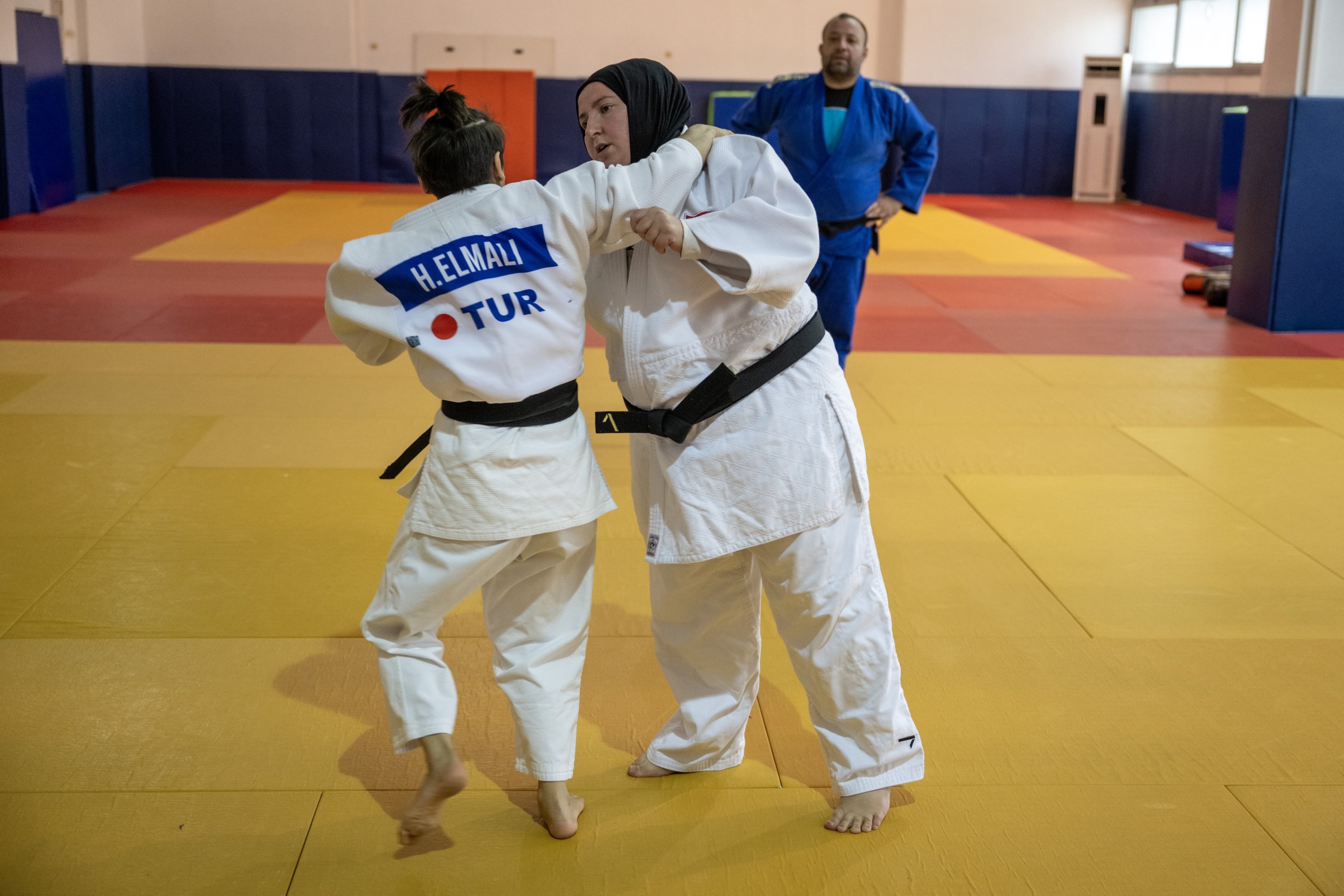
Türkiye’s Paralympic judo scene is quietly reshaping its legacy, led by two determined athletes, Nazan Akın Güneş and Havva Elmalı, who are targeting gold at the 2028 Los Angeles Paralympic Games.
Their journeys reflect resilience, grit, and an unwavering pursuit of excellence in the face of physical and societal challenges.
Nazan Akın Güneş, born in Diyarbakır in 1993, became visually impaired following a severe seizure early in life.
She began sports at a visually impaired school, initially pursuing weightlifting before discovering judo at age 11.
Over the next decade, she carved a remarkable trajectory: multiple domestic victories and, in 2012, a historic silver medal at the London Paralympics in the 70+ kg category.
“Since 2012, no Turkish judoka has reached a Paralympic final. That silver medal was not just mine – it was for our country,” Güneş said.
Yet success came with setbacks.
Health issues forced her to step away from competition, halting a career that promised even more.
Her comeback in 2022, inspired by coach Murat Gemalmaz and encouragement from President Recep Tayyip Erdoğan, reignited her pursuit.
“We returned to the mat determined. Every tournament since has brought a medal, culminating in bronze at Paris 2024. Now, everything is focused on Los Angeles 2028,” she said.
Her path hasn’t been easy.
A month before Paris, a ligament rupture in her shoulder threatened her participation.
Medical advice was clear: do not compete. But Güneş fought through pain and skepticism, claiming third place despite the injury.
“The doctors doubted us, but on the mat, we showed what Turkish judo can achieve,” she said.
Her return also highlighted the need for recognition of Paralympic athletes in Türkiye, noting that while thousands attended her Paris matches, judo remains largely unknown domestically outside football, basketball, and volleyball.
Havva Elmalı, whose athletic career began in track and field, found her calling in judo.
The 2025 IBSA European Judo Championships in Georgia marked her first major international medal – a bronze.
“Athletics gave me speed and endurance, but judo gave me heart and purpose. Our daily three-training sessions push every limit, building toward both World Championships and Los Angeles 2028,” she said.
Elmalı’s regimen is rigorous: early morning runs, weight training, and intensive judo practice six days a week, blending strength, technique, and tactical preparation.
Coach Murat Gemalmaz emphasized their strategic approach and long-term vision.
“Nazan overcame major surgery to pursue gold; Havva transitioned from athletics to European bronze in two years. Their work ethic, consistency, and focus are unmatched. Every tournament, every training session is a step toward 2028.” Gemalmaz confirmed the team’s structured roadmap: regional competitions, World Championships, and continuous technical refinement, ensuring both athletes peak at the right moment.
For both judokas, the pursuit is more than medals.
It is about national pride, elevating Paralympic sports, and inspiring the next generation of athletes with disabilities. Güneş reflected, “Every medal, every victory, is a message. We want to make our country proud, show the world what Turkish Paralympic judokas can achieve, and leave a legacy.”