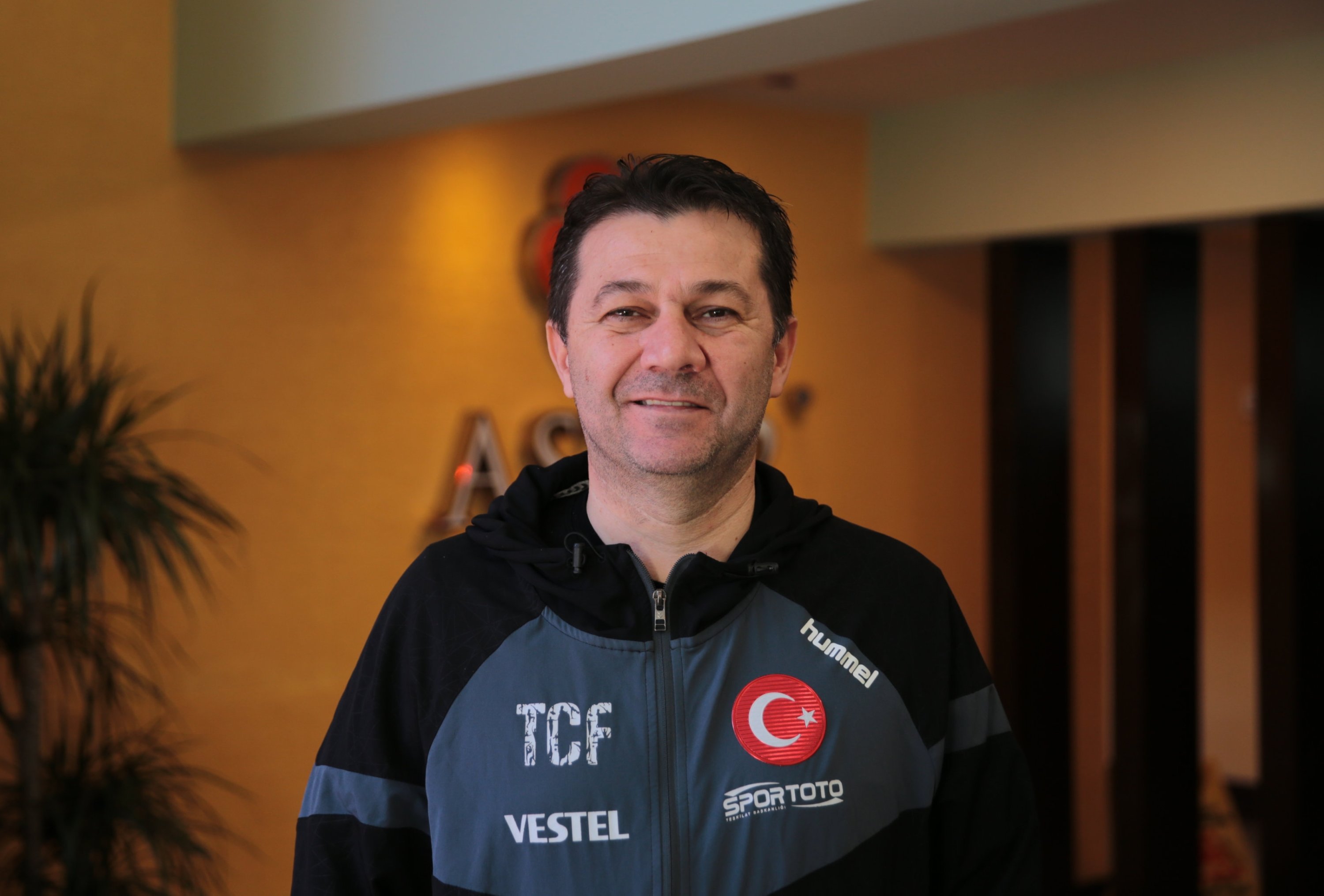
Türkiye’s gymnastics surge is no longer defined only by medals but by systems, sustainability and belief, according to Turkish Gymnastics Federation (TCF) President Suat Çelen, who says the launch of the TCF Academy stands as the federation’s most important achievement of 2025.
Speaking to Anadolu Agency (AA), Çelen reflected on a year that delivered landmark results across disciplines while reinforcing Türkiye’s status as a genuine gymnastics nation with long-term Olympic ambitions.
At the elite level, the headline moment came from Adem Asil, who claimed silver at the World Artistic Gymnastics Championships to become the first Turkish athlete to win multiple medals at the worlds.
Ferhat Arıcan narrowly missed a final that Çelen believes could have produced another podium, while both gymnasts now stand out as leading medal contenders for the 2028 Los Angeles Olympics.
In aerobic gymnastics, Ayşe Begüm Onbaşı once again carried Türkiye onto the European and world stage, continuing her role as a reliable medal force and symbol of consistency in a discipline where Turkish gymnastics has long excelled.
Yet some of the most meaningful breakthroughs came without medals.
Hatice Gökçe Emir made history by becoming the first Turkish gymnast to reach a world championship final in an individual rhythmic discipline at the senior level, while Nazlı Savranbaşı advanced to the all-around final at the European Artistic Gymnastics Championships – another national first.
“These results prove that our success is sustainable,” Çelen said. “There was a time when people in Türkiye didn’t know Ferhat Arıcan, İbrahim Çolak, Adem Asil or Ahmet Önder. They were 13 or 14 years old, and we could barely form a team. Today, those athletes are the backbone of a deep senior program with three competitive teams. Even our third team is pushing qualification levels. That shows how much Turkish gymnastics has grown.”
That depth is increasingly visible in the junior ranks. Türkiye now consistently places among the world’s top 15 teams in artistic, rhythmic and aerobic gymnastics – within striking distance of Olympic qualification thresholds.
The results are already tangible. Five of Türkiye’s seven medals in aerobic gymnastics this year came from junior athletes, including three golds.
In trampoline, Tuba Bade Şahin won silver at the World Junior Championships, signaling another discipline with Olympic potential. Rhythmic gymnastics at the junior level continues to deliver standout performances, reinforcing Türkiye’s growing reputation across Europe and globally.
“Now when Türkiye arrives at world or European championships, we’re recognized as a gymnastics country,” Çelen said.
For the federation president, however, medals alone do not define 2025. The establishment of the TCF Academy represents a structural turning point aimed at education, coaching quality and institutional strength.
“Education is non-negotiable,” Çelen said. “Without it, nothing else is sustainable. The Academy put training and development at the center of everything we do.”
He also pointed to Emir’s rhythmic final as a psychological breakthrough. “That was like a door opening. It shifted the mindset from ‘Can we qualify for the Olympics?’ to ‘Can we win medals there?’ That belief matters.”
Since being re-elected in 2024, Çelen said the federation has restructured its governance model, introducing sporting and administrative directors alongside a newly created high-performance unit. In partnership with the Ministry of Youth and Sports, the TCF Academy has delivered nationwide training programs for coaches and athletes, dramatically expanding the federation’s professional base.
Türkiye’s number of contracted gymnastics coaches has grown from around 30 to nearly 500, while the sport has expanded from 10 provinces to all 81 – and is now reaching district levels. Gymnastics, Çelen said, has become a foundational “athlete factory,” developing flexibility, strength, balance and speed from the earliest ages.
Infrastructure has matched that growth.
New and upgraded facilities have opened or are nearing completion in Ankara, Antalya, Istanbul, Mersin, Trabzon, Sakarya, Çanakkale and Bolu, with the Sancaktepe Training Center now serving as Türkiye’s Olympic hub.
A new federation headquarters and national facility in Ankara is set to open in January, while Antalya has already hosted a World Junior Championships and two European championships.
“Our goal is to turn Istanbul and Antalya into global centers of gymnastics,” Çelen said. “With camps, education and high-performance systems, we are building a structure designed to deliver medals at Los Angeles 2028.”