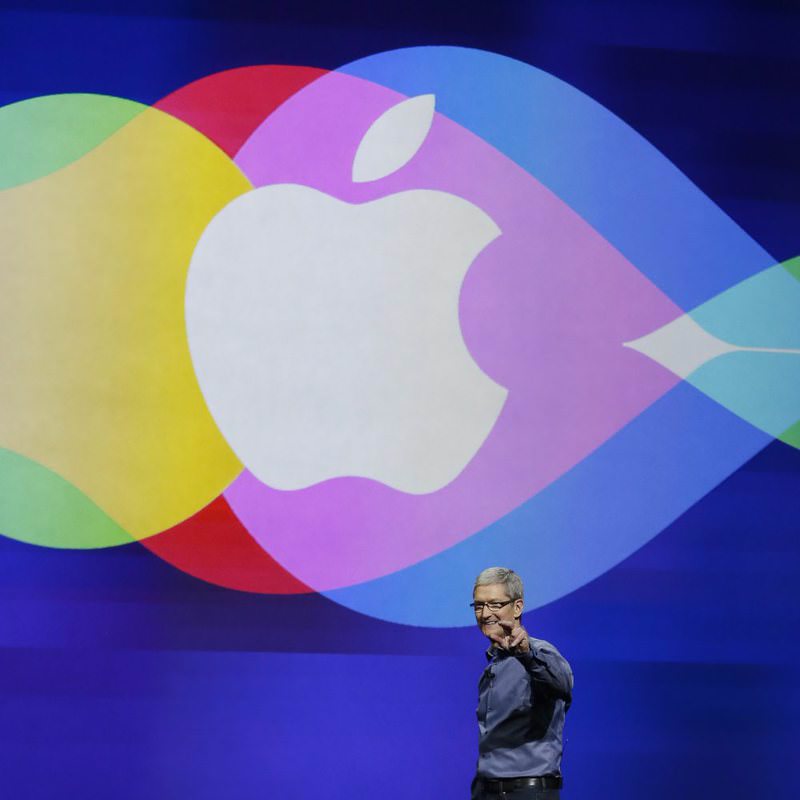
The company's engineers have begun developing new security measures that will make it impossible for the government to break into a locked iPhone, according to people close to the company
Apple is said to be developing security measures to make it even harder for the government to break into iPhones, the New York Times reported on Wednesday, citing people close to the company and security experts.
"Apple engineers have already begun developing new security measures that would make it impossible for the government to break into a locked iPhone using methods similar to those now at the center of a court fight in California," the Times said.
CEO Tim Cook also said Wednesday that it would be "bad for America" if his company complied with the FBI's demand for help unlocking an encrypted iPhone used by one of the San Bernardino shooters. Cook said he's prepared to take the dispute to the U.S. Supreme Court. He also said he would try to make his case directly to President Barack Obama, although he did not say when or where they would meet.
In his first interview since the controversy erupted last week, Cook told ABC News that it was a difficult decision to resist a court order directing Apple to override security features on an iPhone used by Syed Farook, one of two extremists who killed 14 people in the Southern California city in December.
"Some things are hard and some things are right, and some things are both. This is one of those things," Cook said. The interview came as both sides in the dispute are courting public support, through interviews and published statements, while also mustering legal arguments in the case.
Federal officials have said they're only asking for narrow assistance in bypassing some security features on the iPhone, which they believe may contain information related to the mass murders. Apple has argued that doing so would make other iPhones more susceptible to hacking by authorities or criminals in the future.
The Apple chief expressed sympathy for the shooting victims' families, and said his company provided engineers and technical advice to authorities investigating the case. But he said authorities are now asking the company "to write a piece of software that we view as sort of the equivalent of cancer."
The software could "expose people to incredible vulnerabilities," Cook added, arguing that smartphones contain private information about users and even their families.
"This would be bad for America," he said. "It would also set a precedent that I believe many people in America would be offended by."
Cook disputed FBI Director James Comey's argument that the court order applies to only one phone.
"If a court can ask us to write this piece of software, think about what else they could ask us to write," Cook said. "Maybe it's an operating system for surveillance. Maybe it's the ability for law enforcement to turn on the camera. I mean I don't know where this stops." A Department of Justice spokeswoman did not immediately respond to requests for comment. Apple is expected to file its legal response to the judge's order by Friday.
Keep up to date with what’s happening in Turkey,
it’s region and the world.
You can unsubscribe at any time. By signing up you are agreeing to our Terms of Use and Privacy Policy.
This site is protected by reCAPTCHA and the Google Privacy Policy and Terms of Service apply.