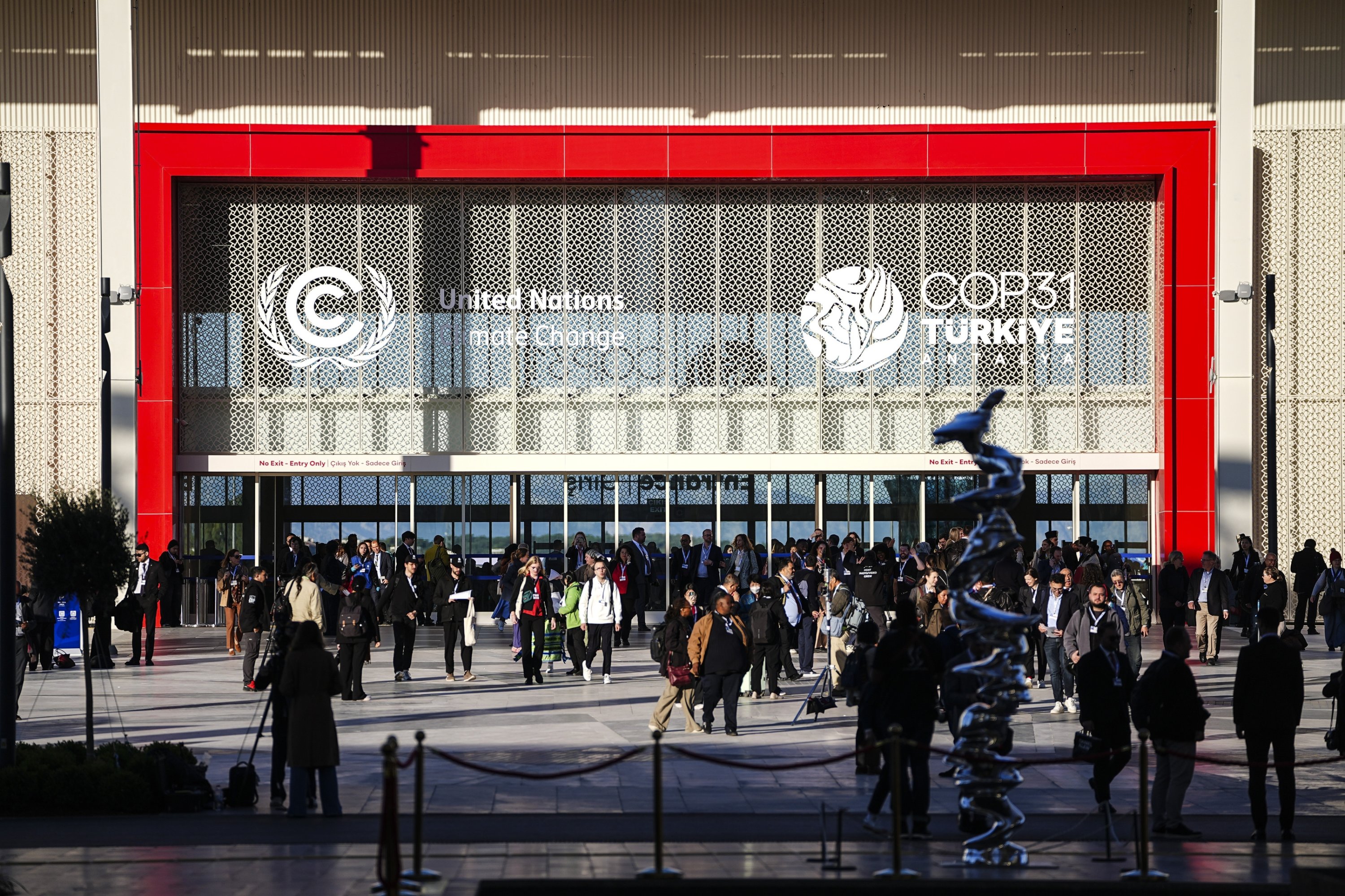
The 31st United Nations Climate Change Conference (COP31) started in Antalya on Monday, with Türkiye and Australia calling for faster implementation of global climate commitments, greater access to financing and stronger support for countries vulnerable to global warming.
COP31 President-Designate Murat Kurum urged countries to make the summit an “Implementation COP,” focusing on translating climate pledges into concrete results. He outlined three guiding principles for Türkiye’s presidency: “Dialogue. Consensus. Action.”
Kurum said climate action must deliver tangible benefits for people, linking environmental commitments with food and energy security, economic development, public health, migration and the future of cities. He emphasized the need to move beyond declarations and accelerate practical solutions.
Australia’s Climate Change and Energy Minister Chris Bowen, who serves as COP31 president of negotiations, warned that the world remains on course to exceed the Paris Agreement’s 1.5-degree Celsius warming threshold. However, he said the goal of limiting warming remains worth pursuing if countries act with urgency, solidarity and resolve.
Bowen called for stronger international cooperation, stressing that climate action requires governments to work together despite political differences. He also highlighted the importance of supporting vulnerable countries, including Pacific island nations facing rising sea levels and other climate-related threats.
Financing is expected to remain a major focus of negotiations. Under the agreement reached at COP29 in Baku, developed countries are expected to take the lead in mobilizing at least $300 billion annually for developing countries by 2035, alongside a broader ambition to scale up climate finance from all sources to $1.3 trillion annually.
Kurum highlighted the importance of making climate projects more attractive to investors and connecting countries with the resources needed to implement them.
In this context, the Climate Implementation Bridge (BRIDGE), aims to help prepare priority climate projects for investment and connect them with potential financiers. The initiative is designed to facilitate access to financing rather than operate as a dedicated fund.
Kurum also pointed to Türkiye’s efforts to advance practical climate solutions through international cooperation, including the Zero Waste Project led by first lady Emine Erdoğan.
Türkiye is also seeking to advance the global electrification agenda through the “35 by 35” initiative, which aims to increase electricity’s share of global final energy consumption to 35% by 2035.
The initiative forms part of the broader COP31 Action Agenda, which focuses on accelerating implementation across priority areas, including energy, buildings, industry and waste management.
The agenda also includes voluntary ambitions to improve energy efficiency in buildings, increase the use of circular materials in industry and halve the projected increase in waste generation by 2035. These targets are intended to encourage action rather than establish new legally binding obligations under the Paris Agreement.
Bowen said the conference faces more than 160 agenda items and 60 substantive negotiating mandates, underscoring the scale of the work ahead.
Key issues include the Just Transition Mechanism, the Mitigation Work Programme, the Global Goal on Adaptation, adaptation finance, the adaptation fund and Article 2.1(c) of the Paris Agreement, which concerns aligning financial flows with climate-resilient and low-emissions development.
He also emphasized the importance of grounding negotiations in scientific evidence.
Bowen announced plans for a presidency-initiated, party-led decision intended to deliver a practical outcome from the summit. He said the approach would focus on implementation and avoid duplicating existing negotiations or producing an unnecessarily lengthy political declaration.
The arrangement reflects the division of responsibilities between Türkiye, which hosts the summit and leads its presidency, and Australia, which is responsible for guiding the formal negotiations following an agreement between the two countries over COP31 leadership.
Kurum stressed the value of collective effort, invoking the Turkish concept of “imece,” which describes people working together toward a shared goal.