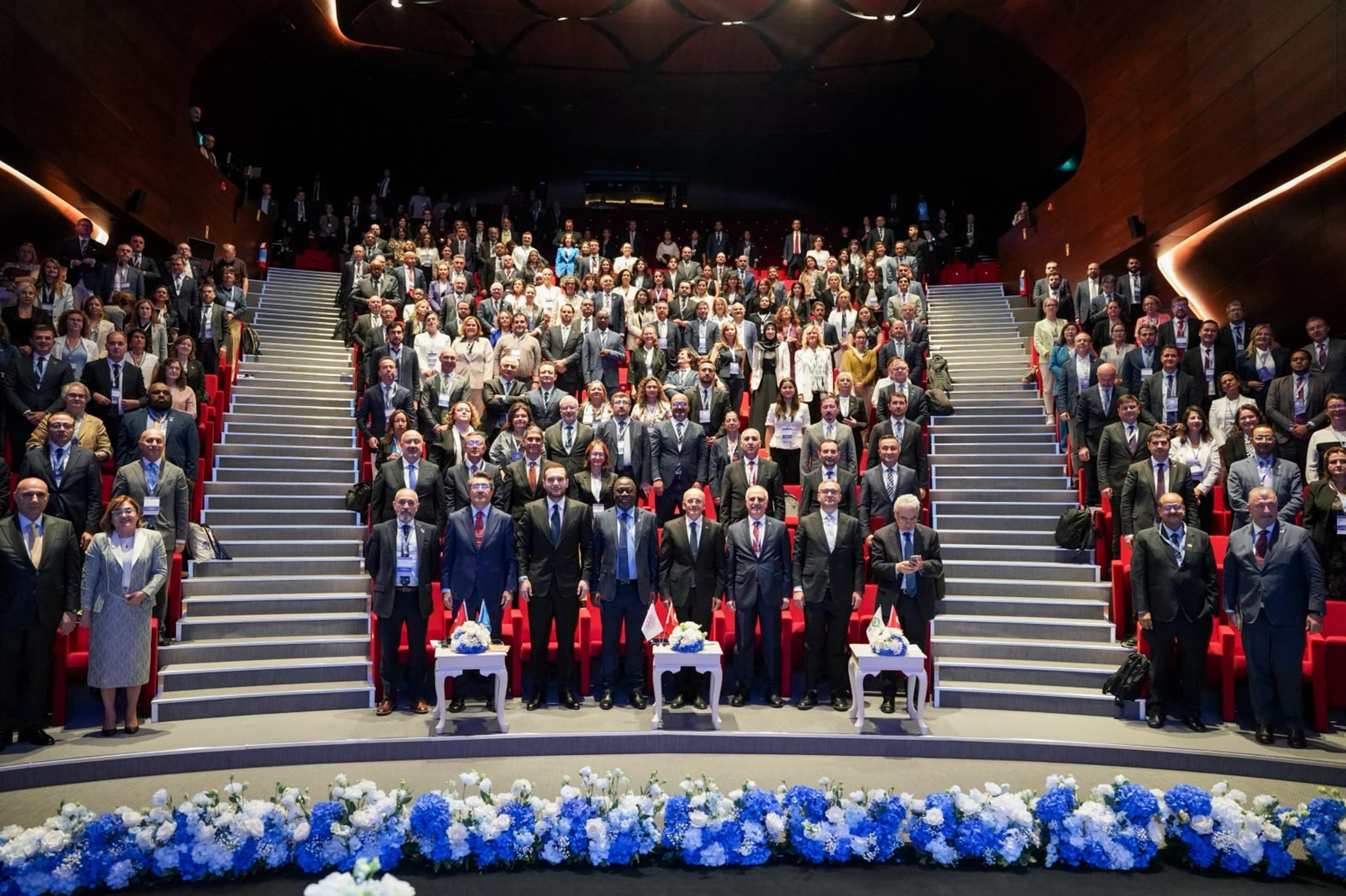
Türkiye brings together public institutions, financial organizations, international bodies, the private sector, academia and civil society to strengthen climate action financing and support the country’s green transformation ahead of COP31.
The “Towards COP31: Climate Finance Policy Dialogue,” organized by the Zero Waste Foundation in cooperation with the Ministry of Treasury and Finance, the Ministry of Environment, Urbanization and Climate Change and the U.N. in Türkiye, took place at Ziraat Bank’s headquarters in the Istanbul Finance Center on Saturday.
The dialogue focuses on strengthening Türkiye’s capacity to mobilize resources for climate action, aligning public and private sector investments more closely with climate goals and improving cooperation among national and international financial actors. The event is also part of preparations for COP31.
The zero waste approach promoted by first lady Emine Erdoğan, founder of the Zero Waste Movement and honorary president of the Zero Waste Foundation, is also highlighted as an important component of a broader transformation agenda focused on preventing waste, using resources efficiently, promoting sustainable production and consumption, and strengthening the circular economy.
Speaking at the opening of the program, U.N. Türkiye Resident Coordinator Babatunde Ahonsi said climate finance was moving from the margins of climate discussions to the center of economic and financial policymaking.
“The fundamental question is no longer whether we need to invest in climate action,” Ahonsi said, stressing that the focus was on increasing the scale, speed and quality of resources needed to turn climate targets into investments and tangible results.
Ahonsi described climate change not only as an environmental challenge but also as a systemic economic and financial risk affecting fiscal balances, debt sustainability, financial stability, infrastructure, food and energy security, businesses and livelihoods.
At the same time, he said the transition to a low-carbon and climate-resilient economy created significant investment opportunities.
He emphasized that financial systems needed to align with climate objectives from the design stage, with regulation, taxation, investment decisions, risk management, capital markets, transparency and project development considered together.
Samed Ağırbaş, president of the Zero Waste Foundation and COP31 High-Level Climate Champion, said financing was not simply a complementary element of climate policy but the mechanism that enabled climate policies to be implemented.
Ağırbaş called for public resources, private capital, international financial institutions and new financing models to be brought together within an integrated system.
The one-day high-level roundtable established six thematic working groups focusing on strengthening Türkiye’s climate finance ecosystem.
The groups examined financial regulation and taxonomy, green financial instruments, bankable project pipelines, blended finance and risk-sharing instruments, mobilizing private capital, and sustainability reporting, assurance and reliable climate data.
The discussions addressed barriers to accessing climate-related resources in Türkiye, investment opportunities and ways to make financing instruments more effective.
The policy recommendations emerging from the dialogue were planned to be shared with the COP31 Presidency, the COP31 High-Level Climate Champions Office, international financial institutions and multilateral development banks.
The initiative also supported Türkiye’s efforts on green growth, climate resilience and sustainable development under its 12th Development Plan for 2024-2028 and National Green Finance Strategy and Action Plan for 2026-2030.