Ten years after the defeated July 15 coup attempt by the Gülenist Terror Group (FETÖ), politicians, academics and witnesses gathered in Istanbul on Monday to reflect on the night they say reshaped Türkiye's democracy, revisiting stories of resistance, leadership and public resolve while stressing the importance of preserving its memory for future generations.
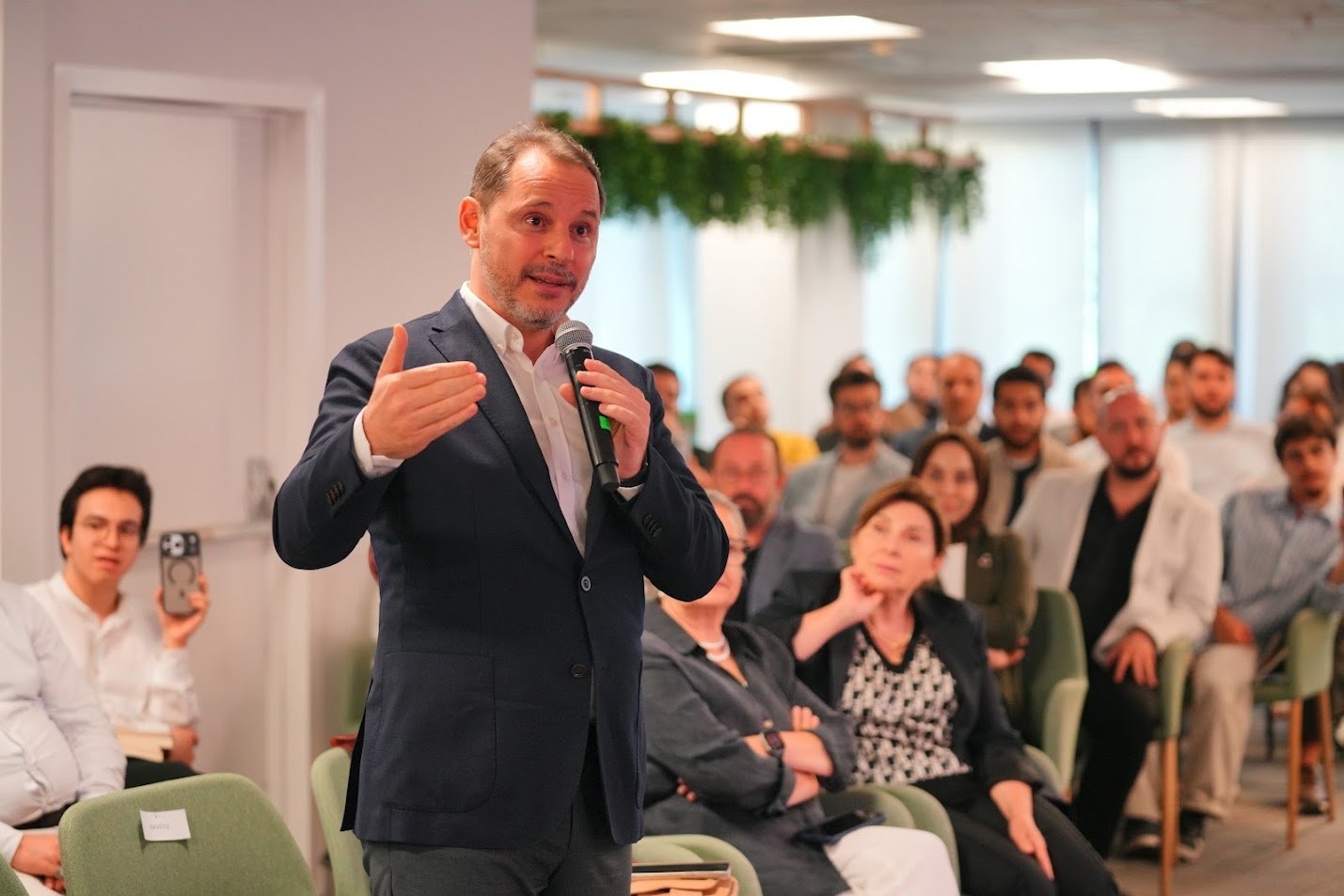
The forum, titled "Remembering July 15 on Its 10th Anniversary," was organized by Enstitü Sosyal, or the Institute Social, to examine the failed coup attempt beyond political debate, focusing instead on its historical, social and legal legacy.
For many speakers, the defining image of that night was not tanks or warplanes, but ordinary citizens confronting them.
Former Treasury and Finance Minister Dr. Berat Albayrak, who was with President Recep Tayyip Erdoğan in Marmaris, a town in Türkiye's southwestern Muğla province, when the coup attempt began, said the public's spontaneous response remained one of the most remarkable aspects of that night.
Albayrak said the coup attempt was not an improvised operation but a meticulously planned plot prepared over a long period, while neither state institutions nor ordinary citizens had been ready for what unfolded.
"It was an organized coup planned months, perhaps even years, in advance. Against that stood a state whose institutions were caught off guard, and ordinary citizens who were neither organized nor prepared. Yet, with God's help, the operation to stop it succeeded," he said.
He said the public's reaction was something that could never have been planned in advance.
"If I told my friends, 'Let's meet on the bridge tonight. There is a coup, there will be tanks, and we'll go with our bare hands,' I don't know how many people would come," Albayrak said. "But that night, millions of people took to the streets with their bare hands."
Reflecting on his own experience, Albayrak also recalled the uncertainty surrounding President Recep Tayyip Erdoğan's flight to Istanbul, saying they later learned that one of the two pilots on board was linked to FETÖ.
He said security concerns forced a last-minute decision to land at Istanbul's Atatürk Airport instead of Sabiha Gökçen Airport.
Even then, concerns continued. Officials warned that although the runway might have been secured, coup plotters could have obstructed it with trucks under the cover of darkness, creating another potentially fatal danger for the aircraft.
"I speak only for myself, but compared to our martyrs and veterans, what we experienced was far less," he said. "Still, all of us were tested through our children."
He urged younger generations to continue learning about July 15, saying preserving the stories of those who lost their lives or were wounded was a shared responsibility.
"The historical significance of that night will be understood even more in the years ahead," Albayrak said. "But we have a responsibility to keep telling this story, especially to our young people. Those who witnessed it must continue speaking about it, and we must keep alive the memory of our martyrs and veterans; that is a duty we all carry."
Deputy Parliament Speaker Bekir Bozdağ said Parliament's decision to continue its session despite being bombed by FETÖ plotters symbolized the country's determination to defend democratic institutions.
"The bombing of Parliament was the bombing of all 86 million citizens," Bozdağ said, recalling that lawmakers refused to leave the chamber despite the attacks.
Bozdağ credited Erdoğan's public call for people to resist as the turning point of the night, saying the president demonstrated leadership by traveling to Istanbul with his family despite the risks.
"If the leader of a country is willing to risk the lives of his entire family for democracy and the national will, then the nation that elected him will follow him," he said.
The discussions also turned to how the legacy of July 15 can be passed on through art, with speakers pointing to Istanbul's Memory July 15 Museum, which has attracted nearly 2 million visitors since its inauguration.
Hasan Mert Kaya, the writer and curator who helped establish the July 15 Memory Museum, told Daily Sabah that commemorative events play a vital role in ensuring the memory of the failed coup attempt does not fade with time.
"In a region where the agenda changes constantly, remembering what happened on July 15 and passing its lessons on to future generations is essential. Honoring the 253 people who lost their lives and expressing gratitude to the veterans is part of our culture of loyalty and remembrance."
Kaya said art and culture have a unique ability to preserve collective memory because they transcend language and connect with people across different backgrounds.
He added that museums, memorial centers, exhibitions, publications, social media projects and academic forums together create a lasting impact that helps keep public awareness alive, particularly among younger generations.
"Studying July 15 through art, cultural events and social research is incredibly meaningful," Kaya said, adding that the strong participation of public institutions, foundations and civil society organizations in this year's 10th anniversary commemorations was encouraging. "That collective effort is what will ensure this awareness is sustained for future generations."