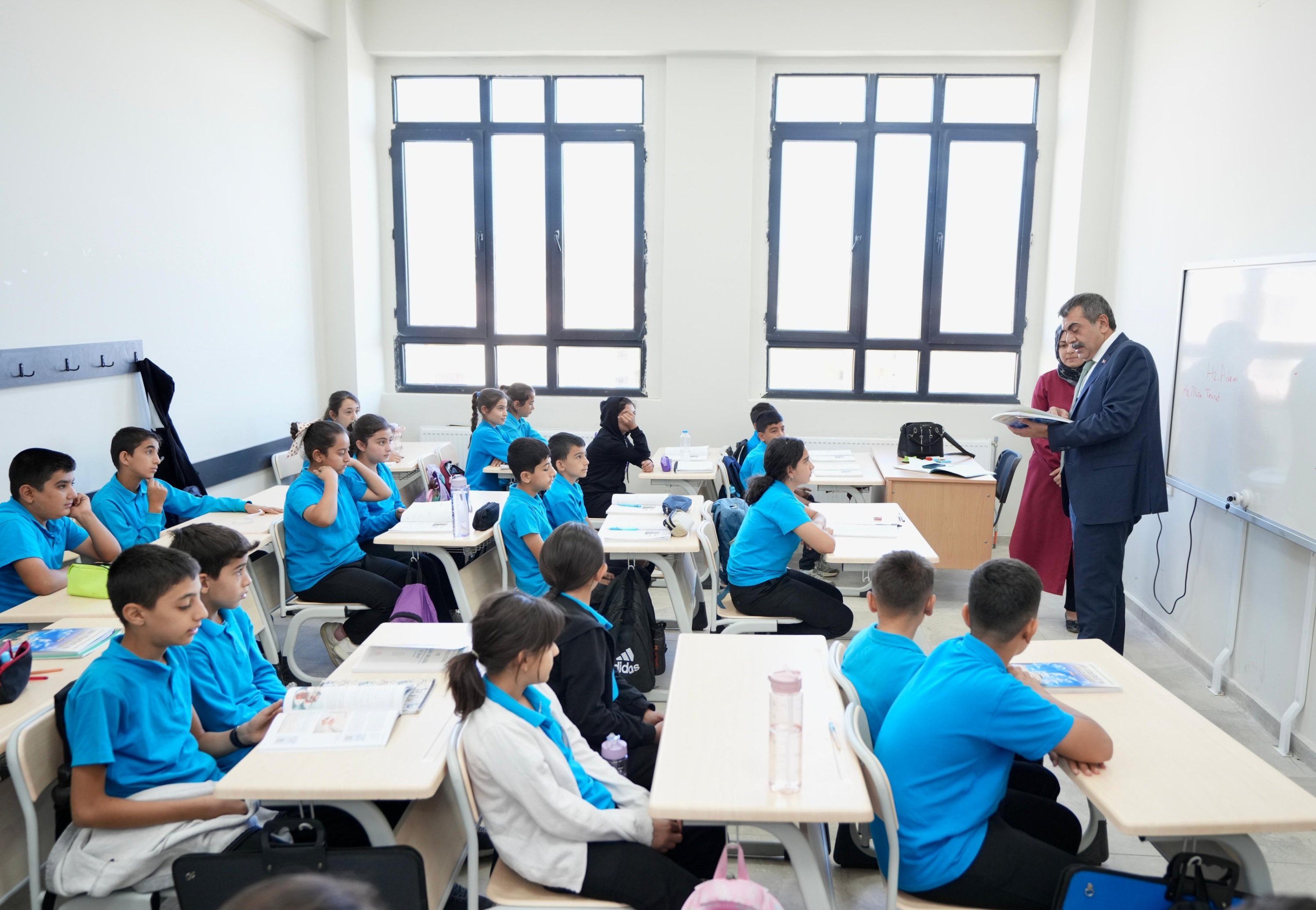
For a child starting primary school in Türkiye today, the path through education is expected to last 17.2 years on average, according to the latest report from the Turkish Statistical Institute (TurkStat).
On average, children spend approximately 1.5 years in pre-primary education and nearly 12 years completing secondary education. These numbers reflect the long and often challenging journey of learning that every young person embarks on in Türkiye.
The story of education in Türkiye is not the same everywhere. In Istanbul and Karabük, in northern Türkiye, children are expected to spend up to 19 years in school, benefiting from access to resources and educational opportunities. Close behind are Bayburt and Rize in northeastern Türkiye, Ankara in central Türkiye and Erzincan and Tunceli in eastern Anatolia, where students tend to stay in school for more than 18 years.
Yet, in other parts of the country, the picture is very different. In southeastern Türkiye, specifically in Şanlıurfa and Şırnak, a child may spend only 14.4 years in school, with Muş, Ağrı and Mardin not far behind. These gaps highlight that while many children have the chance for long educational journeys, others face shorter paths, often shaped by regional inequalities and local challenges.
Gender also plays a role in the story. While the overall expected schooling duration fell slightly in 2024, by 3.8% for boys and 3% for girls, girls are still, on average, expected to spend more time in school than boys. In Tunceli, girls lead the way in education, followed by Karabük, Istanbul, Ankara and Rize. Meanwhile, boys in Bayburt, Karabük, Istanbul, Erzincan and Ankara have the longest expected schooling.
At the same time, boys in Ağrı, Şırnak, Muş, Şanlıurfa and Mardin, as well as girls in Şanlıurfa, Şırnak, Muş, Ağrı and Mardin, face the shortest schooling journeys, indicating communities where educational support remains critical.
The gender equality index, which measures the ratio of girls’ schooling to boys, has steadily improved from 0.97 in 2018 to 1.05 in 2024. This small but meaningful progress indicates that girls are gradually gaining stronger access to education, although disparities persist in certain provinces, such as Şanlıurfa, Bitlis, Siirt, Erzurum and Muş.