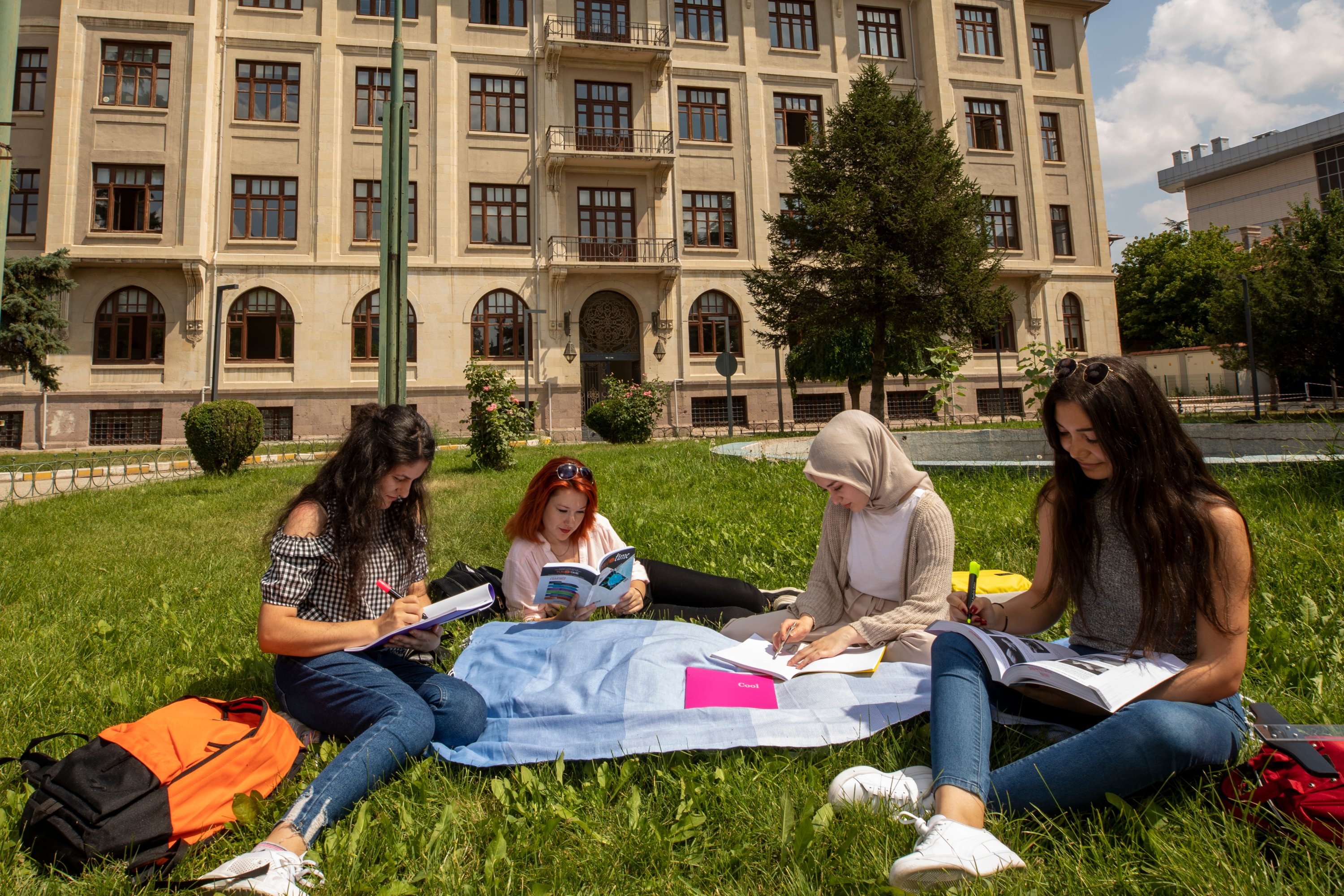
The Federation of International Student Associations (UDEF) and the Science Culture Education Foundation (ILKE) have unveiled a detailed report titled “Education and Life Experiences of International Students in Türkiye,” presenting a broad analysis of the experiences, motivations and challenges faced by international students in the country.
The report was announced at a meeting held at Fatih Sultan Mehmet Vakıf University's (FSMVÜ) Gülhane Campus on Tuesday. Abdullah Muhammed Islam, president of UDEF, noted Türkiye’s nearly two-decade commitment to welcoming international students. He highlighted that since the early 1990s, students primarily from Turkic republics have sought education in Türkiye, and recent years have witnessed a dramatic increase in international student numbers, rising from approximately 70,000 a decade ago to 350,000 today.
Emphasizing the cultural approach to international students, Islam stated, “We have never approached international students merely as students; our culture and history place human beings at the center.”
Ahmet Sait Öner, chairperson of the ILKE Foundation, described the collaboration as invaluable, underscoring that the findings of the report provide significant insights that will positively influence the education sector.
ILKE Foundation Board Deputy Chair Elyasa Koytak delivered a comprehensive presentation of the report’s findings, noting that the study surveyed 551 international students. According to Koytak, Türkiye now ranks as the eighth largest host country for international students globally. He projected that the number of international students in Türkiye will reach nearly 360,000 by 2025, reinforcing the country’s strategic educational ambitions, including a presidential target to attract 1 million international students.
The report shows that 61% of international students are enrolled in state universities, with 56% male and 44% female students. Students come from diverse geographic regions, with Türkiye now attracting learners from all continents.
Six key themes emerged from the study concerning students’ motivations for choosing Türkiye, 50% prioritize religious affinity, making it the top factor, followed by 46% who cite the quality of education. Other significant factors include Türkiye’s rich cultural values and scholarship opportunities. The data reveals gender and regional differences in motivations; female students give more importance to geographic and cultural proximity, while male students emphasize education quality, scholarships, and religious affinity.
Regionally, cultural affinity is most prominent among students from Central Asia, the Caucasus and the Balkans. For Middle Eastern students, geographic proximity is a decisive factor, whereas for students from sub-Saharan Africa and South Asia, the influence of friends and social circles plays a more significant role.
When asked about satisfaction with university facilities, international students expressed the highest levels of contentment with libraries, campuses and academic support. However, the study also highlighted ongoing challenges, with housing identified as the most pressing issue, followed by experiences of discrimination and racism.
Koytak pointed out that while xenophobia and social tensions exist in many countries, these issues fluctuate in Türkiye and must be addressed proactively.
On overall life satisfaction, 55% of international students reported being happy with their living conditions in Türkiye. Satisfaction rates were highest among students from the Asia-Pacific and South Asian regions and lowest among those from North Africa and the Middle East.
Regarding future plans, when asked if they would choose to study in Türkiye again, 41.9% of students answered affirmatively. Meanwhile, 43.9% said they would recommend Türkiye as a study destination, while 27% said they would not.