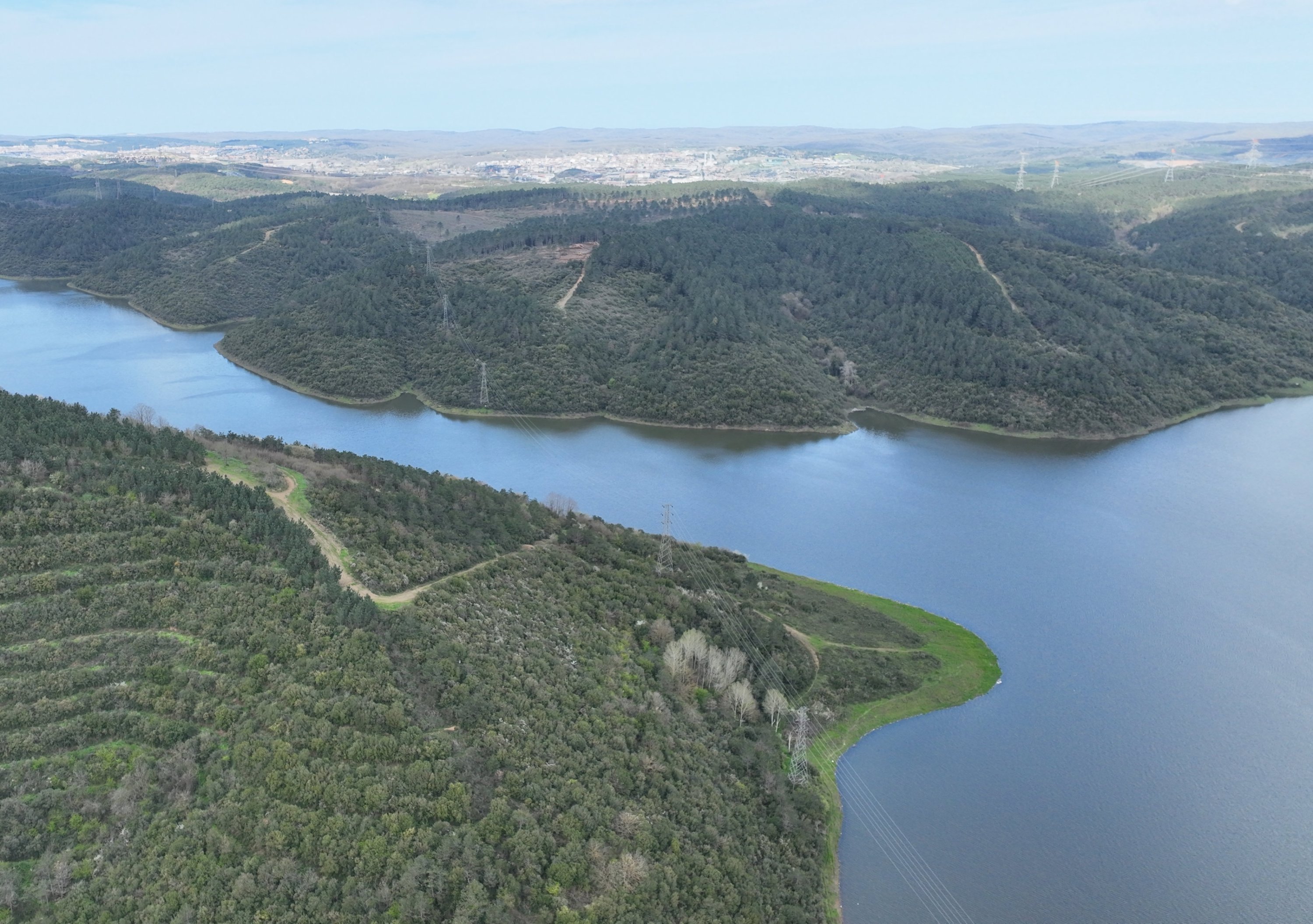
The average occupancy rate of dams supplying water to Istanbul has fallen below 40% for the third time in September over the past decade, amid declining rainfall and increased water consumption during the summer months.
According to data from the Istanbul Water and Sewerage Administration (ISKI), the average occupancy rate of the city's dams stood at 38.03% as of Sept. 18, with around 330.03 million cubic meters (mcm) of water remaining in the reservoirs.
The rate was recorded below 40% on the same date only twice previously in the past decade, at 25.28% in 2023 and 33.49% in 2025.
The city's dams and reservoirs have a combined storage capacity of approximately 868.68 mcm.
Rainfall in the dam catchment areas has also declined in recent years. ISKI data shows that annual rainfall totaled 540.49 kilograms per square meter this year, compared with 852.64 in 2023, 709.27 in 2024 and 619.92 in 2025.
Güven Özdemir, a meteorology professor at Istanbul Aydın University, said that changes in rainfall patterns and hot, dry summer conditions have contributed to the decline in Istanbul's water resources.
Özdemir said reduced rainfall lowers the amount of water flowing into reservoirs, while high temperatures increase evaporation and accelerate moisture loss from soil and vegetation.
He also noted that water consumption rises during hot weather, with individual use, irrigation of green areas and other activities increasing overall demand.
“Declining rainfall is becoming increasingly important for water resources, particularly in densely populated cities such as Istanbul, where water consumption is high,” Özdemir said.
He stressed that the timing and distribution of rainfall are also important, noting that heavy rainfall over a short period does not necessarily contribute to reservoirs at the same rate as regular rainfall.
Özdemir said rainfall during the autumn and winter months will be important for replenishing Istanbul's reservoirs after the decline recorded during the summer.
He noted that regular rainfall in the dam catchment areas will be particularly important for increasing water reserves and entering the new water year with stronger stocks.
“Rainfall during the coming autumn and winter period will be decisive for Istanbul's water resources,” Özdemir said.
“Regular and sufficient rainfall will replenish the dams. However, if rainfall remains insufficient, pressure on existing reserves will continue.”
He also emphasized the importance of careful water consumption during periods of low rainfall and high temperatures to help protect the city's remaining water resources.